

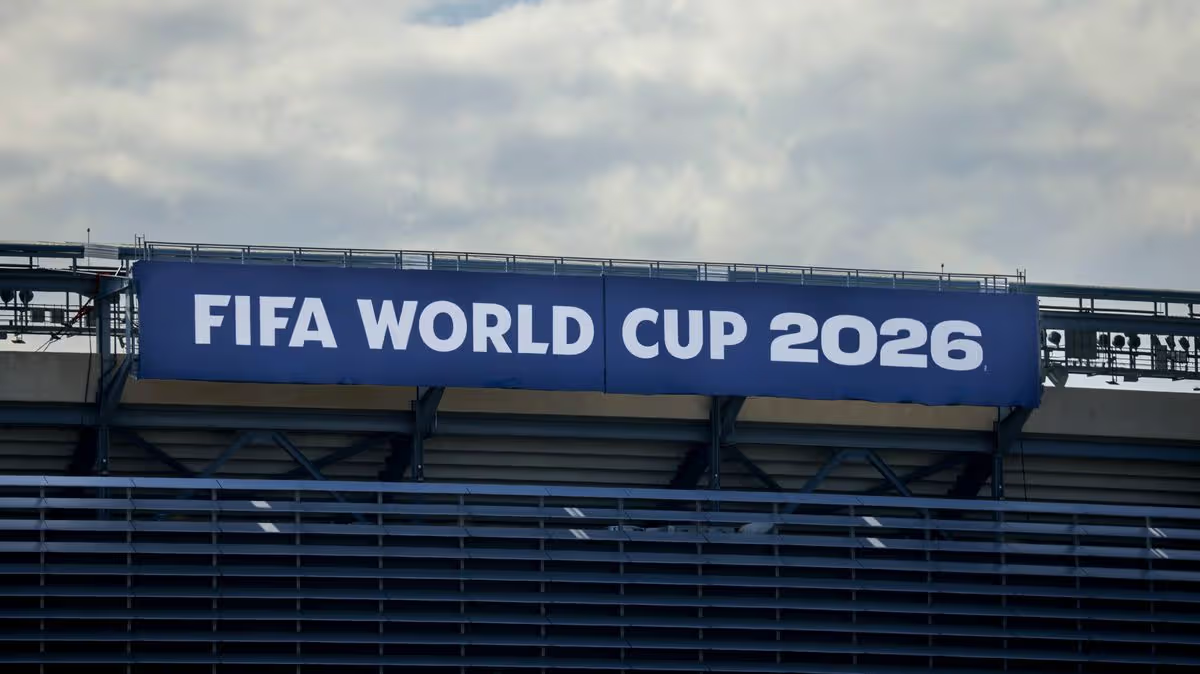
FIFA is poised to orchestrate a historic shift in the beautiful game’s grandest spectacle: a dedicated half-time show for the 2026 World Cup final. This ambitious plan, however, comes with a significant logistical price—the standard 15-minute interval will be “significantly longer,” marking a major departure from football’s traditional rhythm. Mirroring the approach of the American Super Bowl, the world’s most-watched sporting event, FIFA intends to transform the pause in play at MetLife Stadium in New York into a global entertainment event. This stadium, familiar with such spectacles as last year’s Club World Cup final, will now see its hallowed turf potentially used for a performance, a stark contrast to the elevated stage constructed for artists like Doja Cat to protect the pitch in 2025.
The practical implications of this extended intermission ripple out to every corner of the final’s ecosystem. For the players and coaches at the heart of the contest, this is not merely a longer rest period but a fundamental alteration to their competitive routine. Sports scientists must recalibrate plans for muscle recovery and second-half readiness, while managers face the unique challenge of delivering tactical messages that must resonate over a prolonged, potentially distracting break. The athletes’ bodies and minds, finely tuned for a specific cadence of play, rest, and play, will now need to adapt to an unfamiliar stop-start rhythm, where the intensity of a world final must be resumed after a showbiz interlude.
Broadcasters, too, are in a state of anticipatory planning, awaiting official details from FIFA to reshape their global programming. A half-time that stretches potentially to 25-30 minutes, akin to the Super Bowl model when set changes are included, demands a complete reworking of schedules, ad slots, and punditry segments. The entire broadcast architecture built around the match’s timing must be flexed to accommodate this new centrepiece of entertainment, ensuring a seamless experience for the billions of viewers who expect the football narrative to resume without a hitch after the final curtain of the show.
The entertainment lineup itself is a source of fervent speculation, adding a layer of pop-culture anticipation to the sporting buildup. With Coldplay’s Chris Martin reportedly organising the show in partnership with Global Citizen, rumours naturally swirl around the band’s involvement. Furthermore, the recent launch of Shakira’s official World Cup song positions her as another strong contender for the MetLife stage. FIFA’s promised announcement will thus not only clarify logistical timelines but also set the cultural tone for an event designed to marry the world’s most popular sport with A-list musical performance on an unprecedented scale.
This move represents more than a simple schedule tweak; it is a conscious fusion of sporting and entertainment cultures, with FIFA clearly looking to the Super Bowl’s successful blueprint. While the 2025 Club World Cup final, where half-time stretched to 24 minutes, served as a testing ground, the World Cup final is an event of incomparable magnitude. The governing body is navigating uncharted territory, balancing the desire for a spectacular, inclusive celebration with the core integrity of the sport’s most important match. The challenge lies in ensuring the show enhances rather than disrupts the athletic drama that has captivated generations.
Ultimately, the success of this experiment will be judged on the night. Will the extended pause and grand spectacle amplify the global party atmosphere and create a lasting, shared memory, or will it be viewed as an intrusive disruption to the purity of the final? As coaches adjust their talks, broadcasters rewire their feeds, and players prepare for an unusual interval, the world will watch to see if this bold reimagining of football’s pinnacle moment scores a triumph or results in an own goal against the game’s timeless traditions. The 2026 final, therefore, promises not just a champion, but a potential redefinition of what a World Cup finale can be.