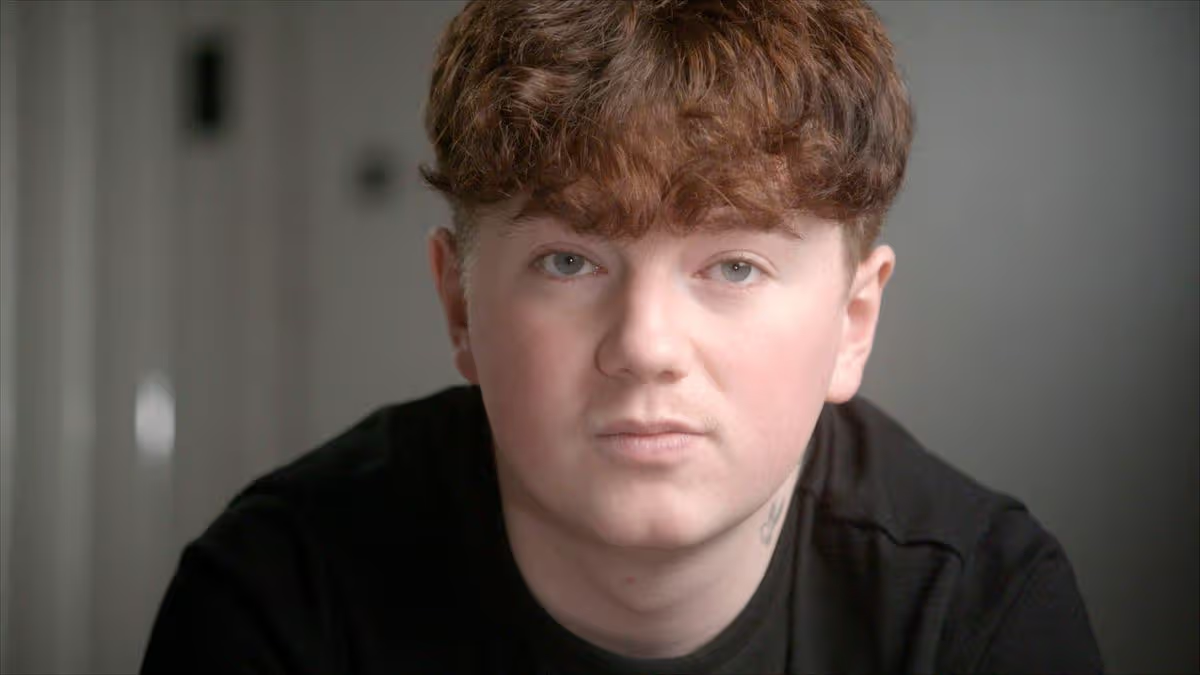
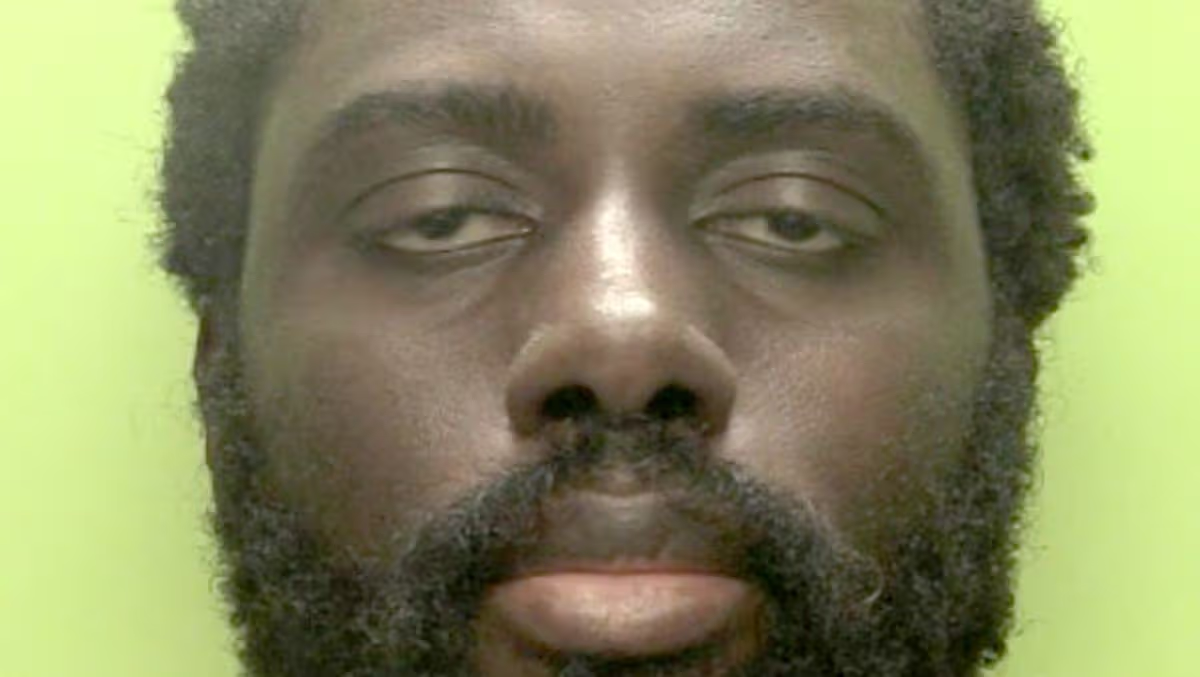


The Nottingham Attacks Inquiry has heard poignant and harrowing testimony from Elias Calocane, the brother of Valdo Calocane, who in June 2023 killed Barnaby Webber, Grace O’Malley-Kumar, and Ian Coates in a stabbing spree. Speaking publicly for the first time, Elias described the profound difficulty of reconciling the violent, cryptic text messages he received from his brother in 2020 with the peaceful, withdrawn man he had always known. He emphasized that, at the time, he interpreted Valdo’s disturbing words—including phrases like causing hurt “permanently” and the backwards-coded “red rum”—as metaphors for his sibling’s intense suicidal ideation and internal anguish, not as threats against others. This interpretation, he explained to the inquiry, was rooted in a lifetime of knowing Valdo as a non-violent person, a context tragically obliterated by the events of June 13th, 2023.
Elias detailed a series of alarming conversations from three years prior to the attacks, where Valdo’s communications swung dramatically between spiritual revelations and expressions of paranoia, anger, and violent imagery. In one exchange, Valdo spoke of being “saved” by the holy spirit, while in others he referenced “break[ing] their heads with my hands” and “losing [his] mind.” When questioned, Elias stated he was certainly worried and sought more explanation, but did not associate the language with murderous intent. He instead perceived it as a continuation of his brother’s desperate, internal struggle, a cry for help from a mind he believed was unraveling under the weight of delusions—delusions Elias had tried logically to dismantle, arguing that the technology Valdo feared could spy on him did not exist.
The testimony revealed a family grappling with a severe mental health crisis in the dark, lacking critical information that could have framed their concerns more urgently. Elias confirmed he was entirely unaware of his brother’s clinical diagnosis of paranoid schizophrenia until October 2023, months after the killings. He was also never informed that a doctor had warned Valdo in 2020 that his condition could lead him to kill someone. This left the family interpreting his behavior through a lens of deep personal concern, but without the professional context that might have signaled a different, more dire category of risk. Their focus was squarely on the threat Valdo posed to himself, a belief solidified when Valdo sent a message saying “I love you,” which Elias tragically received as a potential “goodbye message.”
Elias painted a picture of his brother as someone who, even in distress, historically withdrew rather than confronted, making his eventual violent outburst seem incongruous. He recalled an incident in March 2020 where Valdo “flipped out” after their mother called him unexpectedly, a reaction that seemed significant only in hindsight. This portrait adds to the complex and devastating puzzle of the case: a man whose internal reality had catastrophically diverged from his external demeanor, his illness festering unseen by those closest to him, who were left to interpret his cries for help without the key to decode their most dangerous meaning.
Throughout his evidence, Elias Calocane’s statements were imbued with a palpable sense of grief, hindsight, and moral anguish. He acknowledged the impossibility of asking the public, especially the victims’ families, to view the old text messages without the horrific knowledge of what followed. His testimony underscores a central, agonizing theme of the inquiry: the chasm between how concerning behaviors are perceived by loved ones in real-time and how they are understood in the devastating light of a future tragedy. For Elias, the ultimate fear was that his brother would die by suicide; the notion that he would take the lives of others was a terror that remained, until it was too late, unimaginable.
The inquiry continues to examine the systemic and personal missed opportunities in the lead-up to the attacks. Elias Calocane’s evidence provides a crucial, intimate perspective from within the family, highlighting the isolating nature of severe psychosis and the tragic limitations of well-intentioned, familial support when divorced from professional intervention and information sharing. His account is a sobering reminder of how mental illness can distort communication, hiding lethal intentions behind what appears to be a familiar language of self-destruction, with consequences that forever alter countless lives.