


Paragraph 1
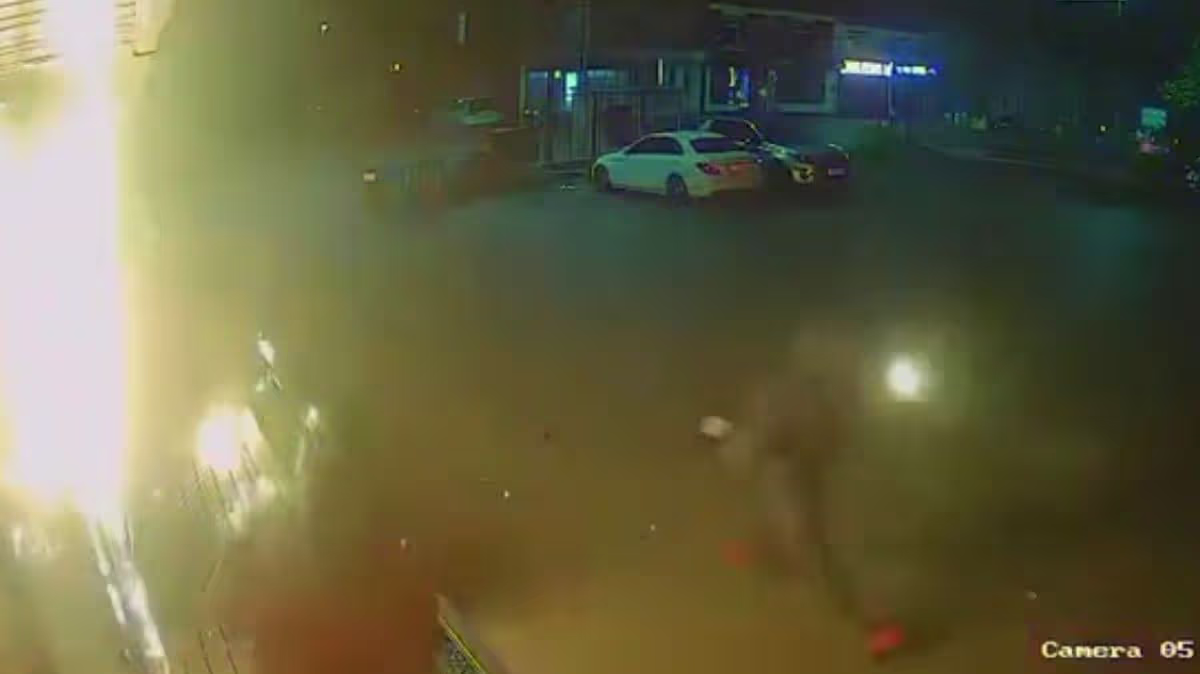
In the early hours of a Tuesday morning, the peace of a Blackburn neighbourhood was shattered by an act of alarming violence. Masked individuals, their identities concealed, targeted Café Raha on Whalley New Road, hurling lit firebombs through the windows of its front-facing spiritual room. Shocking CCTV footage captured the moment the building was engulfed in flames, marking the second such attack on the premises within a single week. The spiritual space, identifiable by its prayer mats and Arabic verses visible through the glass, was left damaged and scorched, a jarring scene in the otherwise quiet community. Emergency services rushed to the scene, with firefighters battling the blaze and police launching an immediate investigation into the disturbing incident.
Paragraph 2
For the owner, Mohammed Awais, and his staff, the attacks represent more than just property damage; they are a devastating blow to their livelihoods and sense of security. Awais expressed profound distress, emphasizing that he and his team had poured their hearts into the café, a community hub that also served as a place of quiet reflection. “We have not done anything to anyone,” he stated, struggling to comprehend the motivation behind such reckless danger. His concern extended to his employees, whose survival depends on their work at the café. Awais made a plea for reason, suggesting that anyone with a grievance should have approached him directly, rather than resorting to actions that risked lives and destruction.
Paragraph 3
In the aftermath, Lancashire Police moved quickly to address community fears, acknowledging the deep distress such incidents can cause. They confirmed an active and ongoing investigation, with increased reassurance patrols deployed in the area to provide a visible sense of security. In their public statement, however, authorities introduced a nuanced perspective, noting that while the motivation was still under investigation, “there is no suggestion at this time that the incident is racially or religiously motivated.” This official stance, intended perhaps to prevent premature conclusions and further unrest, created a complex tension for a community directly confronting the targeting of a visibly Muslim space.
Paragraph 4
This official framing stands in stark contrast to the lived experience of the victims and the symbolic nature of the target. Awais himself questioned why his establishment, with its clearly identifiable prayer room, was singled out twice. “They could have targeted anywhere,” he reflected, pointing to the visible Islamic elements that define the room. For local residents, especially those from the Muslim community, the attacks feel intimately connected to their identity and sense of belonging, regardless of the yet-unknown personal motives of the perpetrators. The trauma is compounded by the frequency, creating an atmosphere of vulnerability and fear that a police statement alone cannot easily dispel.
Paragraph 5
Amid the fear and destruction, the response also highlighted threads of community resilience and solidarity. Awais expressed heartfelt gratitude to the Lancashire Fire and Rescue Service, which swiftly extinguished the flames, and to a vigilant neighbour who promptly alerted the authorities. These acts of responsibility and care form a counter-narrative to the violence, underscoring a community’s capacity to protect its own. The presence of concerned neighbours and the dedicated work of emergency responders serve as a reminder that the perpetrators’ actions do not define the character of Blackburn.
Paragraph 6
Ultimately, the firebombing of Café Raha leaves a community grappling with a tangle of fear, loss, and unanswered questions. While the police investigation continues its crucial work to identify and apprehend those responsible, the human impact is immediate and profound. A family business is threatened, a sacred space is violated, and residents are left to reconcile the jarring reality of repeated attacks with official assurances about their nature. The path forward requires not just justice through legal channels, but also a deeper, community-wide engagement with the roots of such hatred and violence, ensuring that all members feel seen, protected, and valued in the place they call home.