


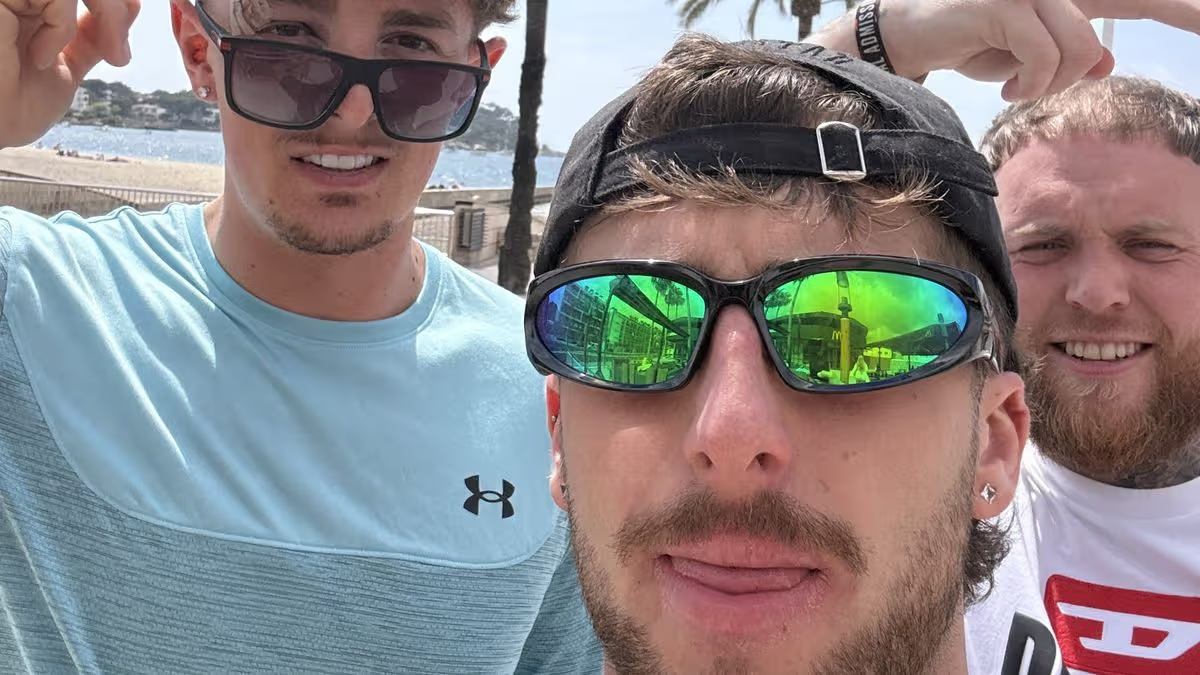
Of all the souvenirs one might bring back from a lively lads’ holiday in Magaluf, a brain injury is certainly not on the list. For 24-year-old Callum Richens from Bournemouth, what began as a celebratory trip with friends descended into a harrowing medical ordeal far from home. The catalyst was as absurd as it was painful: a pair of cartoonish, Lightning McQueen-themed Croc-style shoes. While enjoying drinks with his group at their villa on May 4th, the rubber soles of his footwear caught treacherously on a polished marble floor, sending him catapulting down a flight of stairs. The incident itself is a blank space in his memory; he recalls only the frightening scene of waking up surrounded by panicked friends, the sudden silence of celebration replaced by the urgent buzz of crisis.
The aftermath was a trial in patience and pain. After an excruciating two-hour wait for an ambulance on the Spanish island, Callum was finally admitted to hospital where the true extent of his injuries was revealed. Two separate scans painted a serious picture: a fractured eye socket, potential damage to his neck, and, most alarmingly, bruising on his brain. The immediate treatment was grueling—six stitches to close a wound and being placed on an IV drip, denied even food or water while awaiting results. His planned return flight home early the next morning, Wednesday, May 5th, was swiftly cancelled on doctor’s orders. Flying with a brain injury can be dangerously exacerbating due to pressure changes, leaving him with no choice but to postpone his journey. With his friends having to depart as scheduled, a lonely and anxious recovery began as he checked into a local hotel to convalesce alone.
For days, Callum focused solely on healing, willing his body to mend enough for a safe journey home. By Saturday, May 9th, he felt a turn in his condition and, with cautious optimism, booked an 11 a.m. flight, believing the worst was behind him. Fate, however, had another cruel twist in store. In the early hours of that morning, a fresh misery descended: severe food poisoning, likely contracted from his hotel. From 2 a.m. until 6 a.m., he was violently ill every hour, his body now wracked by a new kind of exhaustion and dehydration on top of his existing trauma. The prospect of navigating an international airport in such a state was daunting, but the powerful desire to finally get home provided a desperate resolve.
Somehow, summoning a reserve of strength he likely didn’t know he had, Callum dragged himself through the necessary motions. He made it to the airport, endured the flight, and landed at Bristol Airport—a triumph of sheer will over a body that had been thoroughly battered. His friend Josh was there to meet him, a familiar and welcome face after days of isolation and distress. There was no detour to his own bed, however; straight from the tarmac, he went to a UK hospital for a thorough check-up and another scan. The fear that had lingered since Spain—the worry over his brain and neck—needed immediate professional reassurance.
The news from this final hospital visit brought the first real wave of relief. The follow-up scan showed that the bruising on his brain had healed satisfactorily and the concerns regarding his neck injury were alleviated. The stitches from his fall were also removed, marking a tangible end to that chapter of the ordeal. While physically and emotionally drained, Callum could finally begin a proper recovery in the comfort of his own country, surrounded by his full support network. His planned return to work soon after stands as a testament to his resilience, though the experience undoubtedly left marks deeper than the physical ones.
Callum’s story is a stark reminder of how quickly a moment of lighthearted fun can transform into a life-altering incident. It underscores the vulnerability of being seriously injured abroad, where language barriers, unfamiliar medical systems, and isolation compound the fear. His ordeal was a double assault of both a freak accident and a mundane illness, a combination that tested his fortitude to its limit. Yet, through the panic in a Spanish villa, the lonely hotel room, and the painful journey home, his perseverance shines through—a young man who, supported by a loyal friend at the finish line, navigated a nightmare to finally make it back to safety.