

A Global Market’s Cautious Optimism
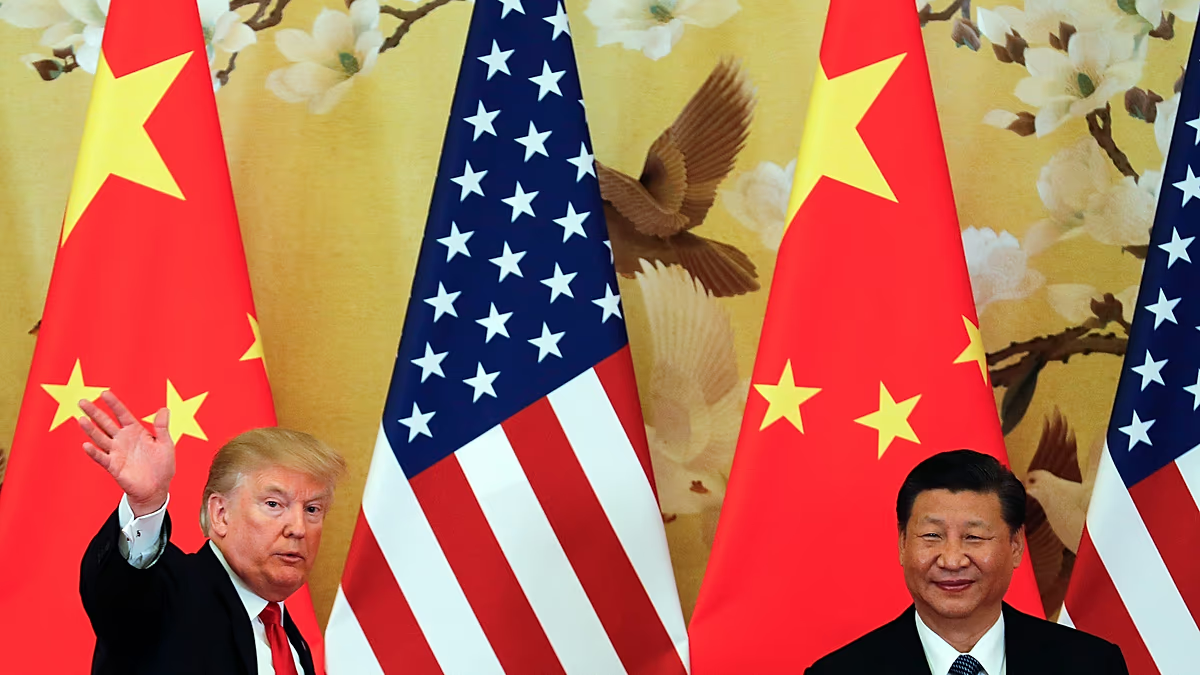
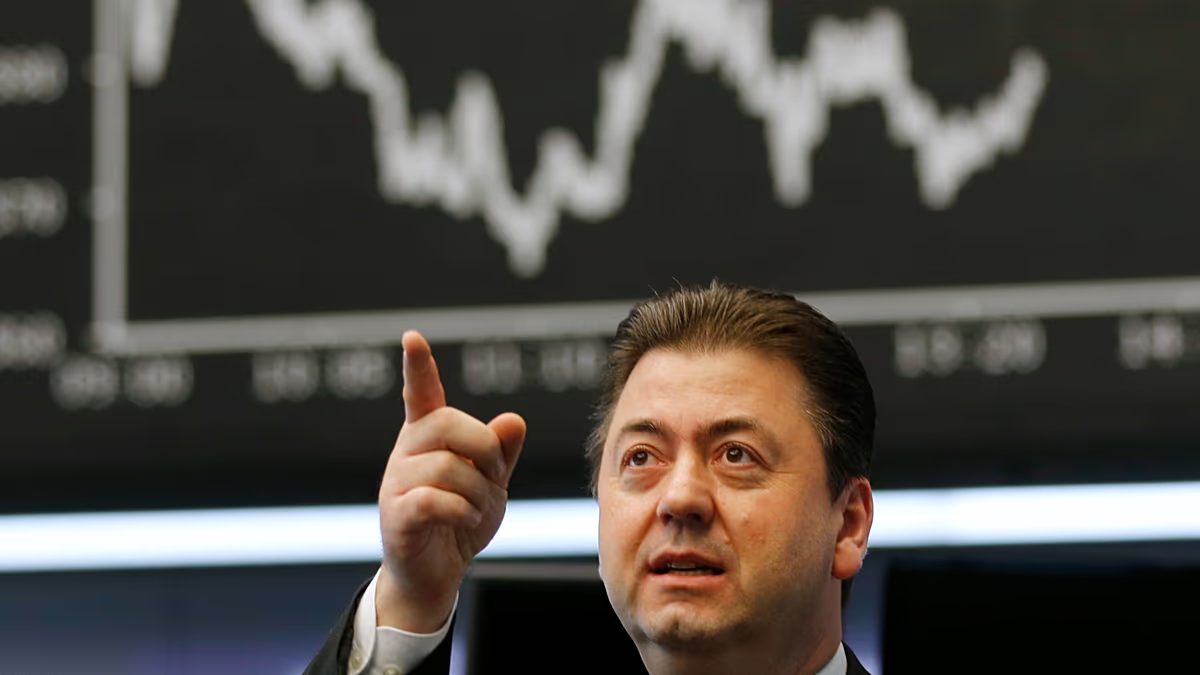
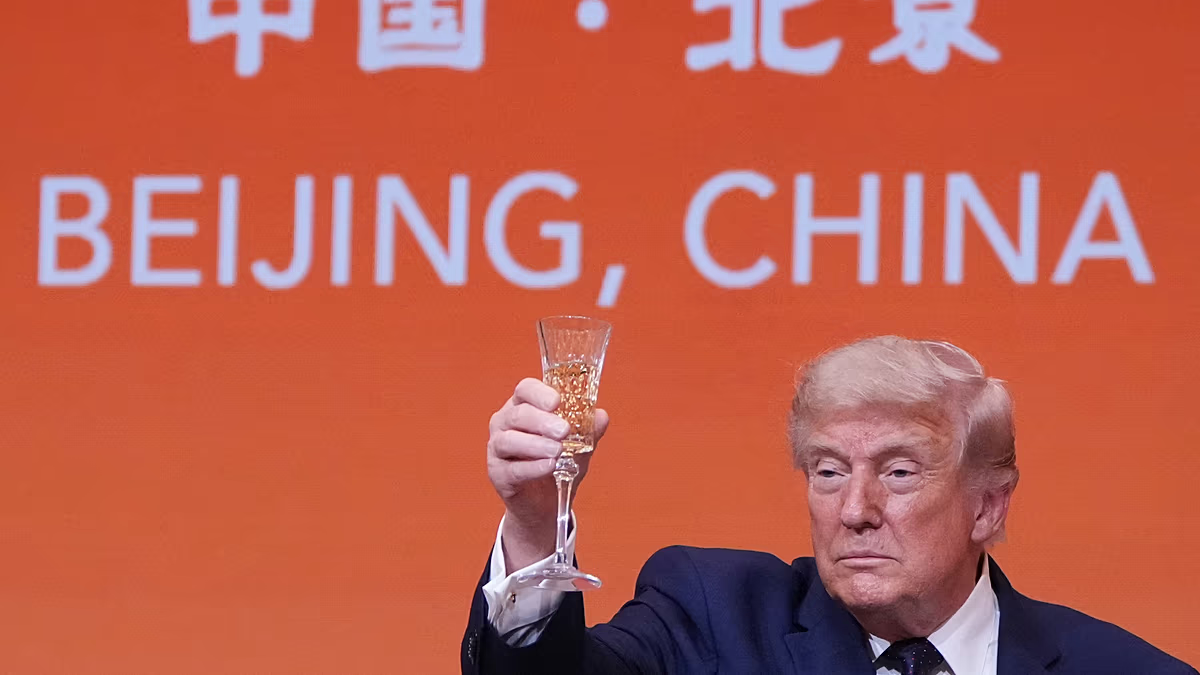
On a Thursday in mid-May 2026, the world’s financial markets presented a picture of cautious optimism, a delicate balance between record-breaking rallies and underlying geopolitical tensions. The catalyst for the day’s movements was the high-profile summit in Beijing between U.S. President Donald Trump and Chinese leader Xi Jinping. While analysts held modest expectations for major diplomatic breakthroughs, the mere fact of the dialogue provided a stable enough platform for investors to build upon recent gains. This sentiment was most palpable in the United States, where Wall Street had just closed at yet another series of historic highs, powered by relentless optimism in the technology sector. The S&P 500 and Nasdaq composite indexes both set fresh records, demonstrating a market willing to look past immediate uncertainties in favor of long-term growth narratives, particularly around artificial intelligence.
European Resilience Amidst Global Uncertainty
Across the Atlantic, European markets echoed this positive, if measured, mood. The major indices in London, Paris, and Frankfurt all advanced, with Germany’s DAX posting a particularly strong gain. This resilience was noteworthy given the ongoing shadow of the war in Iran, now entering its third month. The conflict’s disruption of global energy supplies continued to be a primary concern, yet markets found solace in specific data points. The UK, for instance, reported that its economy had grown at a faster-than-expected pace in March, suggesting an ability to withstand the geopolitical headwinds. This European strength indicated a financial landscape that was learning to compartmentalize—celebrating localized economic wins while nervously monitoring distant conflicts.
A Divergent Picture in Asian Trading
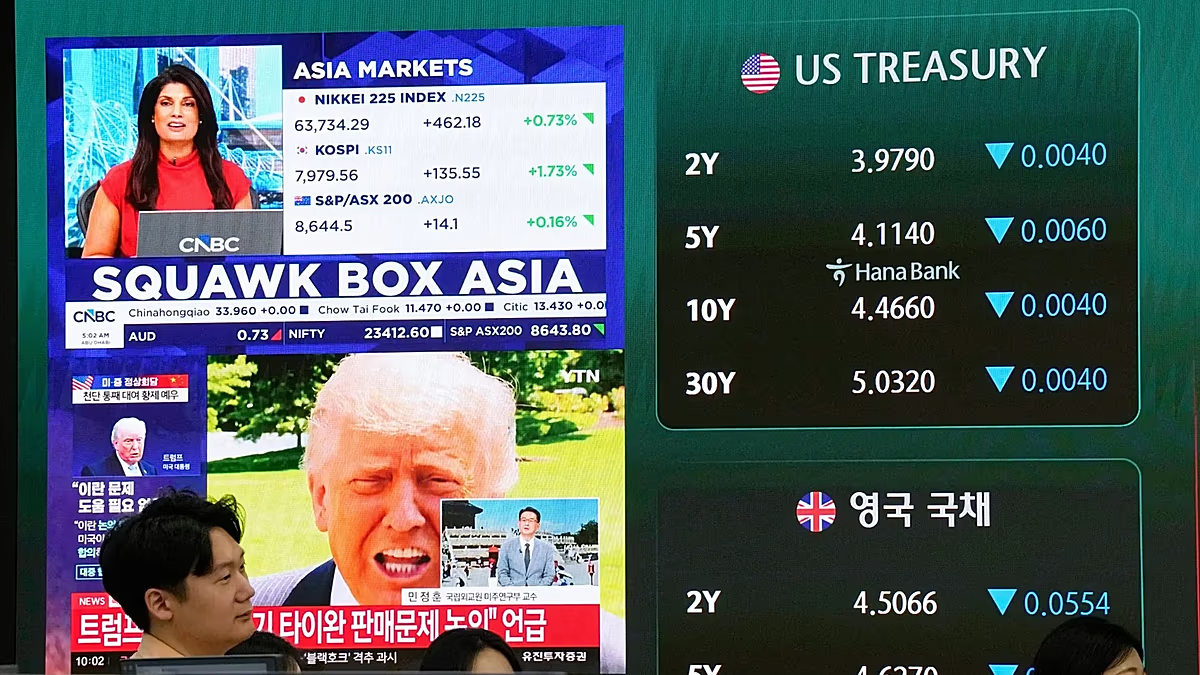
The Asian trading session, however, painted a more mixed portrait, reflecting the region’s direct proximity to both the Trump-Xi talks and the ongoing tensions. While South Korea’s Kospi soared to a fresh record, fueled by the insatiable global appetite for AI-related technology stocks, other key markets struggled. Japan’s Nikkei 225 retreated after briefly touching a new high, and China’s Shanghai Composite fell significantly. This divergence highlighted the complex pressures at play: the summit in Beijing was a double-edged sword, offering hopes of stabilized relations but also serving as a reminder of the deep-seated issues, such as the status of Taiwan and trade restrictions on advanced technology, that could spark volatility at any moment.
The Central Role of Energy and Geopolitics
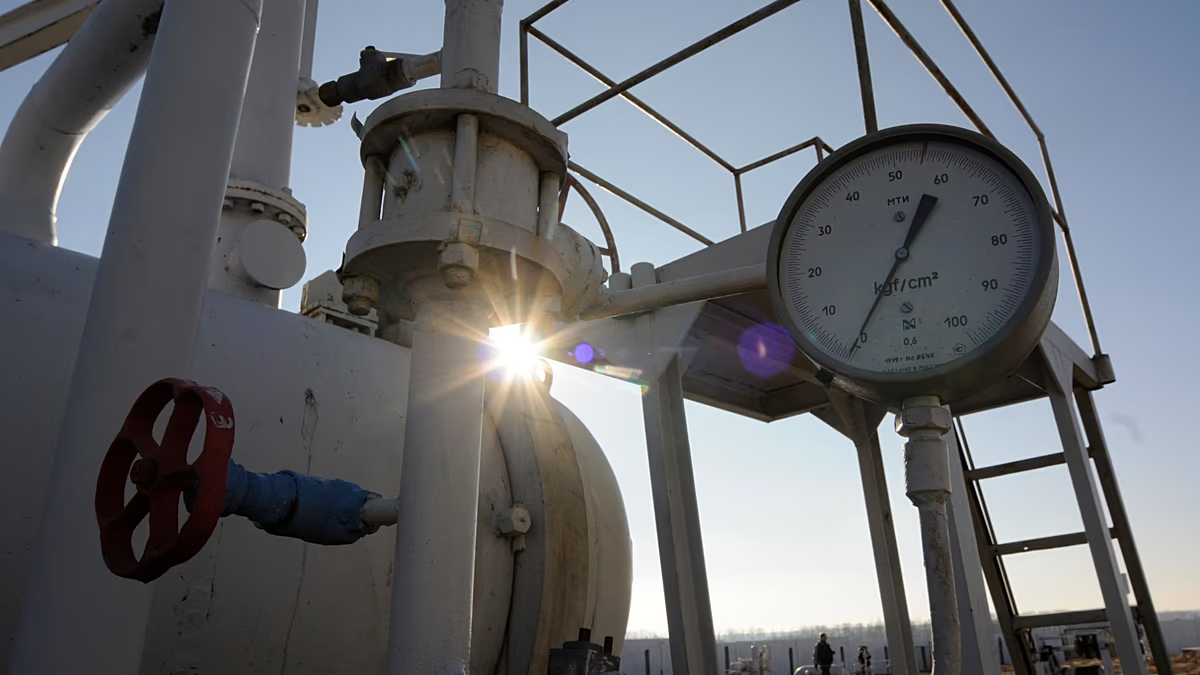
Beneath the stock indices, the crucial energy markets told a more urgent story of the Iran conflict’s tangible impact. Oil prices remained painfully high, with Brent crude holding above $105 per barrel—a stark increase from pre-war levels. The strategic Strait of Hormuz was a focal point of both the war and the diplomatic talks in Beijing. The White House confirmed that Trump and Xi had discussed the vital need to keep the waterway open, with the U.S. hopeful that China could leverage its economic ties with Tehran to help de-escalate the situation. This intersection of diplomacy, warfare, and commodity flows underscored how modern markets are inextricably linked to global statecraft, where a closed shipping lane can drain global oil inventories as swiftly as a sell-off can drain market value.
Corporate Power and Policy Shifts
Adding another layer to an already complex day was the notable presence of America’s corporate elite within the presidential delegation. The confirmation that Nvidia’s Jensen Huang, Tesla’s Elon Musk, and Apple’s Tim Cook were meeting with Chinese Premier Li Qiang signaled a blending of geopolitical and corporate strategy. Investors were keenly watching for any signals regarding China’s access to advanced chips like Nvidia’s H200, a key battleground in the tech rivalry. Meanwhile, back in Washington, a significant shift in U.S. monetary policy was cemented as the Senate confirmed Kevin Warsh, a Trump nominee, to lead the Federal Reserve. This move, replacing the repeatedly criticized Jerome Powell, signaled a presidential desire for a more aggressive approach to interest rate cuts, directly responding to the inflationary pressures exacerbated by the war-driven energy shock.
A Moment of Fragile Equilibrium
As the trading day wound down, the global financial system found itself in a state of fragile equilibrium. The dollar held strong against the yen, and the euro was stable. Market participants had navigated a dense thicket of information: high-stakes diplomacy, corporate diplomacy, a change in central bank leadership, booming tech earnings, and a persistent war. The records set on Wall Street and in some Asian markets spoke to a powerful underlying confidence in innovation and economic adaptability. Yet, the elevated oil prices, the mixed performance in Asia, and the watchful waiting for diplomatic outcomes served as a constant reminder that this optimism was built on a foundation that required careful maintenance. The world’s markets, it seemed, were taking a brief, hopeful breath, well aware that the very next headline could determine whether the ascent would continue or a correction was on the horizon.