


The end comes not with a bang, but with a quiet, administrative finality. North East Rig Out (Aberdeen) Limited, a stalwart of Scottish industry known to its clients as NERO, has ceased trading and entered liquidation, bringing a definitive close to over four decades of craftsmanship. The voluntary winding-up, formalized in a meeting on April 15th and overseen by insolvency firm MHA, has resulted in the immediate loss of employment for all eight remaining staff members. This final act underscores a painful reality that has become all too familiar in certain corners of the UK’s industrial landscape: even the most dedicated and specialized companies are not immune to the seismic shifts in the broader economy. For the employees, the sudden loss is both professional and personal, severing ties to a workplace that was likely a source of pride and identity for many years.
The story of NERO’s demise is deeply intertwined with the fortunes of the region it called home. For generations, the company served as a vital thread in the fabric of Aberdeen and the wider North-east, supplying essential workwear, protective gear, and uniforms to the very industries that powered the local economy. Its client list read like a directory of Scottish enterprise: oil and gas, engineering, construction, transport, and retail. As liquidator Michael Reid of MHA succinctly stated, the firm faced “sustained pressure as a result of the prolonged downturn in the energy sector.” This was not a sudden collapse from a single failed contract, but a gradual erosion—a long, slow squeeze from the protracted difficulties facing North Sea oil and gas. The company’s fate became a microcosm of the region’s broader economic challenges, where the ripple effects of a struggling primary industry can eventually wash away even the most resilient supporting businesses.
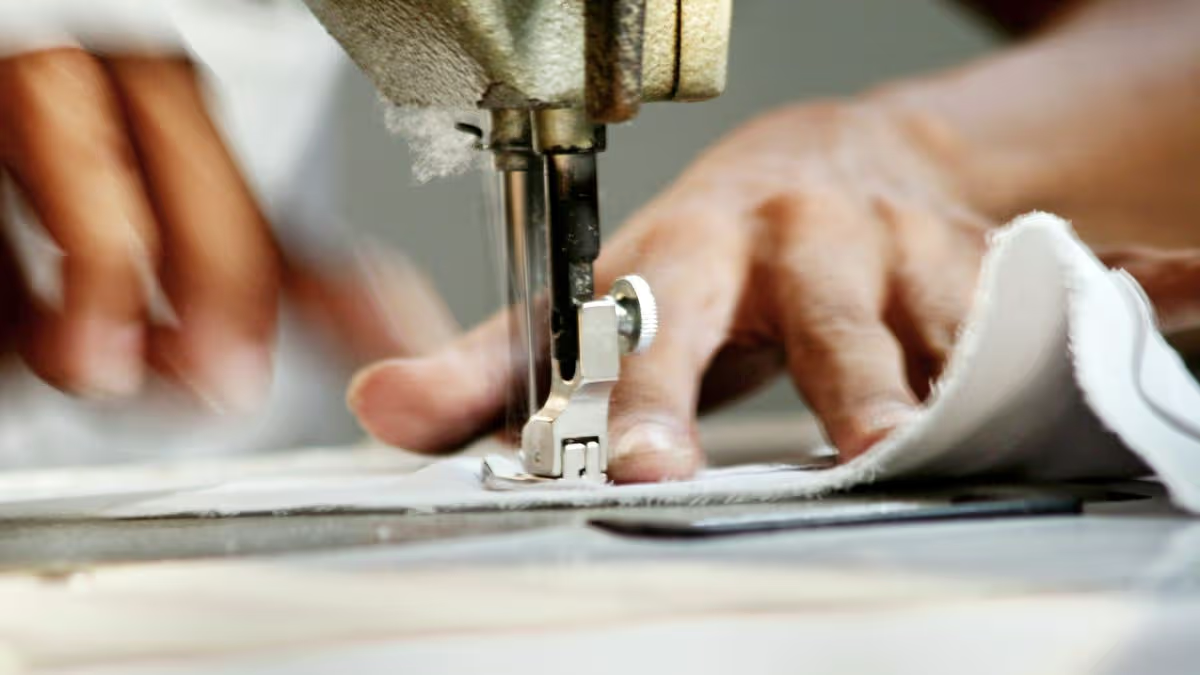
What makes this closure particularly poignant is the loss of a specific kind of industrial artistry. NERO was far more than a simple distributor; it prided itself on being “the only direct workwear manufacturer in the Aberdeen area.” This was a firm of makers. Their website spoke of a “truly unique” service, where designers and a manufacturing team worked to create garments with a focus on “design, functionality, durability and comfort.” They offered not just standard-issue uniforms, but a bespoke, “made-to-measure” service, crafting coveralls and protective equipment tailored to the unique specifications and safety needs of industrial clients. This level of customization represented a deep understanding of the working lives of their customers, from offshore rigs to construction sites. Furthermore, services like embroidery, heat-seal branding, and laser logos meant they also clothed community identity, providing uniforms for schools and sports clubs, stitching local emblems onto the region’s fabric.
The human cost, while quantified in the official figure of eight redundancies, carries a weight that numbers alone cannot convey. These were not just jobs lost; they were skilled positions in design, manufacturing, and customer service—roles built on accumulated knowledge of fabrics, safety standards, and client relationships nurtured over years. For the employees, the liquidation represents a profound disruption, forcing them to seek new paths in an economic environment that has proven harsh for their former specialty. The auctioning of business assets and the return of the premises to the landlord are the sterile, procedural bookends to a narrative filled with personal uncertainty. The quiet dignity of the company’s final statement, acknowledging the difficulty of the situation, does little to soften the blow for those who now face the daunting task of rebuilding their careers.
In an era dominated by fast fashion and globalized supply chains, the fall of a manufacturer like NERO signifies something more than just another corporate failure. It marks the erosion of local, integrated production capability. The company’s comprehensive in-house process—from design and fabric cutting to sewing, branding, and distribution—provided a level of agility and quality control that offshore bulk orders cannot replicate. Their closure diminishes the ecosystem for local industry, removing a responsive partner that could swiftly adapt to the specific needs of North-east businesses. The range of sectors they served, extending to aviation, shipping, military, and the public sector, highlights how a specialized local manufacturer can become a versatile and trusted community resource, a role that is exceptionally difficult to replace.
Ultimately, the shuttering of North East Rig Out is a story of resilience finally meeting an insurmountable tide. For over forty years, the company adapted and endured, stitching its legacy into the safety and identity of countless workers and organizations. Its end was not due to a lack of skill or dedication, but to economic currents far beyond its control, highlighting the vulnerability of even the most robust small-to-medium enterprises when foundational industries struggle. As the doors close for the final time, what remains is the memory of a business that was, in its own words, “second to none” in its craft. Its passing leaves a void not only in Aberdeen’s industrial landscape but also in the very idea of local, hands-on manufacturing—a reminder that behind every corporate liquidation statistic are skilled hands, community ties, and a quiet pride in workmanship that is increasingly rare.