


Here is a humanized and expanded summary, structured into six paragraphs.
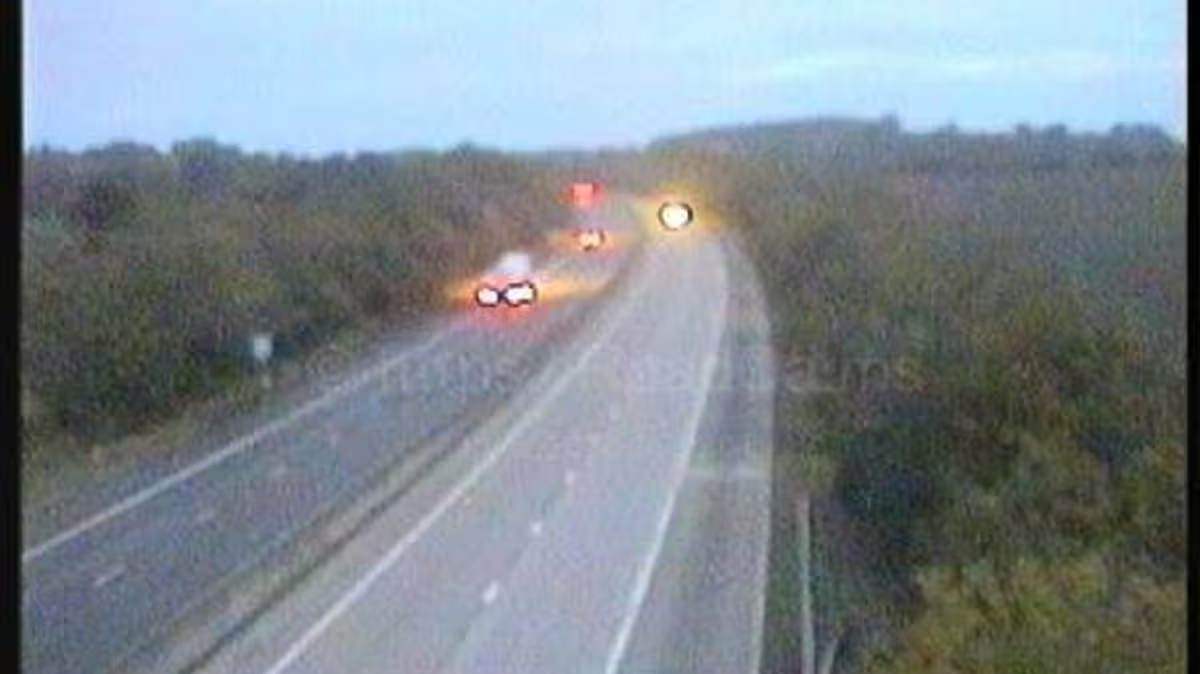
A quiet, pre-dawn Friday on the M54 motorway in Shropshire was shattered by a serious collision, leading to the significant closure of a major stretch of this key UK roadway. The incident, occurring in the early hours of 15th May, involved a vehicle leaving the carriageway. Such events, while statistically recorded as “incidents” or “collisions,” are profoundly human moments of crisis—a sudden departure from the normal flow of life and travel that transforms a routine route into a site of emergency response. The M54, typically a conduit for commerce, commuters, and families, instantly became a place where the priorities of safety, investigation, and care superseded all movement.
As a direct result, eastbound traffic on the M54 is now confronted with a closed road between Junction 3 at Albrighton and Junction 2, which serves Wolverhampton. This closure is not a minor inconvenience; it represents a substantial disruption to a vital artery in the West Midlands’ transport network. For drivers, this means cancelled plans, delayed deliveries, missed appointments, and the sudden need to recalibrate their entire morning. The economic and personal ripple effects of such a closure are immediate and widespread, affecting countless individuals who depend on the predictable rhythm of the motorway for their daily lives.
At the scene, officers from the local police force and likely other emergency services are now present. Their work is multifaceted and critical. First and foremost, they attend to the urgent human needs arising from the collision—the medical care, the support, and the safeguarding of all involved. Concurrently, they begin the meticulous process of securing and investigating the scene to understand the cause of the crash. This forensic work is essential not only for any potential legal proceedings but also for preventing future tragedies. Their presence also manages the practical reality of the closure, ensuring the area is safe for their work and that no further harm occurs.
To manage the inevitable disruption, a diversion route has been swiftly established and put into place. The implementation of such a diversion is a complex logistical task, requiring coordination to steer a high volume of traffic—including heavy goods vehicles—onto alternative roads that are often less capable of handling such density. While this route provides a necessary pathway, it inevitably leads to increased congestion on local roads, longer journey times, and heightened stress for drivers navigating unfamiliar or less suitable routes. The diversion is a testament to the system’s ability to respond, but it also underscores the fragility of our interconnected transport network when a key link is suddenly broken.
For the public seeking information, the advice is to follow the latest updates in the provided live blog. This point highlights the modern reality of crisis communication. In such dynamic situations, details evolve: the extent of injuries, the estimated duration of the closure, the specific nature of the diversion, and ultimately, the cause of the incident. A live blog serves as a central, updating source of truth, combating speculation and misinformation. It provides weary drivers with the knowledge to make informed decisions, and it offers a community concerned about the event a window into the ongoing response. This transparency is a crucial part of managing the societal impact of the incident.
Beyond the immediate facts of closure, diversion, and response, this event is a sobering reminder of the vulnerability inherent in our high-speed travel. Every such incident on our motorways is a story with profound human roots—of a person or people who began a journey they did not complete as intended. It underscores the constant balance between the efficiency of our road networks and the absolute imperative of safety. As the investigation proceeds and the motorway eventually reopens, the hope will be for a full recovery for those injured and for lessons to be learned that might make this vital stretch of road, and all others, safer for everyone who depends on them. The true summary of this content is not just in traffic updates, but in this deeper human and systemic context.