

Here is a summary and humanization of the content, structured into six paragraphs.
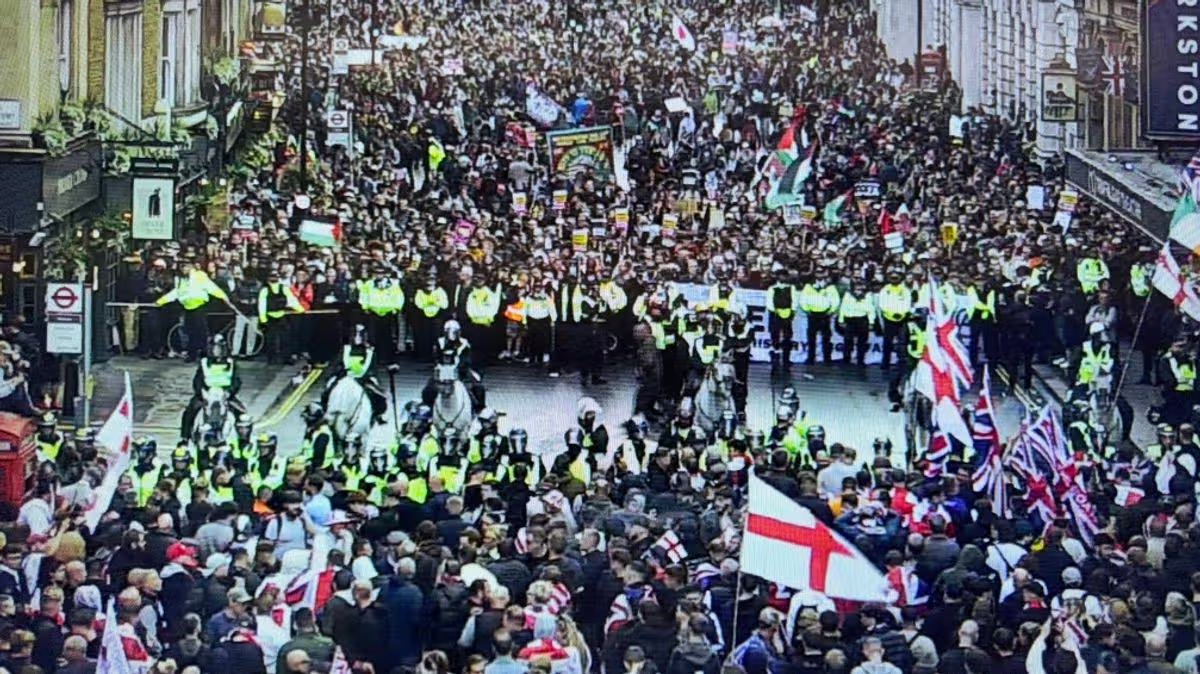
On Saturday, London is set to experience a significant test of public order as two major marches with opposing ideologies are scheduled to occur. The day will see a pro-Palestine demonstration commemorating Nakba Day and a far-right rally organized by Tommy Robinson under the banner “Unite the Kingdom.” This convergence has prompted the Metropolitan Police to prepare for one of their busiest operational days in recent years, deploying around 4,000 officers and implementing strict Public Order Act conditions on both events.
The Nakba Day march, an annual event, marks the displacement of Palestinians in 1948, referred to as the “catastrophe.” This year, participants will gather on Exhibition Road in Kensington for the 78th anniversary. The procession will follow a route through central London landmarks, culminating with speeches and music at Waterloo Place. Organizers have been instructed to disperse by 5:30 PM. Concurrently, the far-right “Unite the Kingdom” march, led by Stephen Yaxley-Lennon (known as Tommy Robinson), will commence on Kingsway. It aims to promote “national unity, free speech, and Christian values” and will proceed through Aldwych, Strand, Trafalgar Square, and Whitehall, ending in Parliament Square. This assembly is also set to conclude by 6:00 PM.
The Metropolitan Police have declared an assertive, zero-tolerance approach to managing the day’s events. Deputy Assistant Commissioner James Harman outlined a comprehensive strategy involving live facial recognition technology, helicopters, drones, police dogs, horses, and armoured vehicles. Dedicated investigative teams will also be present. A key part of this strategy is a new, stricter enforcement policy regarding speakers at such rallies. Organizers are now responsible for ensuring that invited speakers do not use the platform to promote unlawful extremism or hate speech, with both speakers and organizers facing consequences for violations.
In addition to managing the two politically charged marches, police resources will also be stretched by the FA Cup Final at Wembley Stadium, which brings tens of thousands of football fans into the city and its own potential risks of disorder. Authorities are particularly mindful of the history of football hooligan groups aligning with causes associated with figures like Tommy Robinson. To preempt trouble, the Home Office has been working to prevent individuals deemed a potential threat to public order from entering the UK for the events.
The police have also committed to a more proactive stance against hate speech and symbols of extremism during the protests. This includes taking action against chants, placards, or banners that incite hatred, support terrorism, or promote anti-Muslim or antisemitic rhetoric. The force is responding to a concerning rise in antisemitism and is determined to clamp down on any criminal expressions of hate during the demonstrations.
This complex policing operation underscores the challenges of maintaining public safety and order in a city hosting multiple large-scale events with conflicting agendas. The Met’s extensive preparations and stringent conditions reflect a determination to prevent violence, disorder, and the spread of hateful ideologies. The outcome of this significant day will depend on the conduct of the participants and the effectiveness of the police’s robust, multi-faceted strategy.