



Italy has once again affirmed its status as a global titan of coastal tourism, with the Foundation for Environmental Education (Fee) awarding a remarkable 525 of its coveted Blue Flags to the nation’s beaches in 2026. This prestigious recognition, celebrated at a ceremony in Rome, underscores Italy’s enduring commitment to combining natural beauty with exemplary environmental standards. The Blue Flag is far more than a badge for pristine water; it is a holistic certification that considers waste management, sustainable services, accessibility, and educational initiatives. With this year’s haul, Italy now proudly flies 11.6% of all Blue Flags awarded worldwide, a testament to a concerted, nationwide effort to protect and promote its breathtaking coastline. The announcement brought both continuity and change, welcoming 14 new locations to its ranks while seeing three municipalities, including San Felice Circeo in Lazio, not reconfirmed.
The regional competition for these symbols of excellence tells a story of a country where coastal virtue is widespread yet fiercely contested. Liguria retains its crown as Italy’s Blue Flag champion, with 35 awarded locations, bolstered this year by the new entries of Andora and Taggia. Close behind, the southern regions of Puglia and Calabria are in a vibrant tie at 27 flags each. Calabria’s impressive growth, adding four new beaches, highlights its rising star, while Puglia maintained its count by balancing new entries with exits. Campania and Marche hold steady with 20 flags apiece, and Tuscany joyfully rejoins this tier thanks to the recognition of Monte Argentario. Further enriching the picture, the awards also honour 87 tourist ports and 23 lakes, keeping landlocked regions like Trentino Alto Adige (12 lake sites) and Lombardy (4) firmly on the sustainability map.
This outstanding achievement is no happy accident. As Claudio Mazza, president of Fee Italia, emphasized, it is the direct result of rigorous, forward-thinking planning by local municipalities. To earn a Blue Flag, communities must demonstrate a four-year record of “excellent” water quality—a standard even stricter than national law requires. But the evaluation digs much deeper, scrutinising recycling programs, the promotion of green mobility like bicycle paths and pedestrian zones, services for visitors with disabilities, and the careful stewardship of natural heritage. Perhaps the most transformative element has been the adoption of Sustainability Action Plans. These documents shift the Blue Flag from a static award to a dynamic, ongoing method of governance, ensuring that the commitment to environmental and social responsibility is baked into long-term policy, not just seasonal preparation.
The new class of 2026 offers a thrilling tour of Italy’s diverse shores. Calabria shines with four newcomers: Amendolara, Montegiordano, Falerna, and Locri. Liguria’s new flags in Andora and Taggia solidify its northwestern Riviera. Sicily celebrates the inclusion of Ispica and the Aeolian island of Lipari, while Puglia adds Morciano di Leuca and Tricase to its glittering Salento peninsula. Beyond these, the list reveals delightful surprises: the iconic resort of Rimini in Emilia-Romagna earns its place through dedicated environmental recovery; Limone sul Garda brings the honour to Lombardy’s Lake Garda; Sardinia’s Teulada joins the ranks; and Tuscany’s rugged Monte Argentario peninsula is rightfully acknowledged. Each new flag tells a story of local pride and diligent work, opening new destinations for conscious travellers to explore.
While celebration is in order, the very process of annual renewal ensures that the Blue Flag is a living, evolving standard. The non-reconfirmations of Patù and Castrignano del Capo in Puglia, alongside San Felice Circeo, serve as a poignant reminder that the award must be continuously earned. This mechanism is crucial to the credential’s integrity, preventing complacency and fostering a healthy, ongoing competition among localities to not only reach but sustain high standards. It encourages a perpetual cycle of assessment and improvement, benefiting residents and tourists alike. The goal is not merely to count flags, but to cultivate a lasting culture of sustainability that permeates every aspect of coastal management.
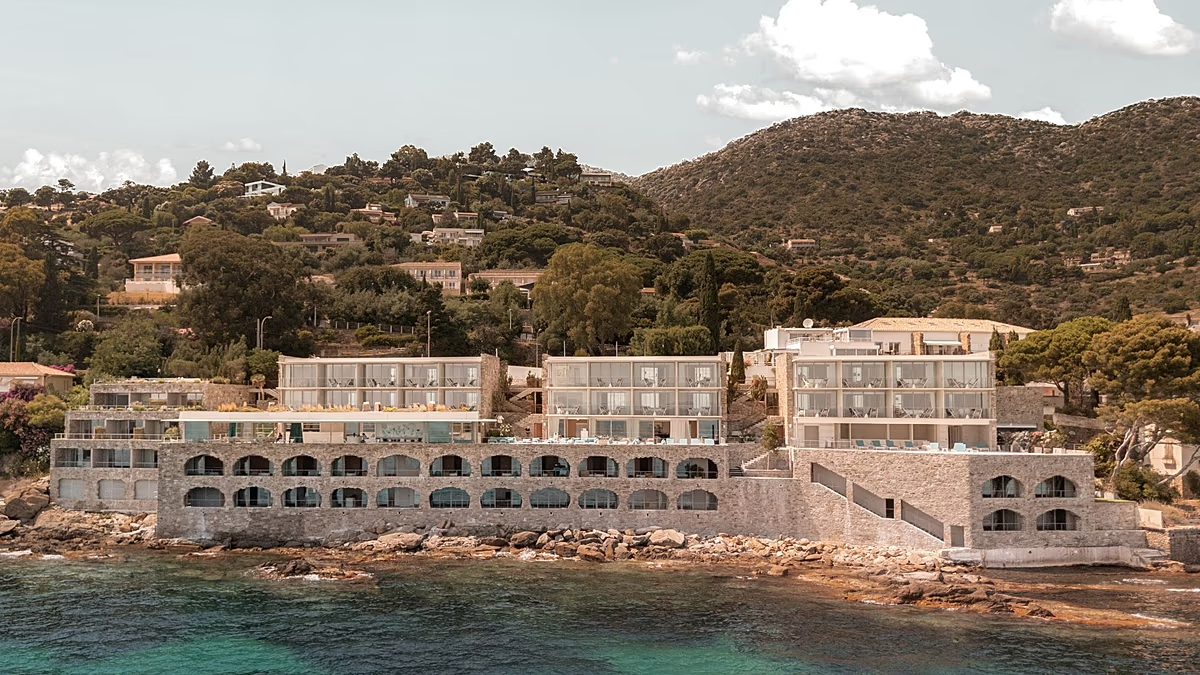
Ultimately, Italy’s 525 Blue Flags in 2026 paint a picture of a nation deeply invested in its future. This is not just about tourism economics, though that is a significant benefit; it is about a collective decision to honour and protect the majestic seaside landscapes that form an indelible part of the Italian identity. From the crystalline coves of Sardinia to the dramatic cliffs of Liguria, from the serene lakes of the north to the vibrant beach culture of the south, the Blue Flag serves as a reliable guide for travellers seeking beauty paired with responsibility. It signals places where communities have chosen to act as stewards, ensuring that the lapping waves, clean sands, and natural splendour that have captivated visitors for centuries will be preserved for generations to come.