


A Life Lost to a Single Blow: The Tragic Death of Marcus Carpenter
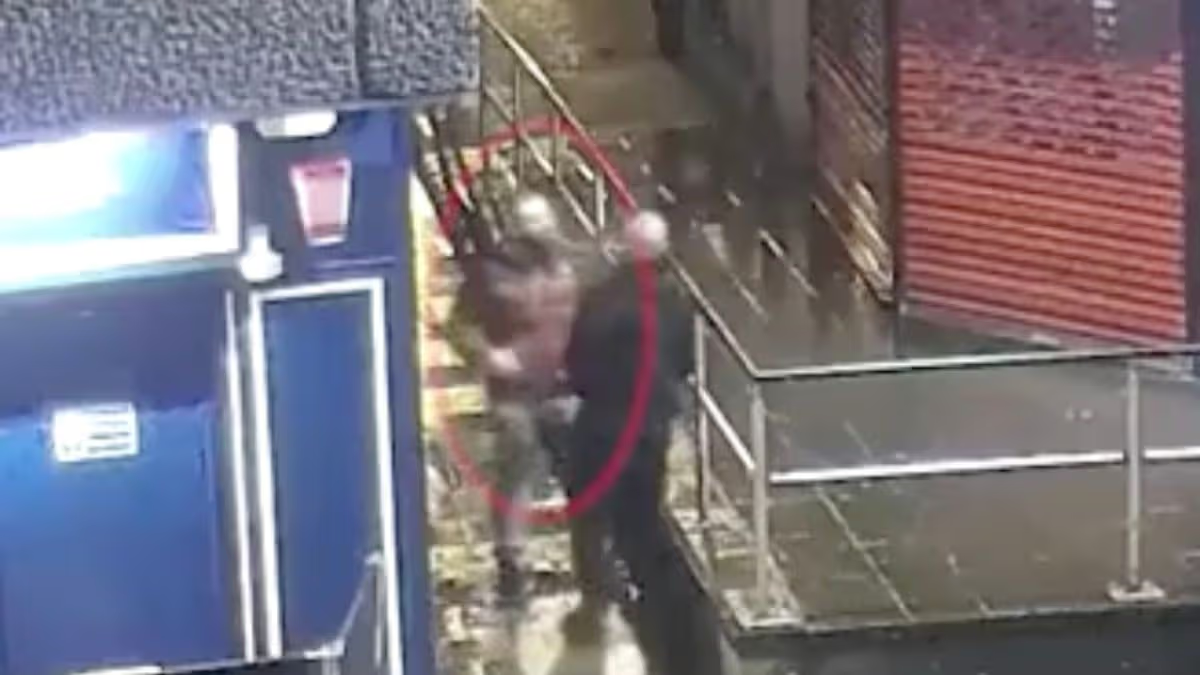
The stark, grainy footage from a CCTV camera captures a moment that irrevocably altered countless lives. Outside the Picture House pub in Ebbw Vale, Gwent, Kyle O’Callaghan, 30, approaches Marcus Carpenter, 37, with a seemingly innocuous question: “Do you want to come outside and have a word with me a minute?” This chilling invitation, played later to Newport Crown Court, was the prelude to a fatal act of violence. What followed was not a conversation, but an unprovoked assault that ended Carpenter’s life. O’Callaghan, who pleaded guilty to manslaughter, has now been sentenced to ten years and six months in prison, with an extended licence period of four years, for his actions on the night of February 21st. The footage reveals the horrifying sequence: after leading Carpenter to an alleyway, O’Callaghan punched him in the face. Even after several minutes of talk, when Carpenter tried to walk away, O’Callaghan grabbed his fleece and delivered a second, devastating punch. The court heard that Carpenter, with his arms passively by his side, was then struck by a final, “fatal, sickening blow” to his head.
The evening had begun ordinarily. Both men were at the Wetherspoon pub with separate groups of friends. The catalyst, according to the court, was O’Callaghan’s perception of a grievance. He had heard that Carpenter had been saying things about him to others—a claim whose truth was never substantiated. Judge Daniel Williams noted O’Callaghan’s tendency to be “very quick to think that you’ve been wronged by others.” This perceived slight, brewing in O’Callaghan’s mind, led him to approach Carpenter’s table around midnight, recognize a friend of Carpenter’s, and then confront Carpenter directly with an aggressive, “who are you then?” Despite there being “no bad feeling” apparent between them, Carpenter followed O’Callaghan outside. Judge Williams stated unequivocally that O’Callaghan was “spoiling for a fight” and “felt disrespected,” his behavior turning “overbearing, aggressive and intimidating” towards a man who showed no hostility.
The aftermath of the assault was as callous as the attack itself. After delivering the blows that would prove fatal, O’Callaghan did not call for help. Instead, as Carpenter lay collapsed from his severe head injuries, O’Callaghan attempted to drag his body and even slapped him before fleeing the scene entirely. His subsequent actions further demonstrated a refusal to accept responsibility. When police arrived at his home to arrest him, separate body-worn footage captured O’Callaghan attempting to escape through a bedroom window. Later, he claimed to officers that he had acted in “self-defence,” alleging that Carpenter had been aggressive—a claim the evidence comprehensively contradicted. Judge Williams condemned this response, stating, “Your selfishness seems limitless. You claimed at first to be acting in self-defence – it was, of course, nothing of the sort.”
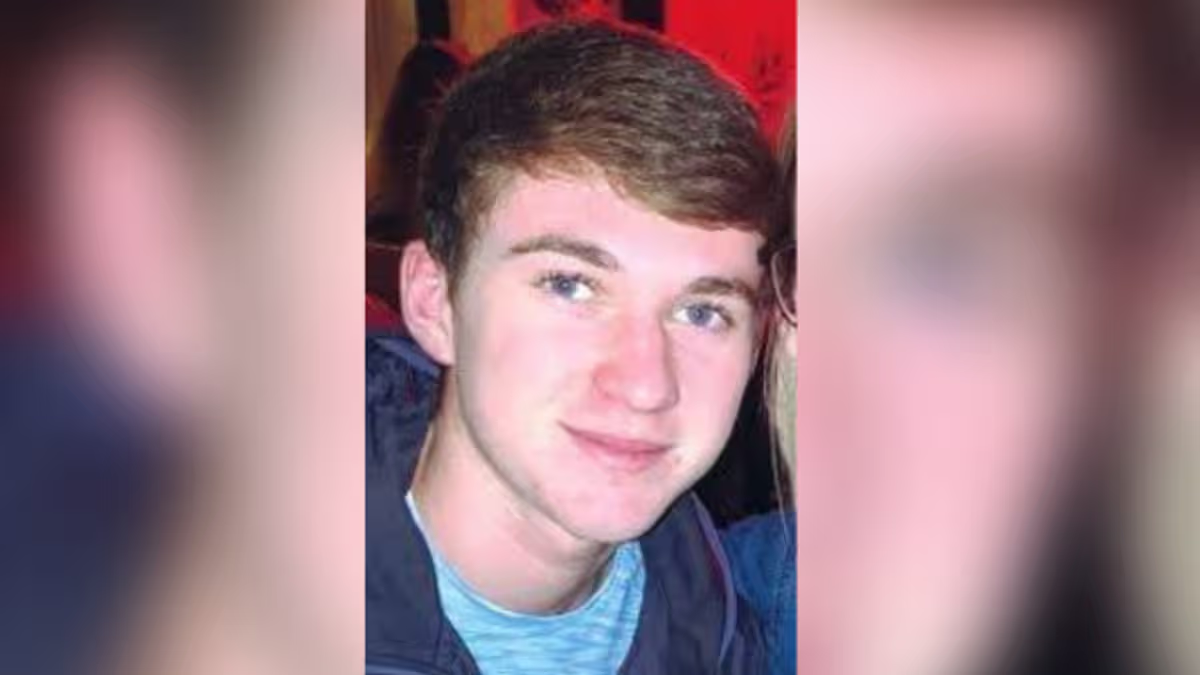
Marcus Carpenter was pronounced dead in hospital on February 24th. His death transformed him from a living man into a case number, a victim, and a memory. But he was so much more. In a heartfelt tribute, his family sought to reclaim his humanity from the brutality of his end. They described him as a “beloved son, partner and dad,” a person of character and warmth. “Marcus was one of a kind with the kindest of hearts who would help anyone out he could,” they said. “His passing has left a massive hole in the lives of everyone close to him.” This portrait—of a helpful, kind-hearted individual—stands in tragic contrast to the image of him as a defenseless victim on CCTV. His life, full of connections and love, was abruptly erased, leaving only unimaginable grief for those who knew him.
Judge Williams’ sentencing remarks directly addressed the profound and permanent damage caused. “Your actions have caused unimaginable grief, loss and sadness,” he told O’Callaghan. This grief is the true, enduring sentence for the family and friends of Marcus Carpenter, a sentence without end. The ten-and-a-half-year prison term for O’Callaghan represents a measure of societal justice, but it cannot fill the “massive hole” left in a family, or restore a father to his children, or return a partner to his loved one. The tragedy underscores a devastating truth: a single moment of unchecked aggression, driven by misplaced pride and a readiness for violence, can annihilate a lifetime of kindness and extinguish a future.
This case, beyond the legal specifics of manslaughter and sentencing, serves as a grim societal reflection. It highlights the catastrophic consequences when perceived disrespect is met with physical retaliation, when dialogue is replaced with fists, and when a person’s life is valued less than another’s momentary anger. The CCTV footage, the police footage, and the courtroom testimony together narrate a story of senseless loss. It is a story where a man with “the kindest of hearts” followed another man outside for a word, and instead received a fatal blow, leaving a community to mourn and ponder the fragile nature of safety and the irrevocable cost of a single, sickening punch.