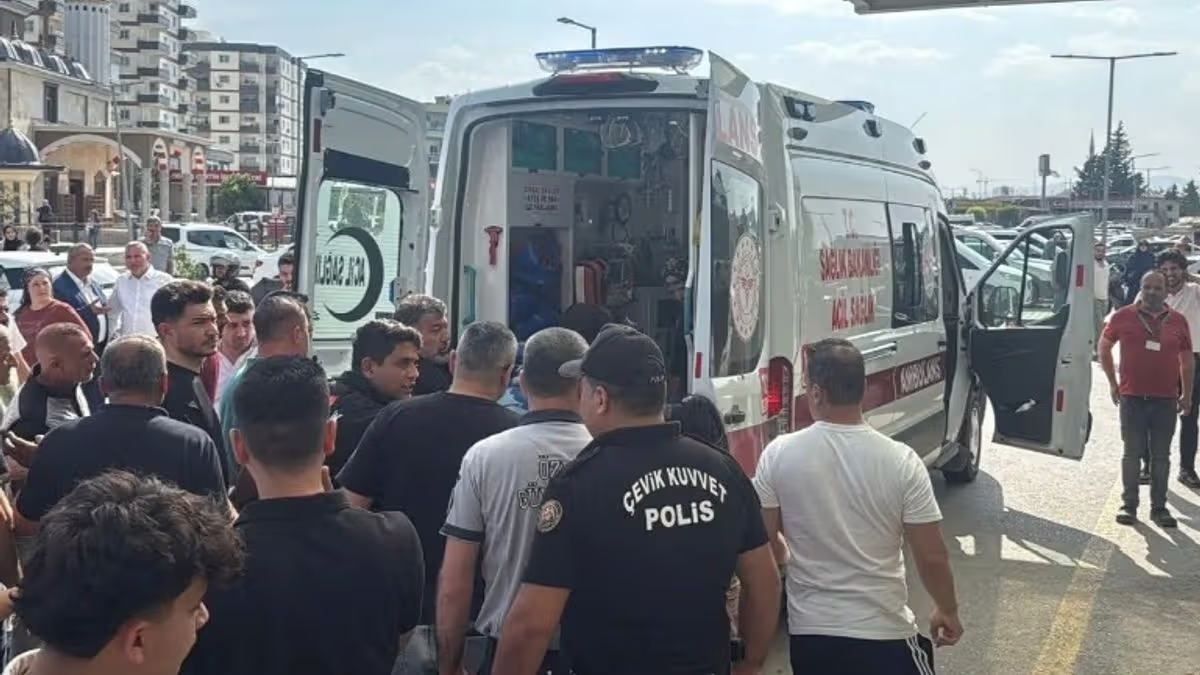




A profound sense of shock and grief has descended upon the sun-drenched town of Tarsus, a historic community in southern Turkey’s Mersin province, after a day of horrific violence left four people dead and seven wounded. The day, which began like any other, was shattered by a sudden and brutal act that has shaken the community to its core. According to local media and authorities, the catalyst for this tragedy appears to be a grim and personal vendetta, with initial reports indicating the suspect first killed his ex-wife with a rifle. This initial act of domestic violence spiraled into a rampage, as the gunman, fleeing in his car, turned the streets into a scene of terror. His path of destruction led him directly to a local restaurant in the Kadelli Neighborhood, where he callously opened fire through his car window at patrons and staff simply going about their day, transforming a place of community and nourishment into one of chaos and bloodshed.
The attack at the restaurant was not an isolated moment of violence but the beginning of a terrifying flight that stretched across the town. As the suspect sped away from the initial horror, his rampage continued along his escape route. In a series of seemingly indiscriminate attacks that underscore the profound randomness of the tragedy, he reportedly shot and killed a shepherd quietly tending to his flock and a lorry driver simply going about his work. These victims, unrelated to the shooter’s initial motive, highlight the devastating collateral damage of such violence, cutting short innocent lives in moments of utter normalcy. The final death toll, a somber accounting of lives ripped away, included the restaurant’s owner and an employee, men who were likely serving their community one minute and fighting for their lives the next. Emergency services, their sirens piercing the afternoon air, flooded the multiple crime scenes, working swiftly to transport the seven wounded to nearby hospitals while security forces established wide cordons.
In the immediate, harrowing aftermath, the streets of Tarsus and the surrounding region transformed from scenes of tragedy to a massive, coordinated security operation. Turkish police launched an intensive, large-scale manhunt, determined to apprehend the armed and dangerous fugitive before he could inflict further harm. The search leveraged significant resources, with helicopters taking to the skies to scan the area from above, their rhythmic thrum a constant reminder of the ongoing peril. On the ground, police meticulously monitored traffic along major highways, setting up checks to intercept the suspect’s vehicle. In a testament to modern policing techniques, drone teams were also deployed, scouring harder-to-reach areas in a technologically aided effort to locate the gunman. This multi-layered response, spanning land and air, reflects the seriousness with which authorities are treating the manhunt, all while a traumatized community holds its breath.
As the manhunt presses on, the human cost of the attack comes into sharper, more heartbreaking focus. Behind the stark numbers—four dead, seven injured—lie individual stories, families shattered, and a community grappling with an unbearable loss. The victims were not statistics; they were neighbors, breadwinners, and friends. The restaurant owner and his employee represented the backbone of local small business, their establishment a fixture in the neighborhood. The shepherd and the lorry driver symbolize the quiet, essential labor that sustains daily life. Each person wounded carries not just physical scars but the deep psychological trauma of having survived a sudden, lethal attack. The community of Tarsus, a town steeped in ancient history, now finds itself united in a very modern kind of anguish, bound together by grief, fear, and a desperate search for answers amidst the senselessness.
While the immediate focus remains on the urgent manhunt, profound and difficult questions loom over this tragedy. The incident painfully underscores the deadly intersection of personal conflict—specifically domestic violence and gender-based violence, as suggested by the reported targeting of the ex-wife—and the broader public safety threat posed by readily available firearms. The shooter’s ability to escalate a private grievance into a public massacre, harming so many unrelated innocents, will inevitably lead to serious discussions about intervention protocols, support systems for those at risk, and firearm regulations. For the residents of Tarsus, the trauma will not end with an arrest. The healing process will be long, marked by funerals, vigils, and the slow, painful return to a daily life forever marked by the memory of this day.
As night falls on a wounded Tarsus, the region remains on high alert, with police efforts continuing unabated. The collective hope of a nation is pinned on a swift and safe conclusion to this manhunt, to ensure no further lives are lost. Yet, even when the suspect is apprehended, the work for Tarsus will only be beginning. The path forward will require immense resilience from its people, sustained support for the victims’ families and the wounded, and a communal commitment to healing. This event is a stark reminder of the fragility of peace and the devastating impact when violence erupts without warning in the heart of a community. The story of May 18, 2026, in Tarsus is now one of tragedy, a somber chapter in the town’s long history that its residents will bear together as they seek to rebuild their sense of security and peace.