


Of course. Here is a summary and humanized version of the content, structured into six paragraphs.
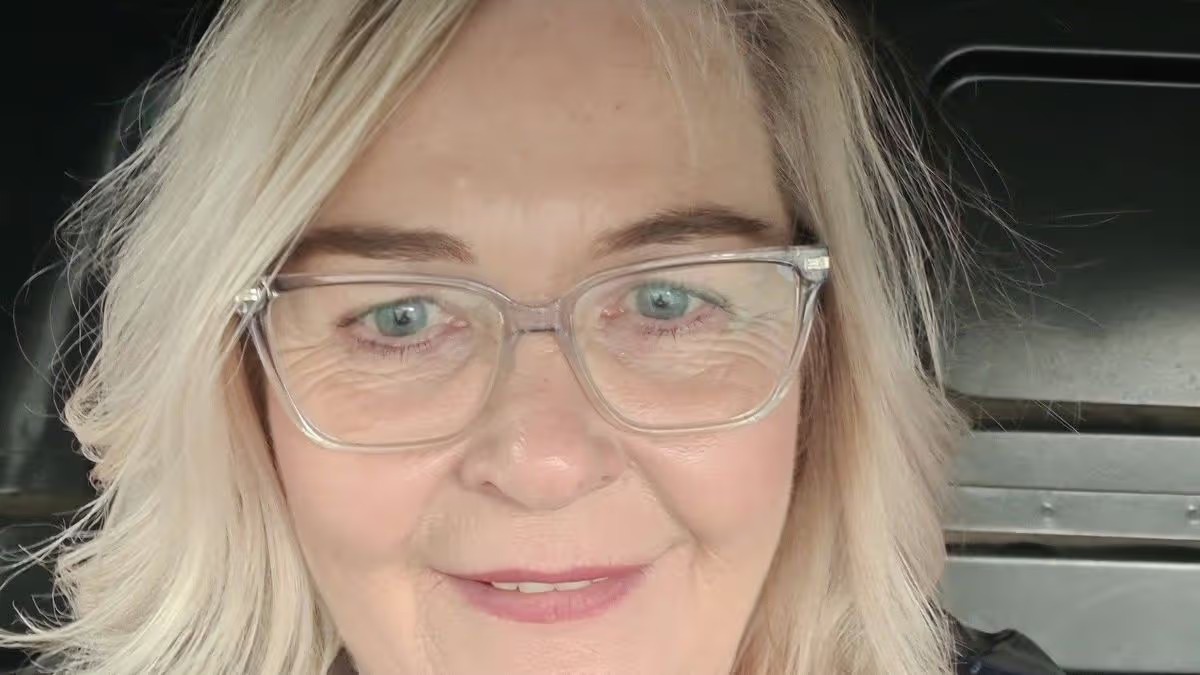
Brenda Young’s world shattered last November as she sat by her mother’s bedside, witnessing the final moments of a complex illness. In the midst of that profound grief, a new, physical agony erupted. The 57-year-old felt an intense and overwhelming pain seize her chest, so severe she was rushed to the hospital. While her family was consumed by loss, Brenda was gripped by a frightening and confusing medical crisis, initially suspected to be a heart attack. It was a devastating double blow, mourning her mother while confronting a sudden threat to her own life.
The diagnosis, however, was something far less commonly understood. Brenda was told she had suffered an attack of Takotsubo Syndrome, often called broken heart syndrome. Caused not by a blocked artery but by a severe, stress-induced weakening of the heart muscle itself, the condition fittingly manifests from intense emotional trauma. For Brenda, the trigger was heartbreakingly literal: the shock and sorrow of losing her mother. Like thousands of others, mostly women, affected in the UK each year, she faced a frightening reality with no clear path forward, left to wonder, “What on Earth is that?”
Brenda’s experience highlights a critical gap in cardiac care. While the immediate symptoms of Takotsubo can mirror a heart attack, and the long-term risks of death, stroke, or heart failure are similarly grave, there are no proven, standardized treatments. Patients are often left in a precarious limbo, managed with medications intended for other heart conditions but without concrete evidence for their own. This uncertainty is compounded by the condition’s growing recognition, with diagnosis rates increasing five-fold over the past decade, yet no therapies specifically designed to prevent its often-debilitating recurrences.
Determined to forge a path where none existed, Brenda is now stepping into a role that could change countless lives. She is participating in the world’s first large-scale clinical trial aimed at finding a treatment for Takotsubo Syndrome. This groundbreaking study, spearheaded by Professor Dana Dawson of the University of Aberdeen, will bring together nearly 1,000 patients from across the UK to test whether a common class of heart medications, known as RAS inhibitors, can prevent further attacks and improve long-term survival.
The trial represents a beacon of hope for a patient community that has long been underserved. For over 15 years, Professor Dawson has worked to unravel the mysteries of this syndrome, and this study is a pivotal step toward translating research into real-world care. The goal is clear: to provide doctors and patients with an evidence-based treatment plan, ending the current cycle of uncertainty and offering a chance for those with broken heart syndrome to reclaim their health and quality of life.
Brenda’s participation is driven by both personal resolve and a desire for collective healing. By joining this trial, she is transforming her own moment of profound vulnerability and loss into an act of strength and contribution. Her story underscores the very real, physical toll of emotional trauma, while her action embodies the hope that from the depths of personal heartbreak can emerge the seeds of medical advancement, potentially sparing others from the same painful journey.