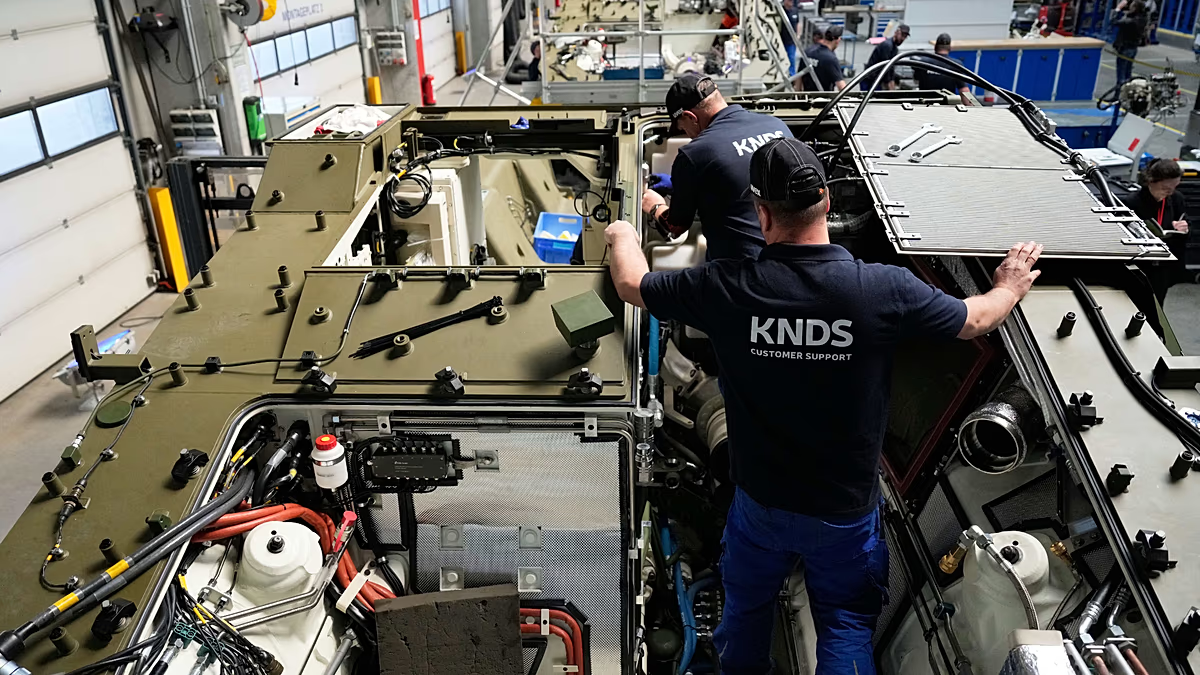


The European Union is engaged in a critical and urgent effort to transform its defense industrial base, a process thrust into sharp focus by the twin catalysts of Russia’s war in Ukraine and the uncertain future of transatlantic security under a potential return of Donald Trump to the White House. This urgency culminated in a high-stakes meeting in Brussels this week, where representatives from the Commission, Parliament, and member states convened to finalize the “Defence Readiness Omnibus.” This package of legislative measures, proposed a year ago, aims to slash bureaucratic red tape, boost transparency, and supercharge domestic arms production. The goal is unambiguous: to enhance Europe’s ability to deter aggression and respond autonomously to crises. However, the negotiations have exposed a deep and persistent tension between the imperative for greater European integration and the cherished sovereignty of national governments over their defense procurement and industrial policies.
The geopolitical backdrop to these talks is stark. EU foreign policy chief Kaja Kallas has warned that Russia is preparing for a long-term confrontation, and that NATO’s credibility is the only true deterrent. From within the bloc, a diplomatic source candidly admitted, “We aren’t procuring what we have pledged and Russia sees weakness,” highlighting empty stockpiles and unfilled orders. The industry itself has pleaded for consistency and fewer delays, with the Commission acknowledging authorization processes that can take up to a year. The Omnibus, born from consultations with over 34 defense companies, is the direct response. Its three key files seek to streamline joint procurement, simplify access to the European Defence Fund, and create predictable rules for industry. While Cypriot negotiators express hope for a deal before their presidency ends in June, others caution about “many open issues,” underscoring the complex path ahead.
Central to the difficulty is a seemingly technical but profoundly political issue: eligibility criteria. The Commission’s proposal incentivizes projects involving at least three member states, a design meant to foster collaboration. This, however, clashes with national preferences. France traditionally advocates for stricter “European preference” rules, while nations like Poland seek more variety and flexibility. The core conflict is over sovereignty. Diplomatic sources stress that tightening criteria could “have an impact on the sovereignty of member states,” and that determining what constitutes a sensitive product is a national prerogative the Commission cannot simply remove. This debate underscores a fundamental challenge: how to build a cohesive, efficient European defense industrial policy while respecting the distinct security interests and industrial landscapes of 27 sovereign nations.
The need for this policy shift is quantified in the latest European Defence Agency report, which shows defense spending soaring to €343 billion, a 19% increase driven by geopolitical shifts and Trump’s calls for higher NATO spending. Yet the report also identifies the roadblocks: “legitimate industrial interests, bureaucratic complexity, protracted decision-making.” It calls for more collaboration and less fragmentation—the very aims the Omnibus seeks to achieve. Negotiators like Danish MEP Henrik Dahl express cautious optimism, noting potential compromise on a transparency register and a single point of contact for industry. However, he warns that some files are moving “really slowly,” and with warnings that Russia could test NATO by the end of the decade, he insists, “We have to be ready by 2030 now. Each day counts.”
Even if a trilogue agreement is reached, the journey is far from over. The package would then need approval from the European Parliament and finally from all 27 member states in the Council. The question of timing looms large over every discussion. European Commissioner for Defence Andrius Kubilius has framed the challenge not just as meeting current needs, but as preparing for future wars through radical innovation. The Omnibus is thus a first, foundational step. The breakthrough reported on permit-granting is a positive sign, but the lingering headache over eligibility criteria proves that aligning continental ambition with national sovereignty is the most delicate part of the puzzle.
In essence, the Brussels negotiations represent a microcosm of Europe’s broader strategic dilemma. The bloc recognizes an existential need to integrate, streamline, and produce for its own security in a more unpredictable world. Yet every step toward that goal must navigate the deeply entrenched sovereignty of its member states, particularly in the sensitive realm of defense. The Omnibus is a test case for whether the EU can operationalize its political will into a functioning, unified industrial base. The outcome will determine not just the efficiency of its procurement forms, but the credibility of its deterrence and its capacity to ensure its own security in the coming, challenging decade.