
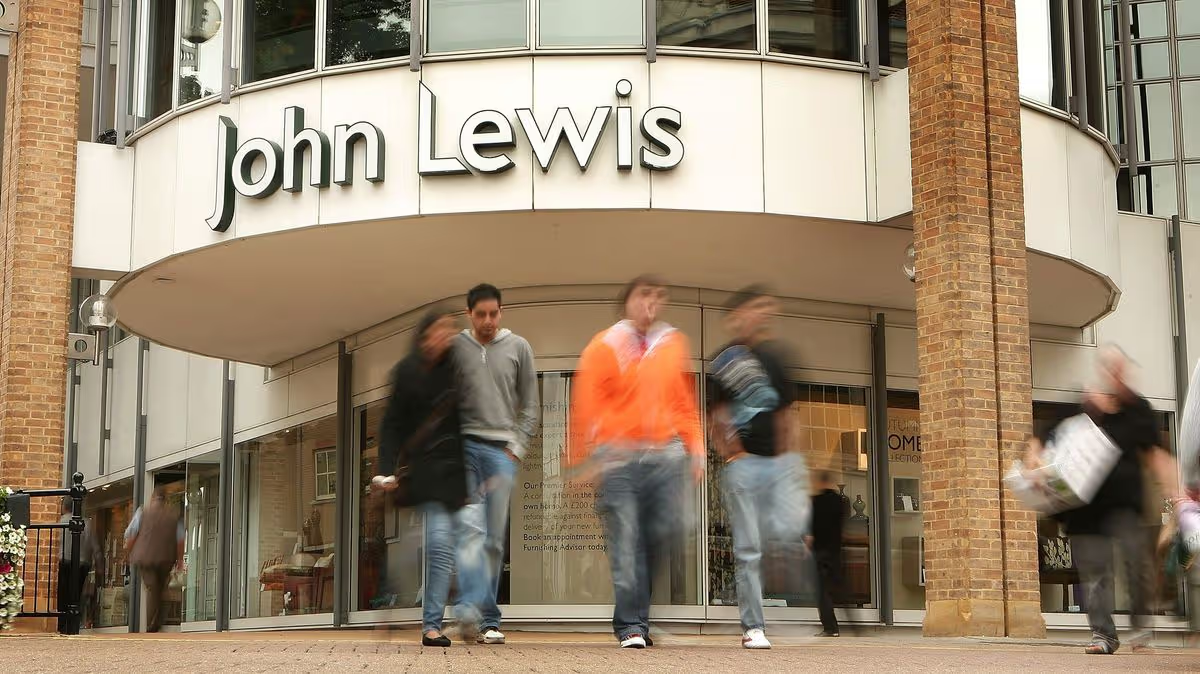



In the frenzied lead-up to the Black Friday sales of 2025, a familiar chorus of dramatic price slashes and unbeatable deals filled advertisements, promising relief to consumers grappling with a persistent cost-of-living crisis. However, in a sobering ruling issued in May 2026, the UK’s Advertising Standards Authority (ASA) has revealed that for several major high-street and online retailers, these promotions were built on a foundation of fiction. The regulator found that John Lewis, Boots, Debenhams, and the online retailer Very all employed misleading pricing tactics in their Black Friday campaigns, artificially inflating original prices to make discounts appear far more substantial than they truly were. This systematic practice, which the ASA declared “not what they appeared to be,” betrays consumer trust at a time when genuine value is most desperately sought.
The investigations, powered in part by AI-powered monitoring tools, dissected specific advertisements with damning precision. John Lewis, a brand synonymous with trust and its “Never Knowingly Undersold” pledge, was found to have overstated savings on two laptop promotions. One ad offered a MacBook Air for £699, claiming a £150 saving from a usual price of £849. The ASA found this higher price had been the established selling price for just one single day in July, making the Black Friday “saving” largely illusory. Similarly, a claimed £450 drop on an ASUS laptop lacked evidence of being a genuine saving against its usual price. For Boots, a Hugo Boss fragrance advertised as reduced from £80 to £60 was problematic because the £80 price point had only been maintained for 21 days after launch before being lowered. These tactics create a false benchmark, manipulating the consumer’s perception of value and urgency.
The problem extended beyond individual products to broader promotional claims. Debenhams, operating on a marketplace model with third-party sellers, ran ads boasting “44% off” home products and “21% savings” on various items, including a hair styler. The ASA ruled these claims were misleading, as the advertised original prices against which these percentages were calculated did not reflect a genuine, sustained selling history. Meanwhile, Very faced separate rulings following complaints from the consumer champion Which?, with the ASA banning ads for misleading reference prices and associated savings claims. Collectively, these cases paint a picture of a retail environment where the “deal” itself has become a product, often crafted more through creative pricing history than through actual, meaningful price reductions.
In response to the rulings, the implicated retailers offered explanations that ranged from apologies to deflection. John Lewis expressed regret for “two errors,” attributing them to the intense price-matching activity during Black Friday, which they claim caused the inaccuracies to be overlooked. Boots described its case as an “individual case of human error” amidst over 20,000 discounted products, emphasising its otherwise robust compliance measures. Debenhams shifted responsibility to its third-party sellers, stating that while it does not control their pricing, it would reinforce guidance to ensure compliance. These statements, however, did little to satisfy critics. Which? head of consumer protection policy, Sue Davies, condemned the actions as “unacceptable,” arguing that the current system remains “not fit for purpose” and calling for the government to tighten laws to outright ban deceptive pricing practices.
The ASA’s actions and the subsequent commentary underscore a critical tension in modern retail. Emily Henwood, ASA Operations Manager, stated unequivocally that promotional events like Black Friday are “not exempt from the rules.” The regulator’s clear expectation is that advertisers must hold and be able to demonstrate evidence that any promoted discount represents a bona fide saving against a product’s usual selling price. This ruling is a direct challenge to the pervasive practice of “was/now” pricing, where a brief, inflated price is used to legitimise a prolonged “sale.” It signals a move towards greater accountability, enforced by increasingly sophisticated monitoring technology that can track pricing histories across the internet.
Ultimately, this scandal strikes at the heart of the fragile covenant between retailer and consumer, especially potent during periods of economic strain. When trusted household names employ deceptive tactics, it erodes confidence not just in individual promotions, but in the very mechanism of the sale. For shoppers, the ASA’s message is one of caution: the allure of a dramatic percentage off should be met with healthy skepticism. For the retail industry, the ruling is a stark warning that regulatory scrutiny is intensifying. In an era where value is paramount, transparency must become more than a buzzword; it must be the non-negotiable foundation of every price tag and every promised deal. The true test will be whether this enforcement leads to lasting change or merely more sophisticated methods of illusion.