

Europe’s Moment of Strategic Uncertainty
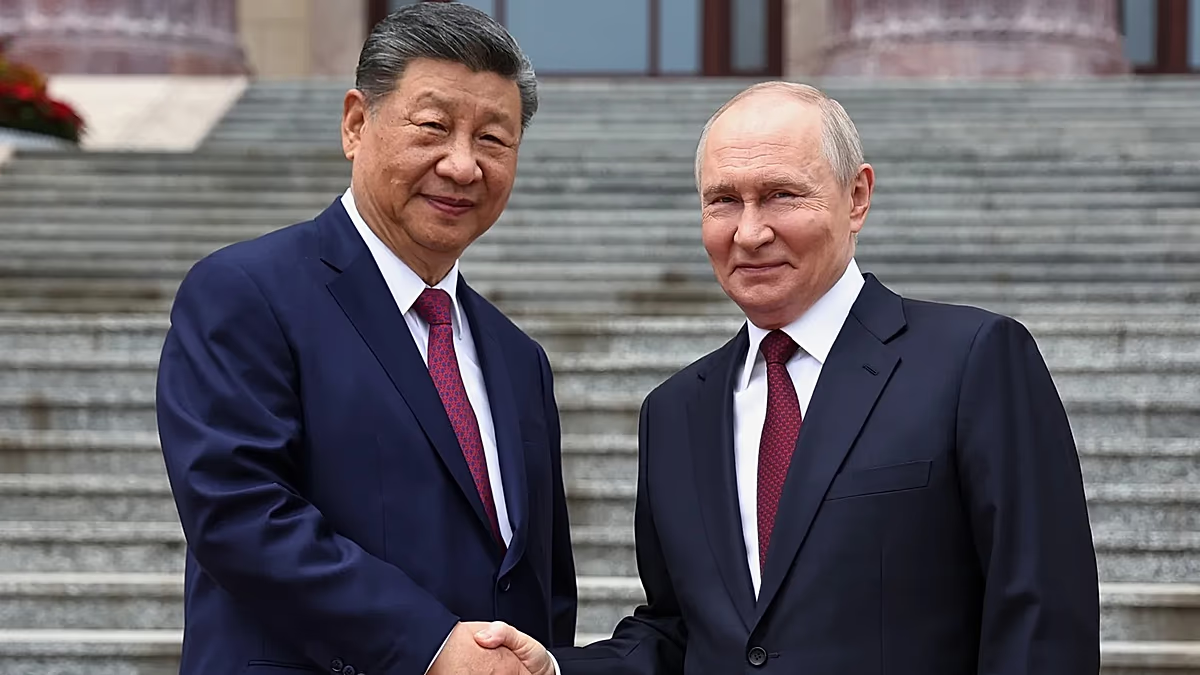
Europe is grappling with a profound and unsettling question that challenges decades of post-Cold War assumptions: Can it still rely on others, particularly the United States, for its fundamental security? This once-unthinkable doubt has been forced to the forefront by Russia’s invasion of Ukraine, conflicts in the Middle East, and the intensifying rivalry between the U.S. and China. In a world increasingly defined by raw power and competition rather than rules-based cooperation, the European Union feels exposed and vulnerable. A growing sentiment across capitals, captured by former Italian Prime Minister Mario Draghi, is that Europe is now “truly alone together,” navigating a new era of strategic unease without its traditional anchor.
The Drive for Self-Reliance: Spending and Planning
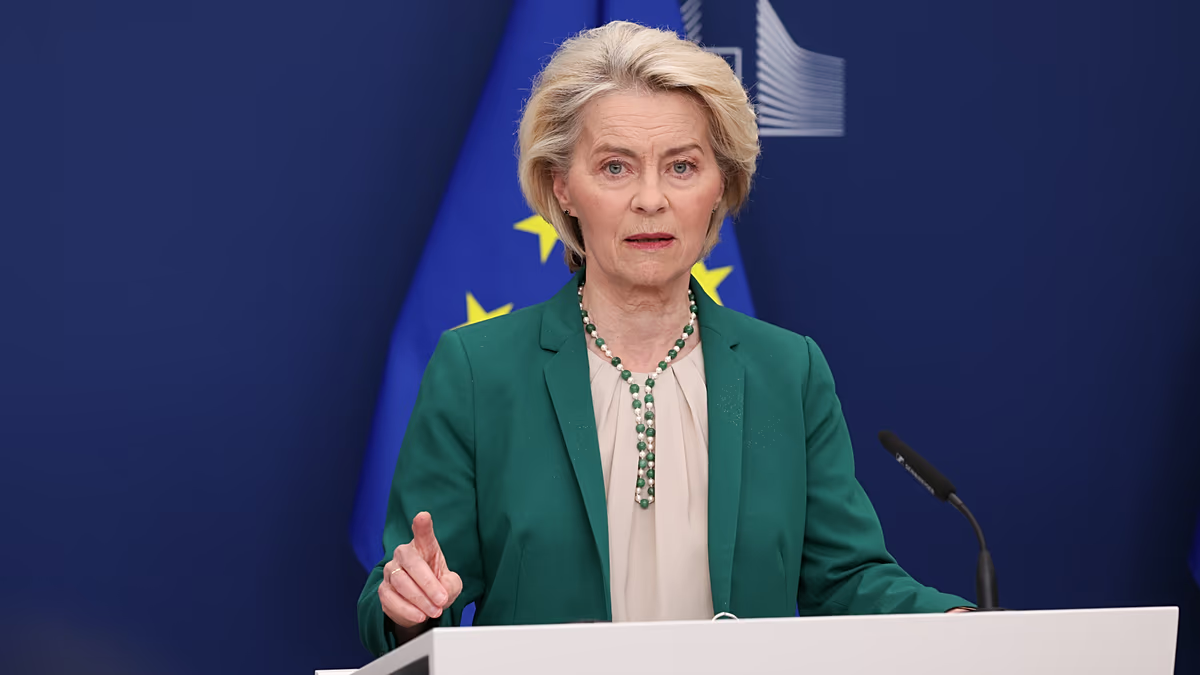
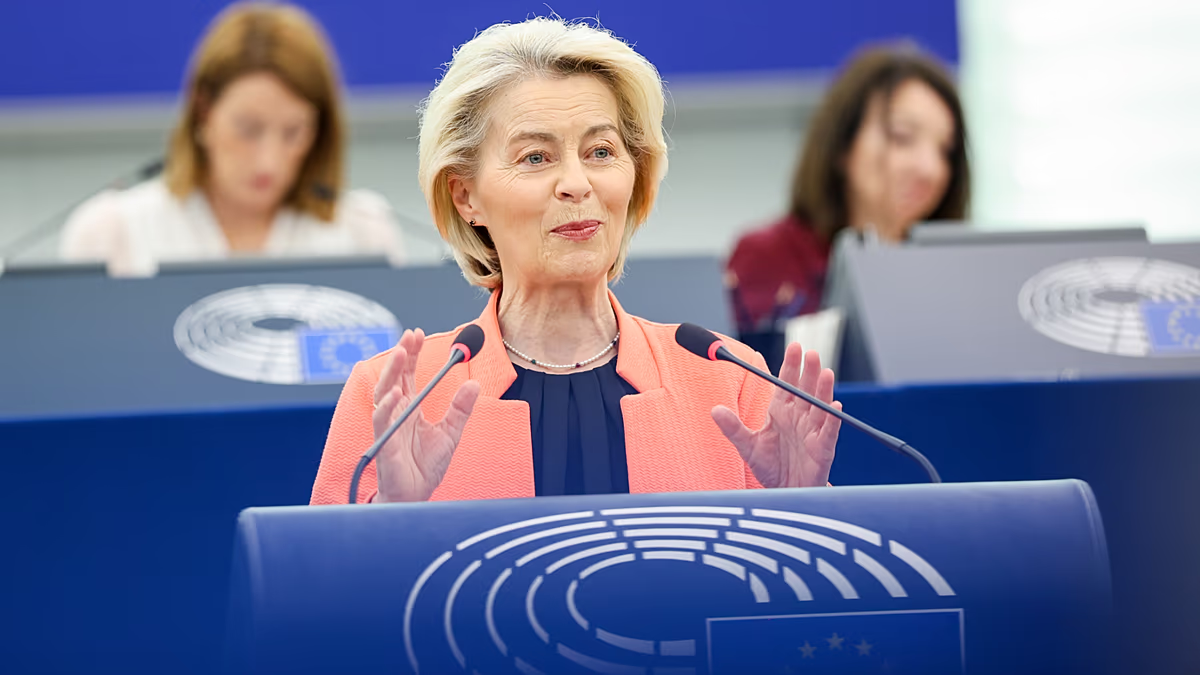
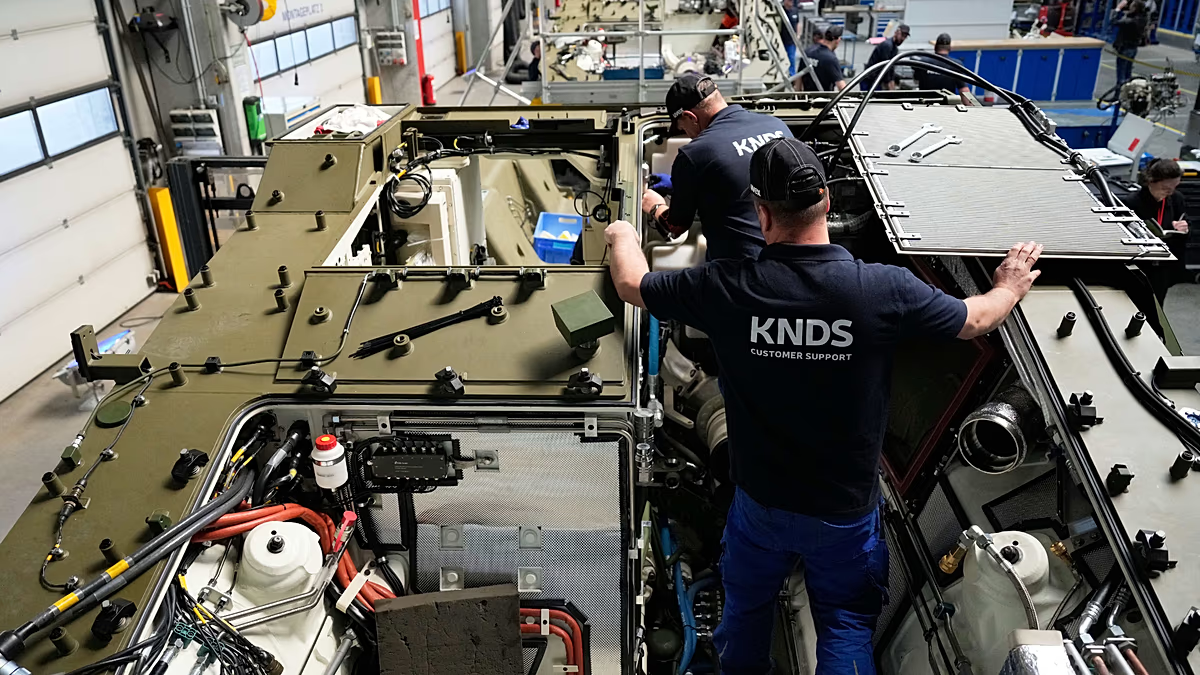
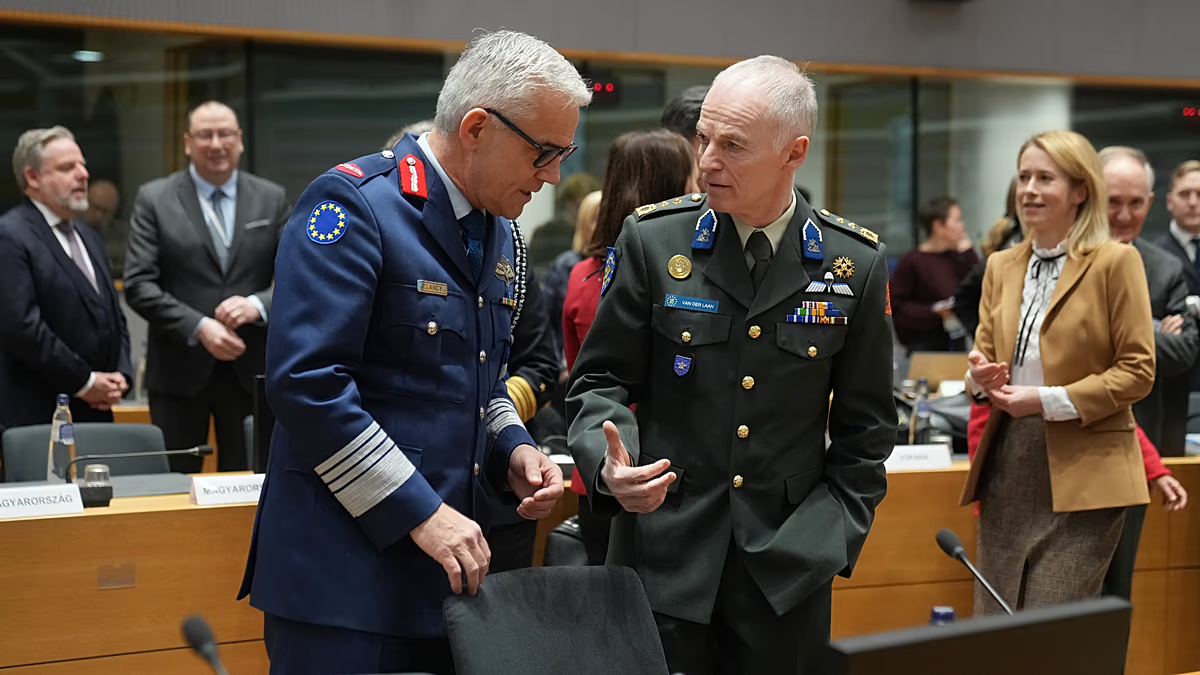
This reassessment is most visibly transforming European defense budgets. Since 2022, member states have significantly increased military spending, with combined expenditures reaching approximately €739 billion this year. Nations like Germany and France are allocating vast sums, while countries on NATO’s eastern flank, such as Poland, are moving even faster—spending over 4% of GDP on defense amid direct fears of Russian aggression. This marks a decisive break from post-Cold War military restraint. Beyond spending, the EU is actively planning for greater autonomy through initiatives like its Readiness 2030 plan, which aims to unlock hundreds of billions in defense investment via joint procurement and industrial expansion. The vision includes proposals for a European Defence Union, a “Military Schengen” for troop movement, and long-term projects like a European Air Shield, reflecting an ambition to treat security as a shared continental responsibility.
The Erosion of the Transatlantic Anchor
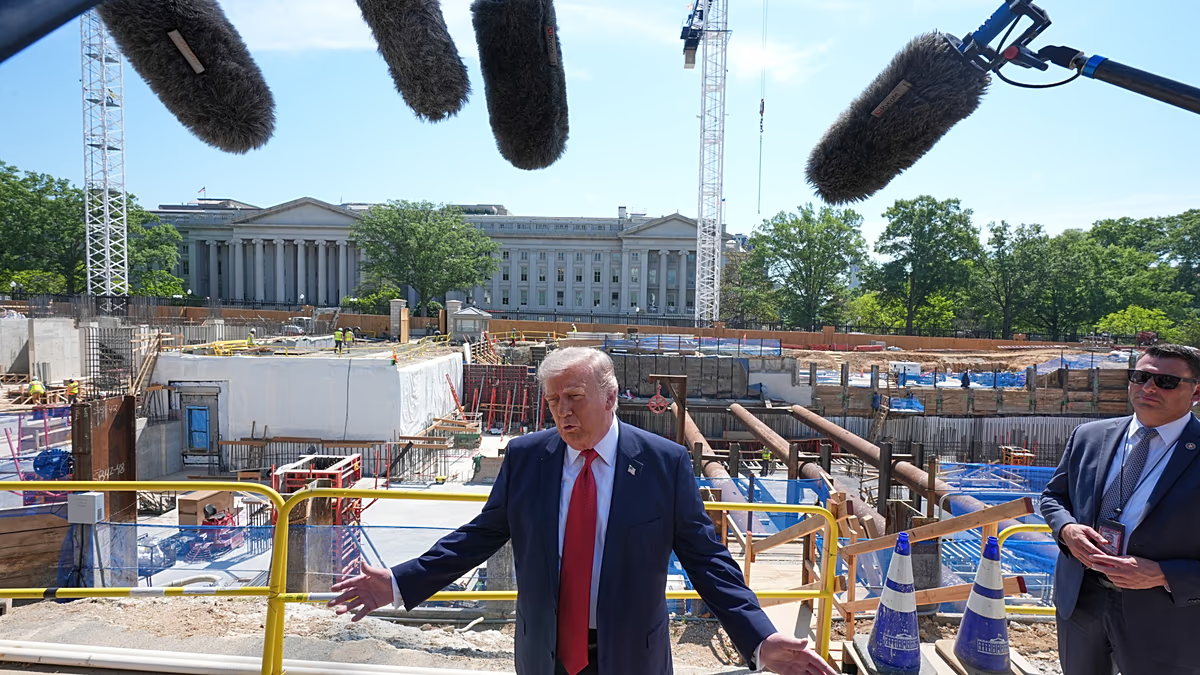
This shift is being urgently driven by a second, more structural change: deepening uncertainty over the United States. For generations, European security rested on NATO and the unambiguous U.S. military guarantee. That assumption is now under strain. Since the advent of Donald Trump’s administration, European leaders have faced a more unilateral and transactional American foreign policy, with Washington making major decisions—from tariffs to diplomatic moves—with limited consultation. This has contributed to a palpable sense in Brussels that the transatlantic relationship is becoming less predictable. The result is not a formal rupture, but a gradual erosion of certainty about U.S. reliability, compelling Europe to rethink its foundational security framework.
Broadening Partnerships and Economic “De-Risking”
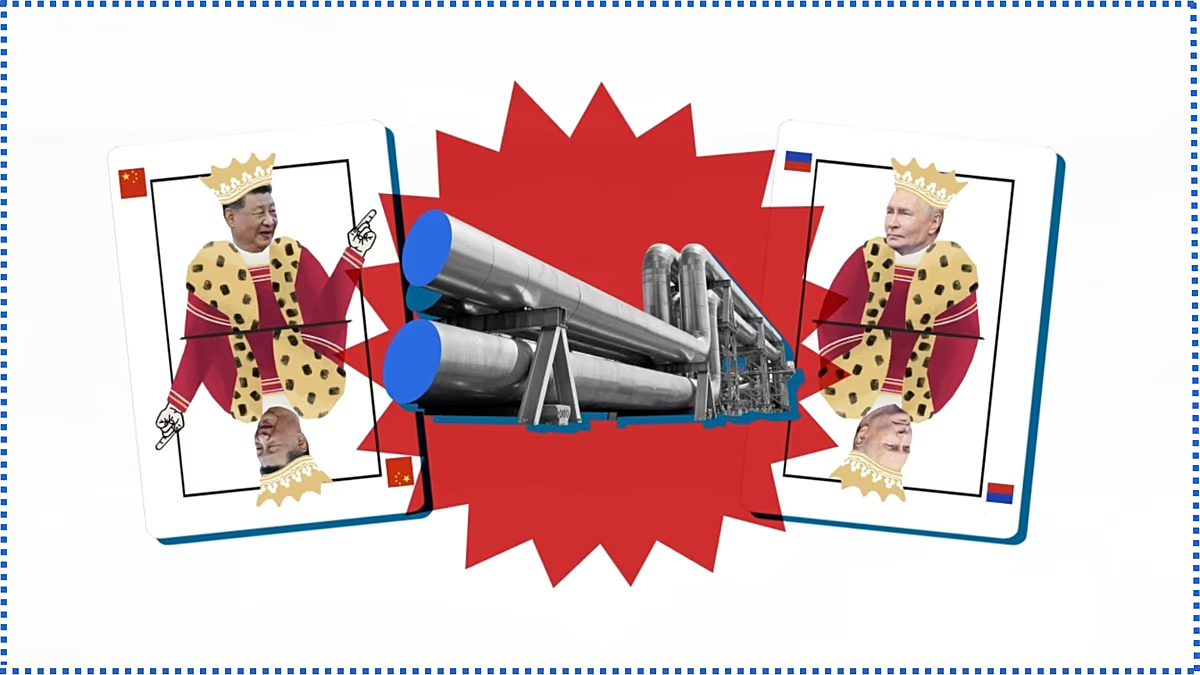
In response, Europe is not only building internal capacity but also expanding its network of defense partnerships beyond the U.S. New agreements, like the EU-Canada Security and Defence Partnership, aim to build a wider coalition of like-minded nations to reduce strategic dependence on any single power. Simultaneously, the EU is grappling with significant economic pressures from both Washington and Beijing, from U.S. tariffs to China’s industrial dominance. Brussels has adopted a strategy of “de-risking”—working to reduce economic exposure to both giants without fully decoupling. This involves actions like removing certain Chinese technology firms from critical infrastructure and bolstering European alternatives in key industries, seeking a more balanced and resilient economic position.
The Challenge of Becoming a Geopolitical Power
Despite these concerted efforts, a fundamental question remains: Can a union historically built around economic integration transform into a credible, independent geopolitical power? Europe remains deeply embedded in a global system shaped by great-power bargaining, often finding itself reacting to initiatives led by others, even on issues like Ukraine where it has provided immense financial support. While moving purposefully—through rising spending, new procurement mechanisms, and expanded partnerships—key military capabilities remain dependent on the U.S., and timelines for full autonomy stretch years into the future. The continent is in a transitional state, no longer able to rely fully on old guarantees but not yet capable of completely replacing them.
A Continent in Transition
The outcome is a Europe navigating a defining condition of strategic uncertainty. In an era of renewed great-power competition, it is a continent caught between its past dependencies and its future ambitions. The collective drive for more integrated defense, economic resilience, and broader partnerships underscores a recognition that Europe must forge its own path to security. While the journey toward true strategic autonomy is long and complex, the direction is clear: Europe is determined to ensure it can defend its own interests in a world where traditional anchors are no longer steadfast. This moment of introspection and action may well define the continent’s role for generations to come.