

Here is a humanized and expanded summary of the provided content, structured into six paragraphs.
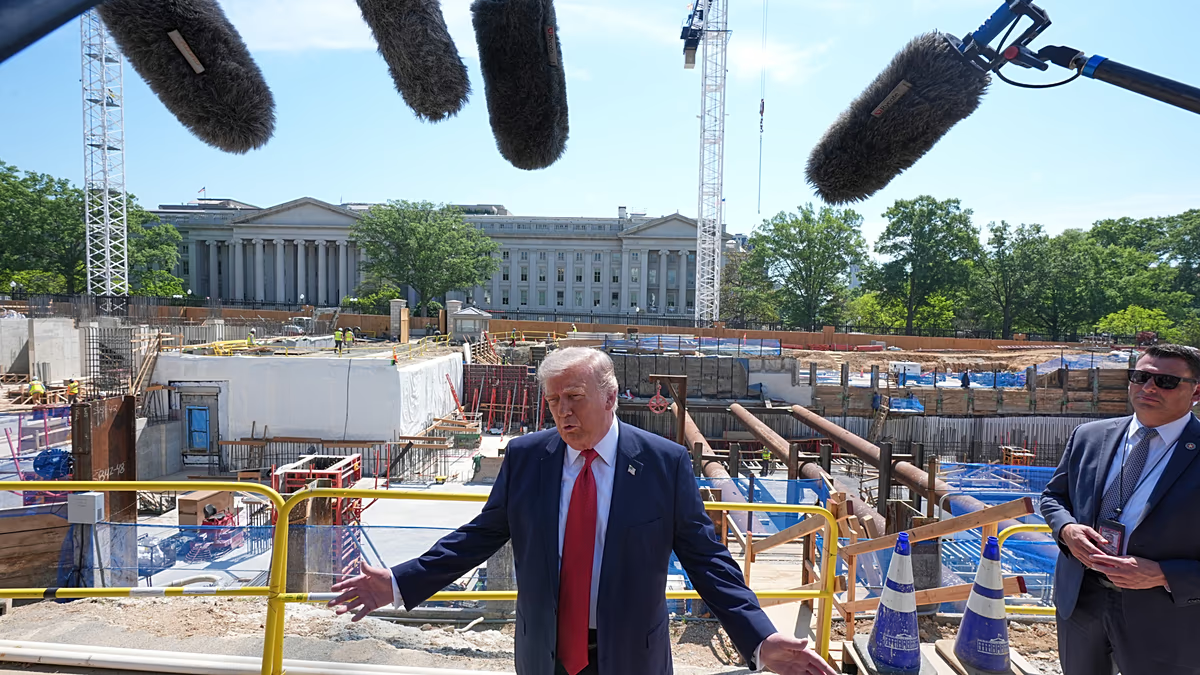
On a Monday in Washington D.C., the city accustomed to political theater witnessed a different kind of performance. Former President Donald Trump visited the bustling construction site of what is slated to become a new White House ballroom—a project he has championed. The scene was a study in contrasts: the dust and raw concrete of an active worksite against the polished suit of a former commander-in-chief. As he walked the grounds, inspecting progress and examining structural details presented to him by workers and managers, the moment felt less like a standard real estate review and more like a strategic appearance, blending his identity as a developer with his enduring political profile. The very act of touring this site, so closely associated with the presidency yet physically separate from the current White House, created a powerful, visual metaphor of his parallel pursuits.
Speaking to gathered reporters with the unfinished skeleton of the building as his backdrop, Trump transitioned smoothly from project foreman to political commentator. He lavished praise on the design, proclaiming the future ballroom to be “one of the most beautiful buildings” ever constructed in the United States—a signature superlative meant to link his personal brand with national grandeur. He was keen to emphasize the project’s funding, noting it was financed through a combination of his own personal wealth and private donations. This detail, likely intended to frame the endeavor as both a personal investment and a publicly-supported civic improvement, served to reinforce his long-standing narrative of self-reliance and direct action, implicitly drawing a distinction with government-funded projects mired in bureaucratic processes.
Yet, as is almost inevitable with Trump, the conversation swiftly expanded beyond bricks and mortar to encompass global bricks and mortar—specifically, matters of war and peace. With the sounds of construction momentarily paused, he was asked about the tense situation with Iran. In response, he offered a glimpse into a critical and controversial chapter of his presidency, revealing that the United States had, at one point, been “close to launching military strikes” against Iranian targets. This admission pulled back the curtain on the high-stakes decision-making that occurs far from public view, where choices of immense consequence hang in the balance. The gravity of such a near-engagement underscored the perpetual shadow of conflict that lingers over international diplomacy.
However, he followed this revelation with a claim that shifted the narrative from brinkmanship to restraint. According to his account, the ordered strikes were deliberately delayed to “allow more time for talks.” This framing is crucial, as it attempts to recast a moment of extreme escalation as one of calculated patience and strategic diplomacy. It presents the decision not as a reversal, but as a conscious choice for peace, appealing to a desire for strong leadership that also seeks to avoid unnecessary war. Whether this account is perceived as a sign of prudent statecraft or unpredictable crisis management depends largely on the observer, but it successfully injected a weighty foreign policy discussion into a day otherwise focused on architectural development.
The entire event—the inspection, the promotional description of the ballroom, and the pivot to weighty geopolitical history—was a masterclass in layered messaging. It seamlessly wove together the threads of Trump’s public persona: the builder creating tangible legacies, the financier using private capital, the president making historic, life-and-death decisions, and the perpetual candidate speaking directly to the press and, by extension, the public. The unfinished ballroom site became more than a construction project; it transformed into a symbolic stage. It represented potential, a work-in-progress, much like his own political future, while allowing him to retrospectively frame his presidential actions in a light of his own choosing.
Ultimately, this Monday visit was a microcosm of the Trump political phenomenon. It demonstrated his enduring ability to command attention and control a narrative, moving effortlessly between the realms of commerce, construction, and command authority. By placing himself against the backdrop of a “beautiful” future project he personally champions, he reinforces an image of visionary action. By recalling a moment where he claims to have pulled the nation back from the precipice of war, he stakes a claim to a legacy of strong, decisive leadership. In just a few hours and a few statements, the line between a real estate development update and a presidential campaign rally became beautifully, and intentionally, blurred.