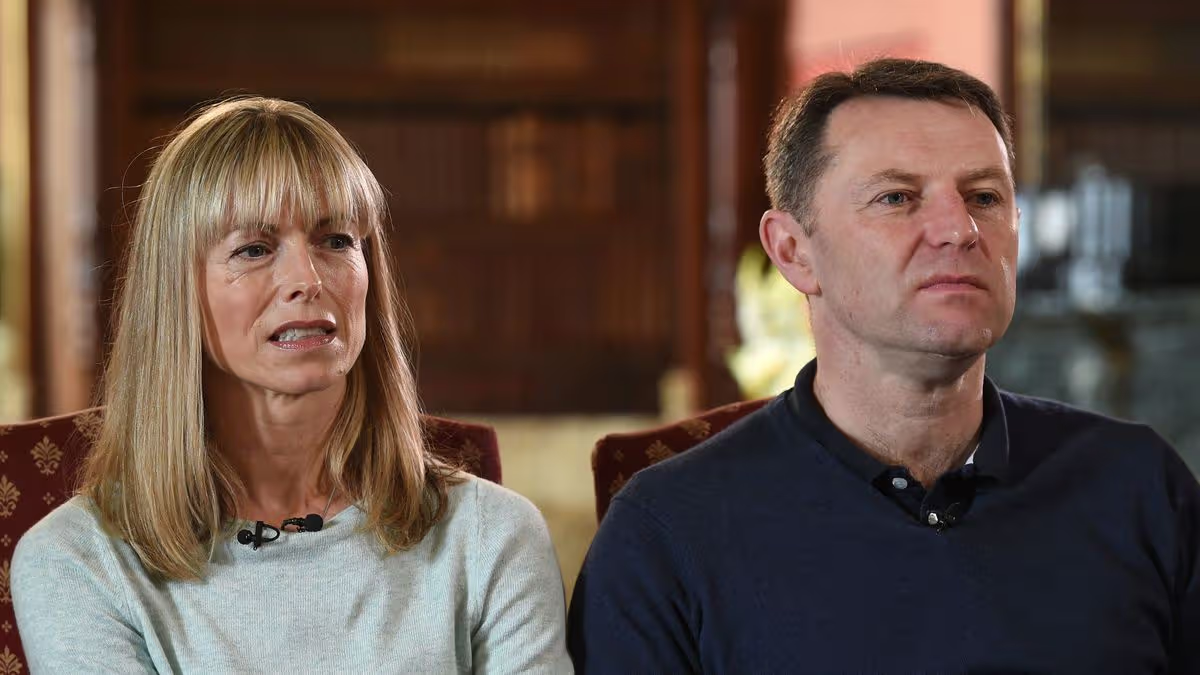




The enduring mystery of Madeleine McCann’s disappearance remains one of the most haunting and widely reported stories of our time. Nearly two decades after she vanished from a holiday apartment in Praia da Luz, Portugal, the case continues to captivate and torment the public consciousness. It is a story marked not only by the profound grief of a family but also by the intense, often brutal, scrutiny of a global media landscape. In May 2026, Channel 5 aired a new docu-drama titled Under Suspicion: Kate McCann, which focused specifically on the period during which Madeleine’s mother was formally treated as a suspect by Portuguese authorities. The programme, dramatising Kate McCann’s interrogation and based on official police materials, sparked immediate and poignant controversy by proceeding without the consultation or consent of the McCann family themselves.
Kate and Gerry McCann responded publicly on the day of the broadcast, releasing a statement expressing their profound disappointment. They clarified that they had “no involvement whatsoever” in the creation of the show and had not been asked for their consent. For a family that has lived for nineteen years under the relentless shadow of their daughter’s disappearance, the month of May is already an intensely painful period, marking the anniversary of Madeleine’s abduction just before her fourth birthday. The announcement of this dramatisation added a fresh layer of distress, with the McCanns stating they fail to see how such a programme could help and warning that productions of this nature “always have a negative impact on our family.” Their message, signed “Kate, Gerry & Family,” was a sober reminder that behind the headlines and dramatisations are real people navigating an unending journey of loss.
The specific historical context the drama explores is a particularly traumatic chapter for the McCanns. Between September 2007 and July 2008, Portuguese police designated both Kate and Gerry as arguidos—official suspects—in their own daughter’s disappearance. This ten-month period of legal suspicion, amidst their desperate search for Madeleine, represented an unimaginable dual ordeal: the agony of a missing child compounded by the scrutiny of being considered potentially culpable. The Channel 5 production, starring Laura Bayston as Kate McCann and helmed by experienced director Paula Wittig, sought to reconstruct this interrogation phase using documentary evidence and recorded testimony. While such frameworks aim for a factual foundation, the ethical dilemma is profound. The translation of a family’s raw, personal tragedy into a dramatic narrative for public consumption risks commodifying their grief and simplifying the complex, human reality of their experience.
The McCanns’ reaction underscores a critical and often overlooked tension within the true crime genre. While public interest in such cases is undeniable, and documentaries can play a role in keeping a story in the public eye, the line between responsible scrutiny and exploitative sensationalism is delicate. When productions proceed without the cooperation or consent of the central families involved, they inherently risk causing further harm. For the McCanns, every re-examination in the media, especially those focusing on the most accusatory periods of the investigation, reopens wounds and potentially distorts the public’s understanding through a lens of entertainment. Their statement is not merely a complaint but a plea for dignity and respect, highlighting that their primary goal remains finding Madeleine, not serving as the subject of dramatic retrospectives.
This incident also raises questions about the responsibilities of broadcasters and creators. Channel 5, which did not publicly comment in immediate response to the McCanns’ statement, and the production team, which included award-winning writer Philip Ralph, undoubtedly operate within a commercial and artistic landscape that finds true crime compelling. However, the ethical calculus must weigh public interest against the demonstrable impact on a family still actively campaigning for answers. The McCanns have endured not only the original tragedy but also years of speculation, conspiracy theories, and invasive media coverage. A docu-drama that isolates and dramatises one of their darkest periods, without their input, can feel like a violation, adding to the “negative impact” they describe.
Ultimately, the story of Madeleine McCann is not a closed case; it is an open wound. The ongoing police investigation and the unwavering efforts of her family through the Find Madeleine Campaign mean this is a present-tense reality, not merely a historical event to be dissected. The disappointment voiced by Kate and Gerry McCann serves as a crucial reminder that behind every sensationalised mystery are individuals whose lives are forever altered. Their grief is not a storyline to be framed into episodes; it is a daily lived experience. As the public consumes narratives about such tragedies, it is essential to remember the human cost and to question whether the pursuit of understanding through drama should ever override the fundamental need for compassion and consent from those who suffer most directly. The McCanns’ dignified response challenges us all to consider where the line between public interest and private pain should truly be drawn.