



Of course. Here is a humanized and expanded summary of the article, structured into six paragraphs.
A recent advertising campaign for a popular French wine has stumbled into a well-established regulatory boundary, highlighting the ongoing tension between creative marketing and responsible messaging in the alcohol industry. The UK’s Advertising Standards Authority (ASA) has ruled that a TikTok video promoting La Vieille Ferme wine—recognizable by its distinctive chicken label—must not be shown again in its current form. The core issue was the advert’s implication that the red wine could offer “emotional support” and other therapeutic benefits, a direct violation of codes designed to prevent the association of alcohol with mental or physical well-being.
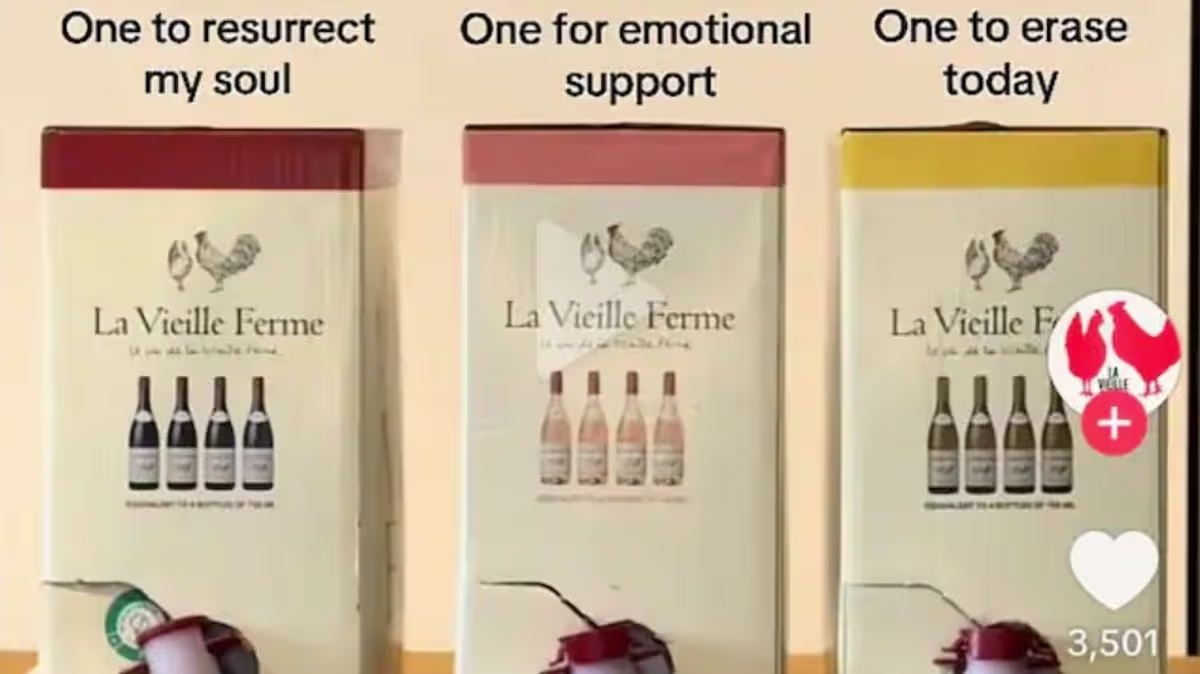
The advert in question, a paid promotion on the social media platform, employed a visually simple yet psychologically charged narrative. It featured three cartons of the wine, each labeled with a provocative phrase: “One to resurrect my soul,” “One for emotional support,” and “One to erase today.” Accompanying text elaborated that maintaining good health depends on factors like “emotional support, personal rejuvenation, and self-care practices.” While perhaps intended as a tongue-in-cheek or stylized representation of winding down after a long day, the messaging landed with a different weight for the two complainants who brought it to the ASA’s attention. They argued that the ad portrayed alcohol as both a mood-altering substance and a potential catalyst for excessive consumption.
This interpretation was firmly upheld by the ASA in its ruling. The watchdog’s analysis dissected the layered implications of the advert’s copy. It concluded that phrases like “resurrect my soul” and “emotional support” clearly suggested the wine could provide emotional benefits and improve one’s mood. Furthermore, it judged that “erase today,” particularly in the context of the other claims, positioned alcohol as a means to cope with difficulty or stress. Crucially, the ASA stated that these combined references implied “therapeutic qualities” and an ability to “change mood,” which is expressly forbidden. The inclusion of a hashtag like #chickenwine alongside text about health dependencies cemented, in the ASA’s view, an impermissible claim that drinking this specific wine positively impacts health and well-being.
The ruling rests on a fundamental principle of the CAP Code, the rulebook for non-broadcast advertising in the UK: alcohol must not be presented as a contributor to good health. This principle exists to counteract deep-seated cultural myths and to prevent the normalization of using alcohol as a coping mechanism. The ASA’s role is to draw a clear line between portraying a product as a pleasant accompaniment to social situations or meals and suggesting it serves as a tool for psychological management or emotional rescue. In this case, the line was deemed to have been crossed, transforming a depiction of casual enjoyment into one of therapeutic utility.
In response to the investigation, both the advertiser and the platform took corrective action. La Vieille Ferme stated that it recognized the concerns raised and had implemented internal improvements to prevent future breaches. Meanwhile, TikTok confirmed that the video had already been removed from its platform for violating its own advertising policies, which typically align with such national regulatory standards. This demonstrates a shared, if sometimes reactive, understanding of the responsible frameworks that govern alcohol promotion, especially on platforms with younger, impressionable audiences.
Ultimately, this incident serves as a contemporary case study in advertising ethics. It underscores how modern, minimalist, and meme-influenced social media content must still navigate traditional but vital regulations designed for public welfare. For consumers, it’s a reminder to view such marketing through a critical lens. For brands, it’s a clear signal that while creativity is valued, it cannot extend into the dangerous territory of suggesting alcohol is a solution for emotional or psychological needs. The banned La Vieille Ferme advert becomes another benchmark in the ongoing effort to ensure that the conversation around alcohol in media remains one of measured enjoyment, not false promise.