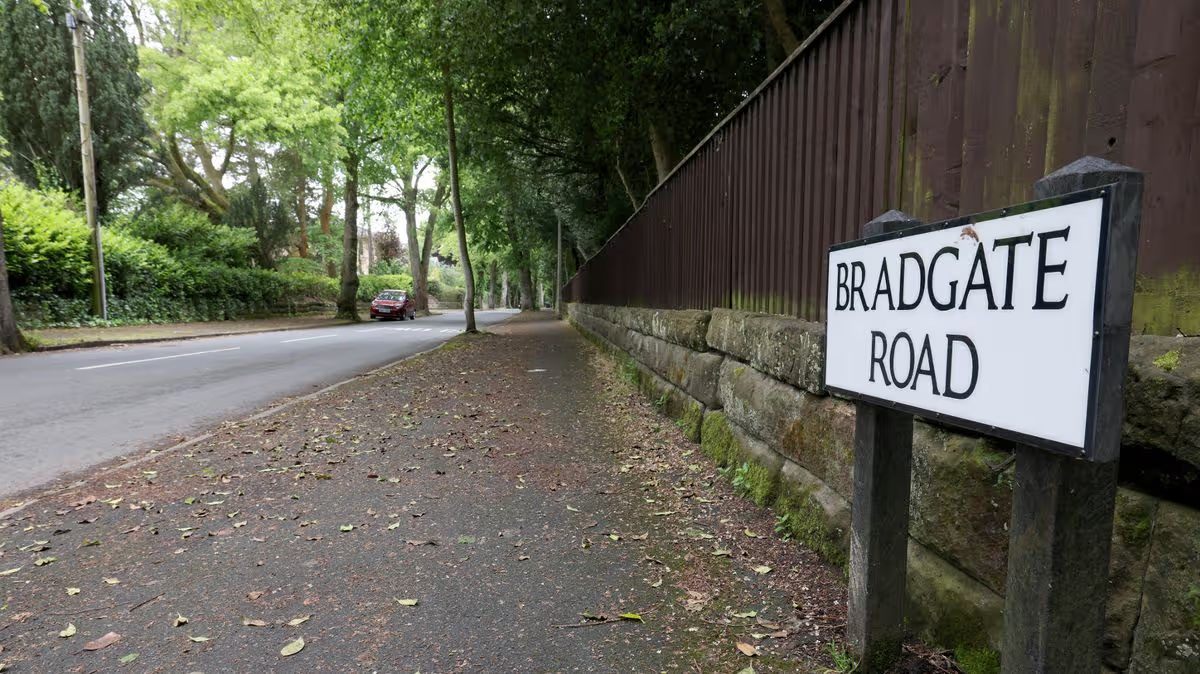




The chilling details of a seven-hour abduction in Greater Manchester this week have left a community shaken and a nation grappling with the terrifying notion of a random attack. On a Monday evening, as daylight began to fade at around 6:45 PM, a 15-year-old girl was walking alone on Bradgate Road in the suburb of Bowdon, Altrincham. In a moment that shattered the ordinary, a man armed with a knife forced her into the back of a van. This violent act marked the beginning of a harrowing ordeal for the teenager, who was reportedly threatened with the weapon and held against her will. The incident, described by authorities as appearing to be “random,” underscores a profound and universal fear: the vulnerability of being targeted for no reason, turning a simple walk home into a parent’s worst nightmare.
For hours, the girl’s whereabouts remained a terrifying mystery. Her family, realizing she was missing, reported her disappearance to Greater Manchester Police at around 9:00 PM, launching a desperate search. As the night deepened, so too did the anguish and uncertainty. The critical break in the case did not come from sophisticated surveillance technology, but from the profound courage and quick thinking of an ordinary member of the public. Somewhere during those agonizing hours, this individual heard the girl’s terrified screams. Instead of turning away, they took decisive action, noting the license plate of the suspect vehicle. This single act of civic responsibility became the pivotal clue that allowed police to narrow their search from an entire region to a specific vehicle, transforming the trajectory of the investigation and the girl’s fate.
Armed with this vital information, police forces coordinated swiftly. Greater Manchester Police, working in tandem with Cheshire Police, issued an alert for the specific van. In the early, quiet hours of Tuesday morning, this collaboration led officers to the car park of the Cottons Hotel and Spa in Knutsford, Cheshire. There, they located the vehicle. Inside, they found the 15-year-old girl, ending her seven-hour captivity. A 56-year-old man was arrested at the scene on suspicion of abduction. The relief of her discovery, physically safe, is immense, but it marks only the beginning of a long journey toward recovery from the psychological trauma of such a violent and prolonged experience.
In the aftermath, Greater Manchester Police confirmed the arrest and emphasized that specialist officers are now providing dedicated support to the girl and her family, a crucial step in navigating the complex emotional fallout. The force has stated there is no wider risk to the public, likely due to the suspect being in custody. Notably, detectives have been granted an extension to question the man, who is described as a white male, underscoring the seriousness with which they are pursuing the investigation. A central and particularly disturbing aspect of the inquiry is the understanding that this appears to have been a “random” attack, meaning the victim and her abductor were not known to each other. This element strips away any false sense of security derived from personal caution, casting a shadow of anxiety over the community.
This incident forces a difficult public conversation about safety, vigilance, and community responsibility. While police investigations continue to establish the full facts, the narrative already highlights a powerful duality of modern society: the pervasive threat of random violence, contrasted with the extraordinary power of human intervention. The anonymous citizen who heard screams and wrote down a number plate embodies the latter. Their actions stand as a potent reminder that public safety is not solely the domain of law enforcement; it is also a collective responsibility. In a world where people are often advised to avoid involvement, this individual’s choice to engage directly altered the outcome, proving that awareness and courage are invaluable community assets.
As the legal process unfolds, the focus must remain on the teenage survivor and the long path to healing that lies ahead for her and her family. The trauma of such an event echoes far beyond the seven hours of captivity. Meanwhile, the community of Bowdon and the wider public are left to reconcile with a breached sense of security. This case is a stark lesson in the fragility of normalcy and the enduring importance of looking out for one another. It concludes not just with an arrest, but with a sobering reflection on the shadows that can fall on the most ordinary of evenings, and the flickers of hope that can be ignited by a single, observant person refusing to look away.