

Europe stands at a critical crossroads, a continent grappling with a profound sense of vulnerability. The brutal reality of war has returned to its eastern border with Russia’s ongoing aggression against Ukraine, while instability in the Middle East and global economic pressures compound a deep anxiety. The comfortable assumptions of the post-Cold War era have shattered, leaving European leaders and citizens alike asking the same urgent question: in a world where the old order is breaking apart, what must Europe become? The answer to this challenge is far from unified, sparking intense debate that cuts to the very heart of the continent’s identity, values, and future.
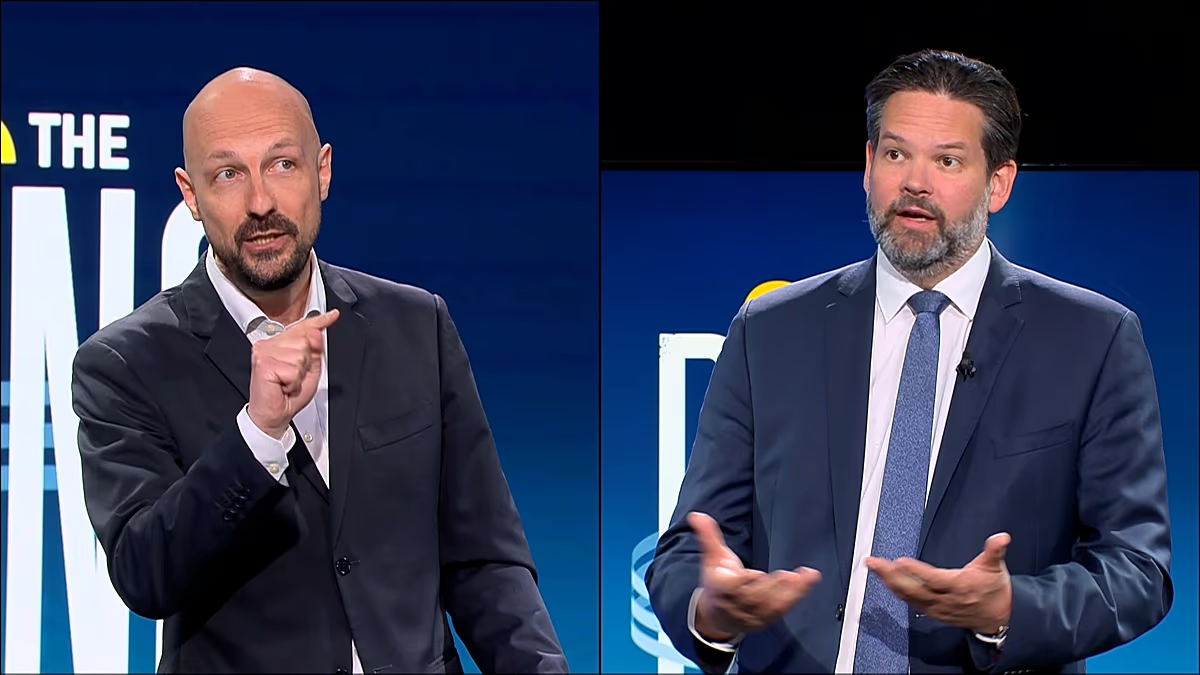
This debate was crystallized in a heated exchange between two Members of the European Parliament, reflecting the wider societal divide. On one side, Lukas Mandl of Austria argues that Europe’s newfound vulnerability justifies a historic and necessary shift. For him, the existential threat posed by an expansionist Russia means that investing billions in modern defense—from advanced drones to strengthened armies—is non-negotiable. This view is mirrored in actions across the continent, most notably in Germany’s revolutionary decision to establish a massive defense fund to rebuild its military prowess. For Mandl and many others, a peaceful Europe can only be secured through a powerful Europe, one capable of deterring aggressors and defending its own borders without hesitation.
In stark opposition stands Marc Botenga of Belgium, who represents a significant strand of European thought that views the rapid arms buildup with deep suspicion and alarm. He questions the wisdom of funneling vast public resources into weapons, arguing that this comes at the direct expense of domestic well-being—funds that could revitalize schools, hospitals, and social safety nets. To him, the rush to rearm represents a dangerous capitulation to a mindset of perpetual conflict, potentially fueling a new arms race rather than fostering genuine security. This perspective highlights a core tension: is Europe defining its strength solely through military might, or should its power be rooted in the resilience and prosperity of its societies?
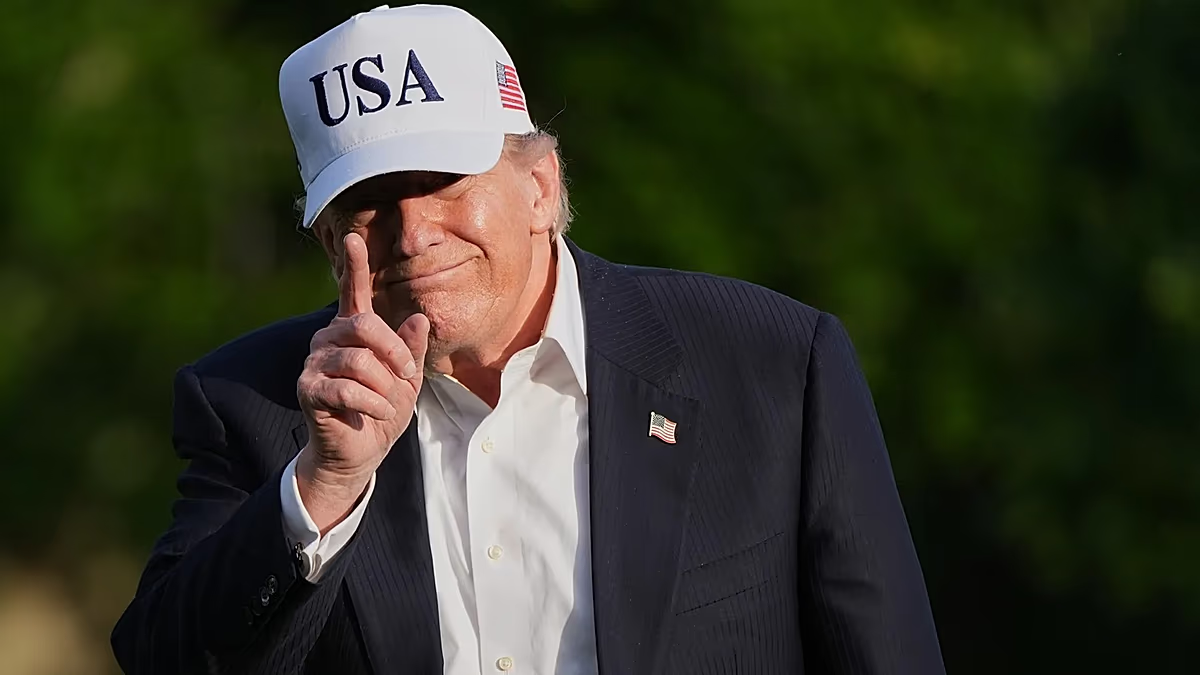
Complicating this internal debate is Europe’s delicate and dependent relationship with the United States. The EU remains inextricably linked to America through the NATO alliance, deep trade ties, and intelligence sharing. However, the potential return of a more transactional U.S. foreign policy has injected a fresh urgency into the long-discussed goal of “strategic autonomy.” European leaders are now forced to ask: can we rely on the transatlantic bond as our ultimate guarantee, or must we build the independent capacity to act alone if necessary? This is not merely a theoretical exercise but a practical imperative, forcing Europe to navigate between preserving an essential alliance and forging a self-reliant identity.
The path forward is fraught with complexity. Europe must simultaneously rearm to address immediate threats, invest in its social foundations to maintain internal cohesion, and carve out a more sovereign role on the world stage—all while managing an uncertain partnership with Washington. There are no simple answers, only difficult trade-offs. The question is whether Europe can muster the political will, unity, and vision to navigate this turbulent period. Can it transition from a reactive continent, buffeted by global crises, to a confident, cohesive power that shapes its own destiny?
Ultimately, the challenge extends beyond budgets and battalions. It is about defining what European power means in the 21st century: a blend of hardened defense capabilities, unwavering democratic values, economic innovation, and social solidarity. The debates between figures like Mandl and Botenga are essential, as they force the continent to confront these fundamental choices. The outcome will determine whether Europe emerges from this era of uncertainty as a fragmented collection of states or as a truly integrated and influential global actor, capable of securing peace for its people and asserting its principles in a rapidly changing, and increasingly contested, world.