


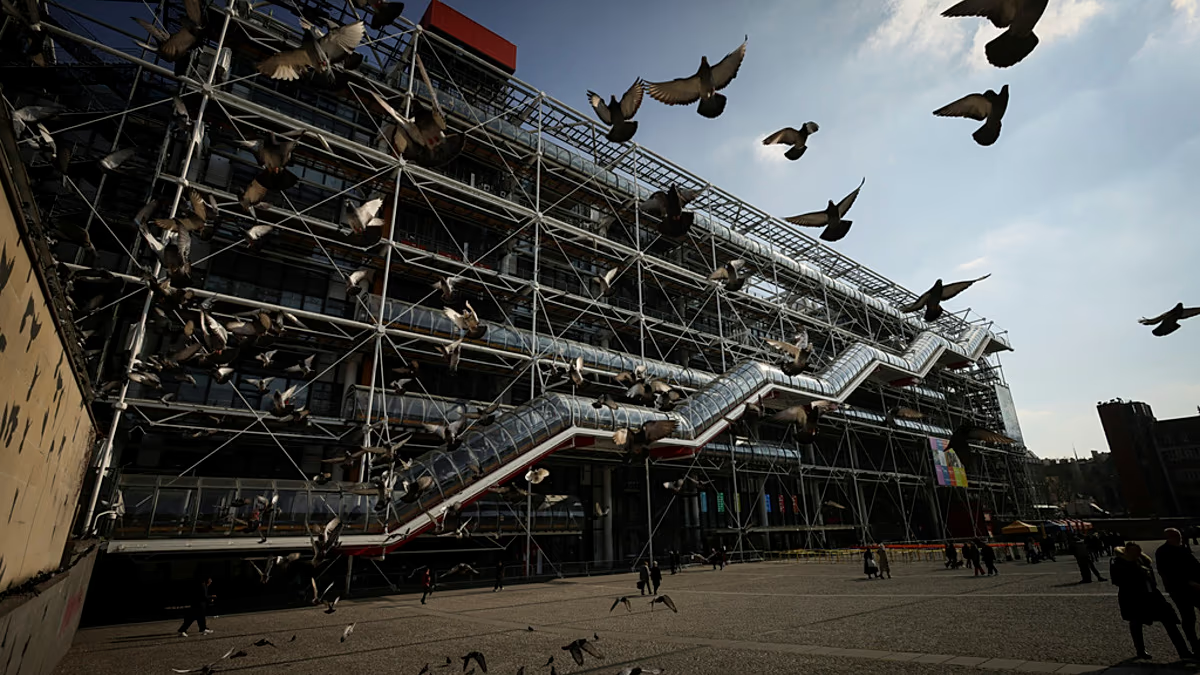
The Centre Pompidou, a titan of modern and contemporary art, is embarking on a bold new chapter that defies the conventional boundaries of a museum. With its iconic, inside-out building in Paris’s Beaubourg district now closed for extensive renovation until 2030, the institution has not retreated into hibernation. Instead, it has launched an ambitious initiative called the Constellation programme, transforming a period of closure into one of extraordinary global outreach. This strategy involves lending works from its unparalleled collections to venues across France and around the world, ensuring its artistic heartbeat continues to pulse far beyond its Parisian home. This nomadic phase represents more than a logistical solution; it is a philosophical statement about making art accessible and creating dynamic cultural dialogues across continents.
This vision finds a powerful expression in Asia, with the upcoming inauguration of the Centre Pompidou Hanwha in Seoul, South Korea, on June 4th. Located in the bustling financial district of Yeouido, this partnership marks the museum’s second Asian outpost, following its presence in Shanghai, and coincides meaningfully with the 140th anniversary of Franco-Korean diplomatic relations. As explained by Jade Kaunhye Lim, exhibition director at the Hanwha Cultural Foundation, this is a four-year collaboration to present two major exhibitions annually, drawn directly from the Pompidou’s vaults. The initiative promises to bring “world-renowned masterpieces of modern art” to Seoul, but its ambitions extend far beyond a one-way cultural transfer. It seeks to create a vibrant bridge, using the Pompidou’s global network as a springboard to propel Korean artists onto the international stage.
To launch this significant cultural embassy, the partners have chosen a foundational and formidable artistic movement: Cubism. The inaugural exhibition, “The Cubists: Inventing Modern Vision,” is a statement of intent. Featuring over a hundred works by 54 artists, including pillars like Pablo Picasso, Georges Braque, and Fernand Léger, the show is poised to be a landmark event. Laurent Le Bon, President of the Centre Pompidou, emphasizes the gravity of this choice, noting it is likely the first major Cubist exhibition in Asia in half a century. Cubism, he argues, is not merely a style but the defining avant-garde movement of the early 20th century—one that fundamentally fractured and reorganized human perception. By beginning with this revolution in seeing, the Centre Pompidou Hanwha signals its commitment to presenting not just art, but the very ideas that reshaped modern consciousness.
This endeavor is a vivid example of the “Constellation” philosophy in action. While the Parisian mothership undergoes renewal, its stellar collection travels, creating points of light in a global network. The Seoul branch is not a static satellite but an active participant in a larger ecosystem of cultural exchange. The Hanwha Foundation’s role is crucial, blending the Pompidou’s curatorial expertise with local insight to present these masterpieces in a context that resonates with Korean audiences. This model challenges the traditional, often centralizing force of major Western museums, proposing instead a more decentralized and collaborative approach to sharing cultural heritage. It turns a period of physical closure into an era of expanded influence and connection.
Looking beyond the groundbreaking Cubist showcase, the roadmap for Seoul promises a continued journey through the pinnacles of modern art. Future exhibitions are set to feature titans like Henri Matisse, with his revolutionary use of color and form, and Marc Chagall, the poetic painter of dreamlike narratives. This programming ensures that the dialogue between Korean audiences and European modernism will be rich and sustained. Each exhibition becomes a new chapter in an ongoing conversation, offering diverse perspectives on the artistic innovations that defined a century. The partnership provides a unique opportunity for in-depth, repeated engagement with the Pompidou’s collection, fostering a deep and evolving appreciation rather than a fleeting encounter.
Ultimately, the story of the Centre Pompidou’s expansion to Seoul is one of transformation and connection. It demonstrates how a cultural institution can adapt to physical constraints by reimagining its presence in the world. This is not merely a touring show; it is the establishment of a temporary home for some of the world’s most important modern artworks, nestled in the heart of one of Asia’s most dynamic cities. By choosing to start with the disruptive energy of Cubism, the project honors the past while embracing a future of international partnership. As the Parisian landmark is meticulously restored, its spirit is simultaneously being amplified across the globe, proving that the power of art lies not only in the walls that house it, but in the bridges it builds between cultures and peoples.