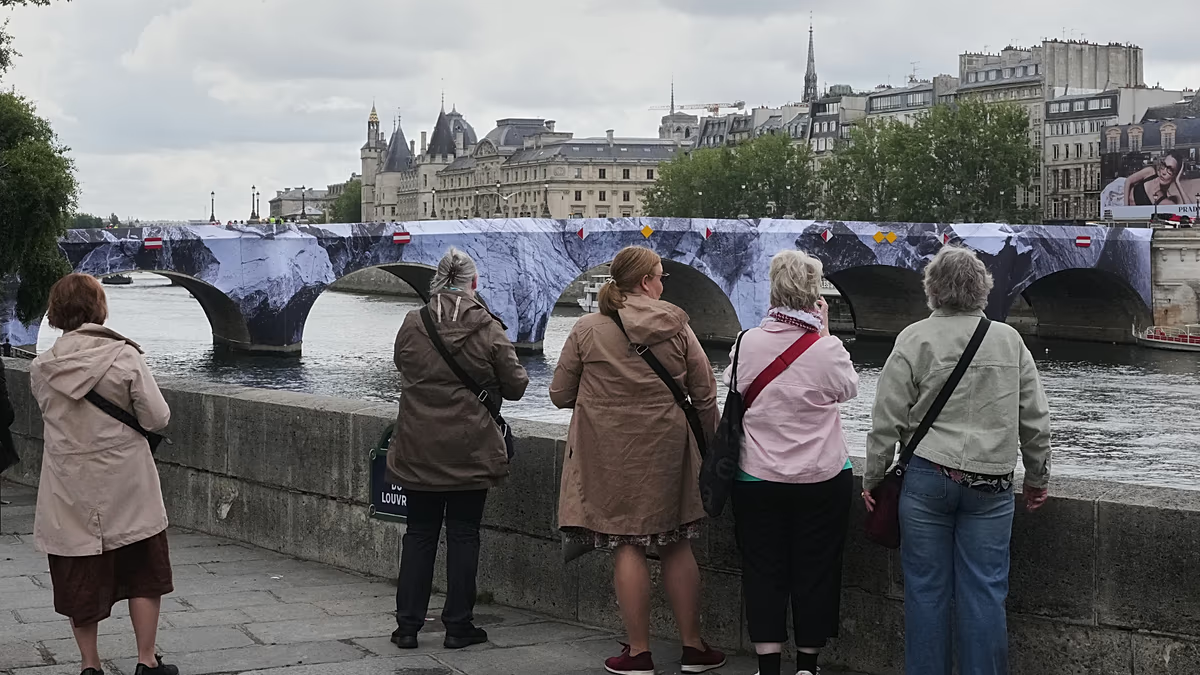


In the heart of Paris, a familiar icon is undergoing a radical transformation. The countdown has officially begun for a breathtaking artistic intervention, as the renowned French artist JR has taken command of the Pont Neuf, the city’s storied oldest bridge. By June 6th, this historic stone structure, already shrouded in scaffolding for renovation, will be reborn as something entirely unexpected: a monumental cavern. Titled La Caverne du Pont Neuf, the temporary installation promises to be a staggering feat of scale and imagination, stretching 120 meters in length, 20 meters in width, and soaring up to 18 meters high. For JR, an artist celebrated for his large-scale, participatory public works, this project is a deliberate act of juxtaposition, aiming to place “the raw and the wild” into a direct “dialogue between past and present.” It is an invitation to see the familiar architecture of Paris not as a static relic, but as a living canvas for contemporary conversation.
The public’s reaction, as ever in Paris, is a study in delightful contradiction, mirroring the city’s own vibrant and opinionated spirit. Some Parisians greet the news with unbridled enthusiasm, eager for the disruption and beauty it promises. “I like it when Paris is alive, and this is clearly going to be a really beautiful event,” enthuses one thirty-something observer, capturing the sentiment of those who view such projects as the lifeblood of a culturally dynamic city. Yet, standing just meters away, another Parisian voice offers a more skeptical, classically reserved perspective: “I’m a bit disappointed, in that it doesn’t really move me for the moment.” This spectrum of responses is intrinsic to the life of public art, especially in a location so steeped in history. The Pont Neuf is not a neutral gallery wall; it is a beloved piece of the city’s daily fabric, and JR’s intervention asks citizens to momentarily reimagine a piece of their own identity, a request that is as thrilling to some as it is disorienting to others.
For three weeks, from June 6th to June 28th, this cavern will become an extraordinary gift to the city, open to everyone, free of charge, twenty-four hours a day. It is designed not merely to be seen, but to be fully experienced. Understanding that true immersion engages all the senses, JR has enlisted a sonic pioneer of equal stature to craft the installation’s auditory soul: Thomas Bangalter, one-half of the legendary electronic duo Daft Punk. The soundscape he creates will not simply play in the background; it is intended to pervade the space, to resonate within the fabricated stone, completing the transformation of sight into feeling. This collaborative vision ensures that a visit to La Caverne du Pont Neuf will be a holistic journey, a place where one can wander at midnight or at dawn, bathed in an otherworldly atmosphere that blends futuristic sound with primal, cavernous form.
This monumental undertaking does not exist in a vacuum; it consciously echoes a legendary artistic moment from Paris’s recent past. JR’s project arrives exactly forty years after the iconic 1985 work by the artist duo Christo and Jeanne-Claude, who famously wrapped the entire Pont Neuf in a silky, sandstone-colored fabric. That project, too, stopped the city in its tracks, using concealment to paradoxically reveal the bridge’s form and significance in a new light. By invoking this lineage, JR situates his cavern within a proud tradition of ephemeral urban art. He follows in the footsteps of those who temporarily borrow public infrastructure to create shared, awe-inspiring experiences that become part of a city’s cultural memory. It is a conversation across decades, linking generations of artists who ask the same fundamental question: how can we see what we think we know in a completely new way?
Like Christo and Jeanne-Claude before him, JR has realized this vision through a principled and independent financial model. La Caverne du Pont Neuf is funded entirely through private sponsorship and the artist’s own resources, with no public money used for its creation. This approach preserves artistic freedom and ensures the project remains a genuine gift, without commercial strings or ticket barriers. It is a grand gesture made possible by belief in the civic value of ambitious art. The temporality of the work—here for just three fleeting weeks—is also central to its power. This impermanence fosters a sense of urgency and preciousness, transforming the installation into a must-see event, a shared moment in time that people will talk about long after the cavern has been dismantled and the bridge’s stonework revealed once more.
As the final preparations unfold behind the scaffolding, a palpable sense of anticipation builds along the Seine. La Caverne du Pont Neuf is more than an art installation; it is a catalyst for collective experience and emotional response. It honors history while aggressively pushing into the future, challenges perceptions of public space, and embodies the democratic ideal of free, accessible wonder. Whether one is thrilled or skeptical, its presence commands engagement. For a few short weeks this June, Parisians and visitors alike will have the chance to walk into a piece of living myth, to hear a Daft Punk-inspired heartbeat echo within ancient stones, and to participate in the latest chapter of a city that forever reinvents itself through art. The bridge, a symbol of connection, will once again fulfill its purpose—connecting past to present, artist to citizen, and individual wonder to a communal, unforgettable event.