


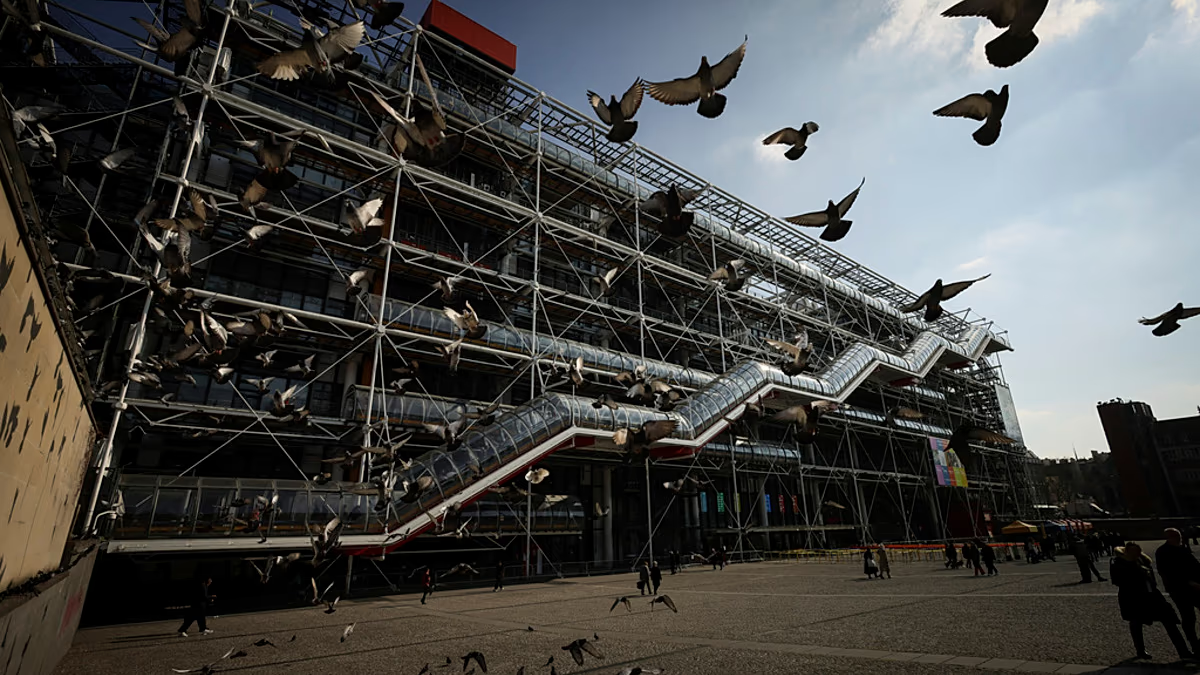
The Centre Pompidou, Paris’s iconic beacon of modern and contemporary art, is embarking on a significant new chapter in its global outreach. Through its innovative Constellation programme, which facilitates the lending of artworks from its vast French collections to international partners, the museum is planting its flag in South Korea. This strategic move will see the establishment of the Centre Pompidou Hanwha in the heart of Seoul’s bustling Yeouido financial district, set to open on June 4th. This venture is more than a simple satellite; it is a four-year collaborative partnership with the Hanwha Cultural Foundation, inaugurated to celebrate 140 years of diplomatic ties between France and Korea. It represents a deepening cultural bridge, where two major exhibitions annually will be curated from the Pompidou’s legendary holdings, bringing a direct line of European artistic innovation to Asian audiences.
To inaugurate this ambitious cultural exchange, the partners have chosen a foundational and transformative movement: Cubism. The opening exhibition, titled “The Cubists: Inventing Modern Vision,” is a bold statement of intent. Featuring over one hundred works loaned from Paris, including pieces by pioneers like Pablo Picasso, Georges Braque, and Fernand Léger, the show aims to be a landmark event. Laurent Le Bon, President of the Centre Pompidou, emphasized the significance of this choice, noting it is likely the first major Cubist exhibition in Asia in five decades. By selecting Cubism—the revolutionary movement that shattered traditional perspective and taught the world to see in fragments and facets—the Pompidou signals its commitment to presenting not just art, but seismic shifts in human perception and thought.
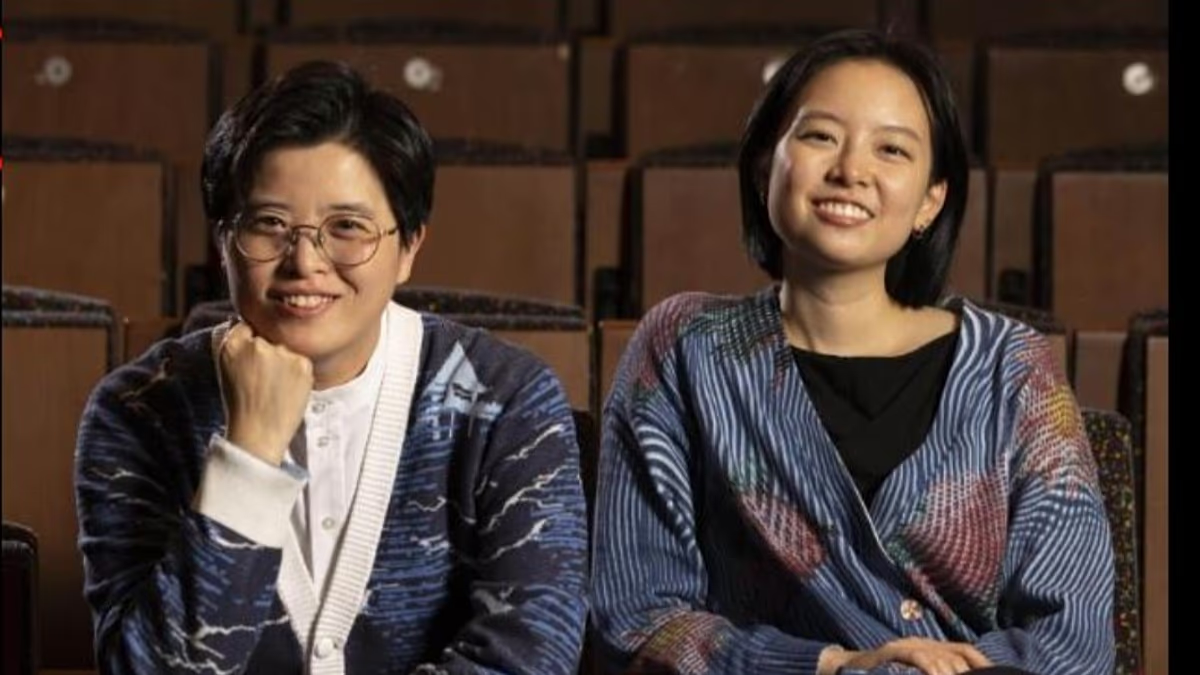
However, the vision for the Centre Pompidou Hanwha extends far beyond a one-way transmission of Western art history. As articulated by Jade Kaunhye Lim, Director of Exhibitions at the Hanwha Cultural Foundation, there is a powerful reciprocal ambition at play. The institution aims to act as a “springboard” to propel Korean contemporary artists onto the global stage by leveraging the Centre Pompidou’s extensive international network. This transforms the project from a mere outpost into a dynamic cultural hub, a two-way street for dialogue. It promises to contextualize Western modernism for Korean viewers while simultaneously creating a prestigious platform to showcase Korea’s own vibrant artistic voices to the world, fostering a truly mutual exchange.
This Korean venture marks the Pompidou’s second physical presence in Asia, following its establishment in Shanghai, underscoring a strategic focus on the region’s growing and engaged art ecosystems. The Constellation programme itself is a modern model for cultural diplomacy, allowing a national museum to share its treasures without diluting its home institution. It creates pop-up chapters of art history worldwide, making masterpieces accessible to new publics and stimulating cross-cultural conversations. The Seoul branch, situated in a global financial hub, symbolizes the fusion of economic and cultural capital, making high art a part of the daily landscape for professionals and the public alike.
Looking beyond the groundbreaking Cubist debut, the future programming promises a rich continuum of modern art. Exhibitions dedicated to giants like Henri Matisse and Marc Chagall are already planned, ensuring a sustained and deep dive into the 20th-century European avant-garde. This curated journey through modernism will offer Korean audiences a chronological and thematic immersion, building a comprehensive understanding of the artistic forces that shaped contemporary visual language. Each exhibition will serve as a new chapter in an ongoing story, with the Centre Pompidou Hanwha establishing itself as a permanent fixture in Seoul’s cultural calendar.
Ultimately, the opening of the Centre Pompidou Hanwha is a testament to the enduring power of art as a universal language and a tool for connection. It moves past the traditional model of the colonial-style “branch museum” towards a collaborative partnership built on respect and mutual benefit. By sharing its foundational collections—starting with the very movement that broke the pictorial plane—the Pompidou offers a gift of perspective. In return, it opens its network to the energy of Korea’s contemporary scene. In this elegant exchange, art transcends its role as artifact to become a living, breathing conduit for shared understanding and new creativity between continents.