


Summary and Analysis
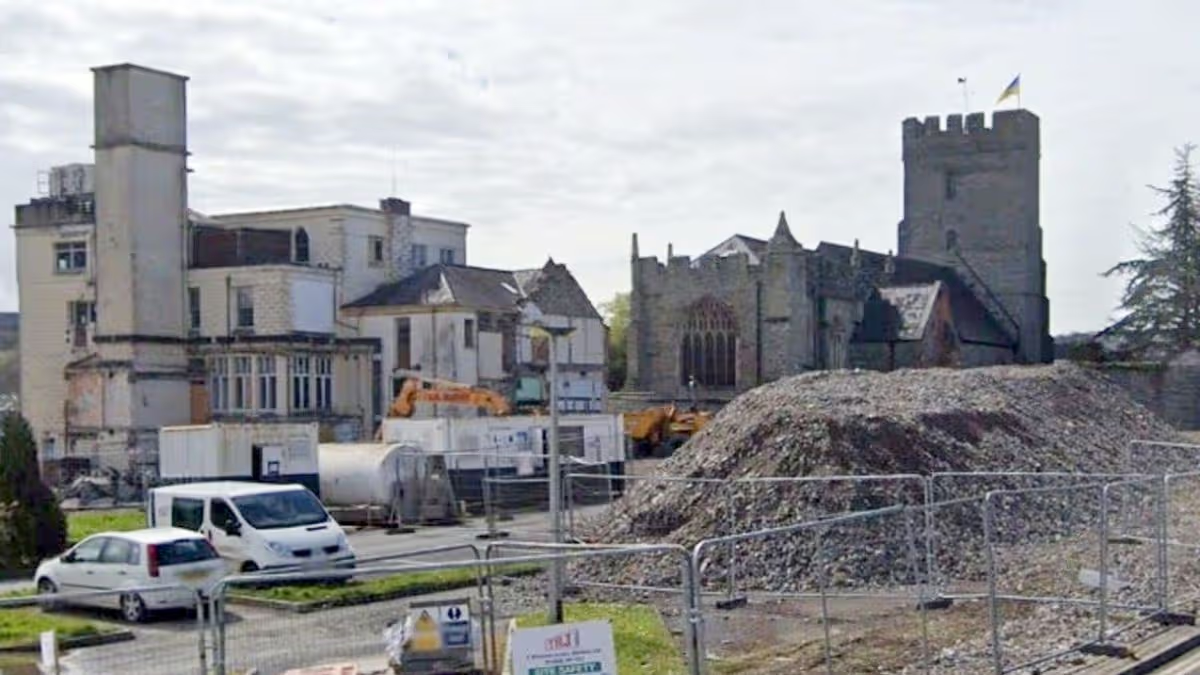
The archaeological discovery at the former Cardigan Memorial Hospital site in Ceredigion, Wales, reveals a poignant intersection of past and present. During redevelopment work for new housing, workers unearthed the remains of at least 38 individuals, including men, women, and children. These bones, found in a poor state of preservation, are believed to date back to the 12th century. The site, which once housed a Priory Church, appears to have been an ancillary burial ground, possibly a “pauper’s cemetery” or an “overspill” area from the main church cemetery. The east-west orientation of the graves strongly suggests Christian burial practices of the post-Roman period. This find offers a tangible connection to the medieval community of Cardigan, reminding us that modern landscapes are often layered with historical narratives.
The discovery underscores the delicate balance between development and preservation. The Wales and West Housing Association (WWHA), which acquired the site after the hospital’s closure in 2019, plans to transform it into 20 flats, a community space, and an office. Yet, this progress was halted by the unearthing of human history. The skeletons, described as the “most significant archaeological features” found, necessitate careful archaeological protocol. Further analysis is planned to learn more about these individuals’ lives and the historical context of their burial. This situation highlights the critical role of archaeological assessments in development projects, ensuring that our advancement does not erase the silent stories buried beneath.
The human aspect of this find cannot be overstated. These were not merely artifacts, but people—men, women, and children who lived, died, and were laid to rest with the rites of their time. The mention of a potential “pauper’s cemetery” hints at a social dimension, possibly indicating a burial ground for the less affluent members of the medieval community. Five graves containing traces of coffins suggest varying burial practices, perhaps reflecting different social statuses or periods. Each skeleton represents a personal history lost to time, now offering a collective glimpse into the demographic and social structure of 12th-century Cardigan.
From a historical and archaeological perspective, the site is a valuable window into the medieval period. The association with the Priory Church grounds provides a specific religious and institutional context. The east-west alignment of the bodies is a hallmark of Christian burial tradition, symbolizing the belief in resurrection from the east. This practice helps archaeologists date and interpret the site within the broader framework of post-Roman Christianization in Wales. The poor condition of the bones presents a challenge but also an opportunity; modern archaeological science can extract information from fragmentary remains, potentially revealing details about health, diet, and origin.
The future of the site now hangs in a balance between memory and modernity. The development plans are poised to proceed, but the archaeological work must be completed respectfully and thoroughly. The bones will be studied, possibly leading to new insights about Cardigan’s past. How they are ultimately treated—whether reburied, preserved, or studied further—will be a decision weighing ethical considerations against historical inquiry. The new housing and community spaces will serve living residents, but this discovery ensures that the legacy of those who lived there centuries ago will also be acknowledged and remembered.
In conclusion, the unearthing of medieval skeletons at the Cardigan Hospital site is more than a news item; it is a narrative about continuity. It reminds us that our communities are built upon layers of history, and that progress often involves encountering the past. The careful handling of this discovery by archaeologists and developers shows a commendable respect for that past. As Cardigan moves forward with new homes, it also reclaims a chapter of its ancient story, honoring the anonymous individuals who once called this place home. Their silent presence, now brought to light, adds a deeper, richer dimension to the town’s identity, bridging centuries through a shared piece of earth.