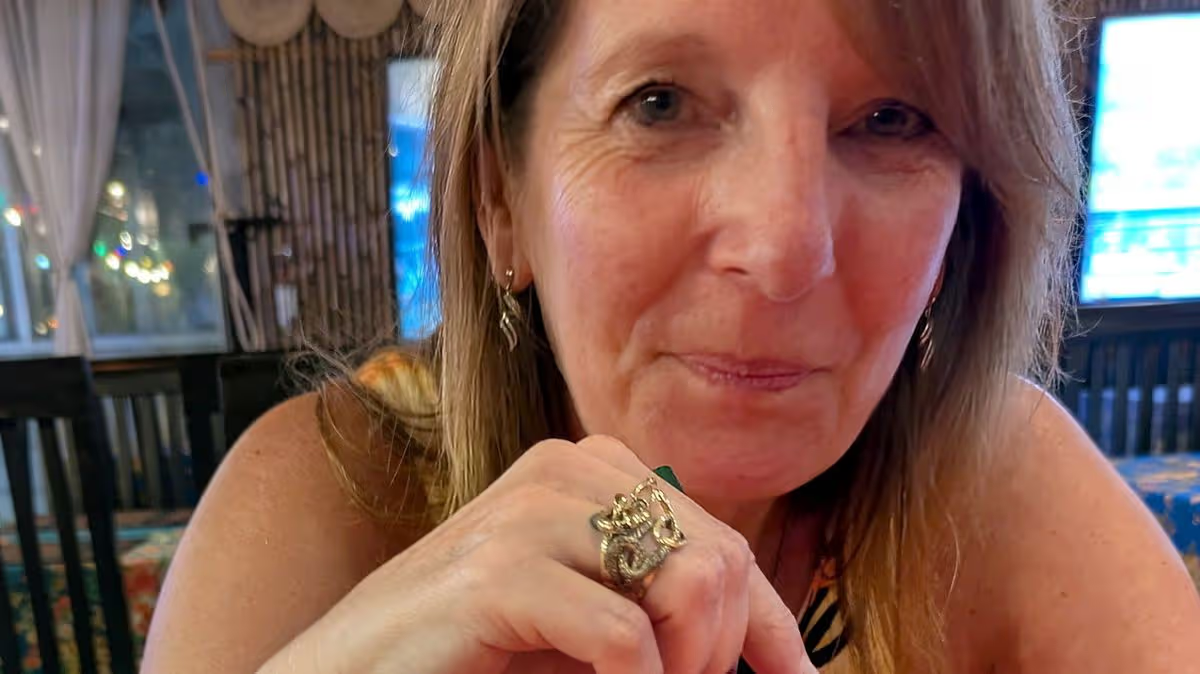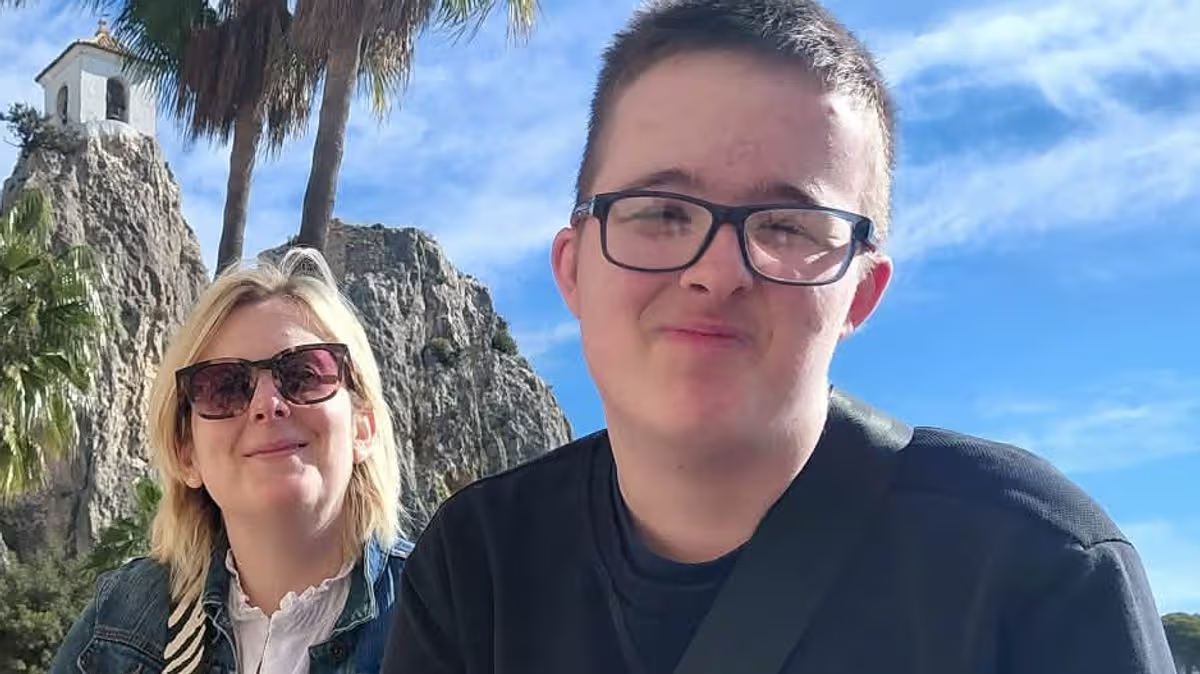





Jody Brown was a 38-year-old mother of five from Walsall, described by her loved ones as a bubbly, outgoing woman who loved a laugh and a joke. Her sudden and tragic death on May 3rd has left her family and community reeling. In the early hours of that morning, she was pulled from the canal basin off Wolverhampton Street. According to her brother, Paul Clarke, CCTV footage showed Jody walking along the canal’s edge before she fell into the water, a space open and accessible to the public. West Midlands Police confirmed they are not treating her death as suspicious, marking it as a devastating accident. For her family, the loss is an “unimaginable tragedy,” the shock of which is compounded by the preventable nature of the incident, sparking a urgent call for change.
In the wake of their grief, Jody’s family, led by her brother Paul Clarke, 42, have transformed their pain into a campaign for public safety. They are appealing to local authorities to install protective barriers or fencing along the Walsall Canal, particularly in the busy town centre area where the tragedy occurred. Clarke has initiated an online petition, arguing that while many UK canals already have such safety measures, this key urban stretch remains hazardously open. The petition highlights that these barriers are proven to significantly reduce accidental drownings, protecting vulnerable individuals, including children and non-swimmers like, he believes, his sister. Their plea is simple: no other family should have to endure this heartache.
The response from responsible organizations has been one of sympathy but also highlights the complexities of jurisdiction. The Canal & River Trust, which manages the waterway, expressed being “distressed” by the event and offered sincere condolences. They confirmed they will conduct an internal inquiry and support the coroner’s investigation. However, they noted a significant hurdle: they do not own the land surrounding the basin where Jody fell, meaning the decision and ability to install fencing is not directly within their control. They have, however, committed to partnership and have already contacted Walsall Council to discuss the issue, indicating a willingness to collaborate on a solution.
Walsall Council has similarly stated it is “saddened” by the tragedy. A council spokesperson affirmed a commitment to working in partnership with the Canal & River Trust to examine improving safety around the canal basin. Their statement also touched on the need to balance safety with access, ensuring that boaters and emergency responders can still reach the water when necessary. This balance between creating a safer public space and maintaining functional access points is a common challenge in such cases, but Jody’s family hopes it will not lead to inaction. The dialogue between these entities is a crucial first step, but the family awaits tangible commitments and a clear plan.
Meanwhile, the community has rallied around Jody’s family in their time of need. A GoFundMe fundraiser was established by Nina Patterson to help cover funeral costs, describing Jody as a “bubbly young lady” whose loss is deeply felt. The campaign has begun to gather support, a testament to the impact she had on those around her. This community solidarity underscores the human dimension of the story—beyond the petitions and official statements, five children have lost their mother, a family is in mourning, and friends are grappling with the sudden void left by a vibrant life cut short.
The tragedy of Jody Brown’s death sits at the intersection of personal loss and public policy. Her family’s advocacy is not just about a metal or wooden barrier; it is a call for a fundamental reassessment of responsibility in shared urban spaces. It asks a pointed question: in places where beauty and danger coexist, what is our duty of care to the public? As the coroner’s investigation proceeds and discussions between the Trust and the Council continue, Jody’s memory becomes a powerful catalyst for a vital safety review. Her story is a heartbreaking reminder that sometimes, the simplest protections can mean the difference between life and death, and that the legacy of a loved one can be the prevention of future sorrow.