

Here is a summary and humanized version of the article, condensed into six paragraphs.
Paragraph 1
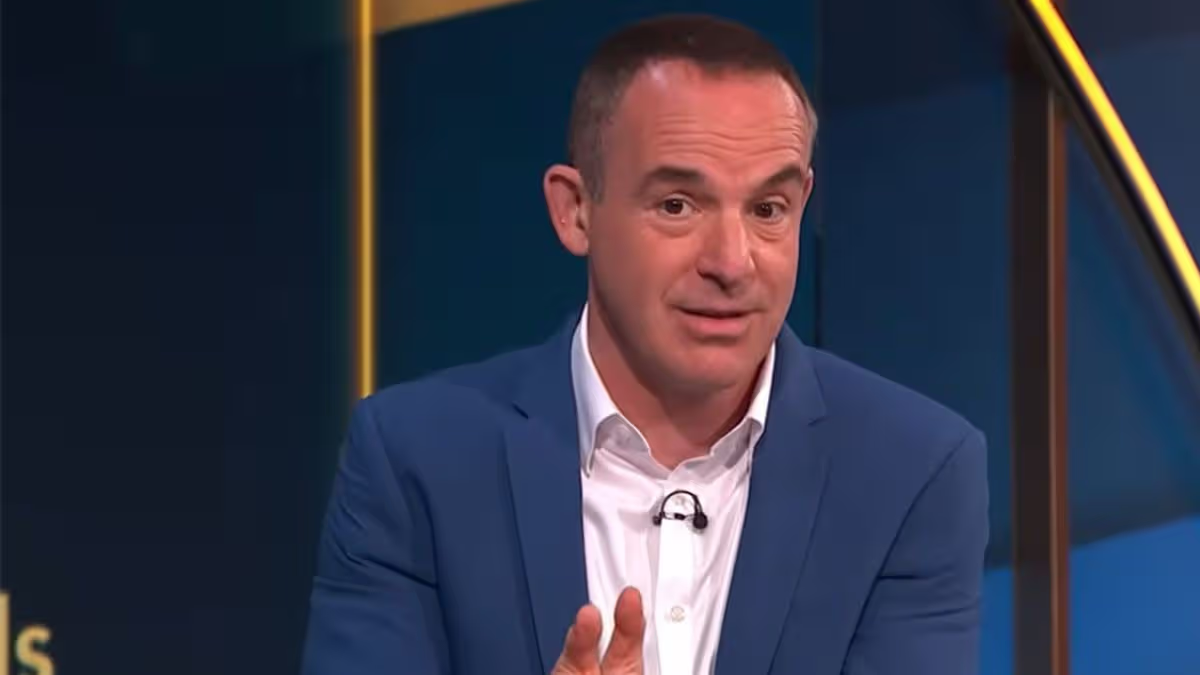
Jamie East, a well-known broadcaster and former presenter for shows like Big Brother’s Bit on the Side and Virgin Radio, has shared his deeply personal journey with a “brutal” cancer treatment. In 2025, at the age of 52, he was diagnosed with chronic myeloid leukaemia (CML) after noticing swollen glands, despite feeling he was in the best physical shape of his life. His initial reaction to the diagnosis was one of shock, even asking his consultant if he could still attend Glastonbury. Faced with a critical choice between two treatment paths, he opted for the one perceived as gentler, a decision made from a place of vulnerability.
Paragraph 2
Jamie’s treatment journey was challenging. The initial medication worked for a time, but when his blood results began to falter, he was switched to a stronger drug. The side effects of this new treatment were severe, including constant headaches and a rash, though they eventually subsided. Reflecting on his experience, Jamie expressed a wish for clearer guidance from the start. He believes that if patients could be told definitively which treatment is best for their specific form of leukaemia, it would remove a heavy burden of choice during an already terrifying time.
Paragraph 3
Hope for future patients is being fueled by groundbreaking research. Jamie recently visited a laboratory at the University of Glasgow where work funded by Leukaemia UK is underway. Scientists there have made a crucial discovery: there are two distinct types of leukaemic stem cells that cause CML, which develop along different biological pathways. This breakthrough helps explain why some patients respond well to therapy while others struggle, much like different cars traveling to the same destination but on different motorways.
Paragraph 4
This research, led by Professor David Vetrie, is the recipient of Leukaemia UK’s 2025 Project Grant. The goal is to move from discovery to application. The team is now working to develop new, targeted therapies that can specifically attack these different stem cell types. Longer term, this could revolutionize CML management, allowing doctors to personalize treatment from the very point of diagnosis and ensure each patient gets the therapy most likely to work for them.
Paragraph 5
For Jamie, seeing this science firsthand was profoundly meaningful. Meeting the scientists and understanding their work underscored the tangible progress being made. He acknowledges that research is a long-term endeavor, but it is precisely this kind of work that “keeps people like me alive.” He finds it incredibly reassuring to think that future diagnoses could come with a clear roadmap, eliminating the uncertainty he faced.
Paragraph 6
The collective effort aims to transform the future of CML care. Professor Vetrie’s team is grateful for the funding, which supports their work with talented scientists to develop precise drugs for different patient groups. As Simon Ridley from Leukaemia UK stated, the mission is to “accelerate progress and improve the lives of people affected by leukaemia.” Jamie East’s story highlights the current human cost of uncertainty in treatment, while pointing toward a future where diagnosis and effective, kinder care are seamlessly connected.