



Paragraph 1: The Great Disconnect
A significant and concerning divide has opened up between the reality of immigration in the United Kingdom and the public’s perception of it, according to a new report from the think-tank British Future. While official statistics demonstrate a dramatic decline in net migration—the measure of the difference between people arriving and leaving the country—nearly half of the British populace believes the opposite. This “massive perception gap,” as described by the report, is not a minor statistical curiosity but a powerful force actively shaping the nation’s political landscape. The data reveals a public convinced that immigration is surging, a belief held with such conviction that it overrides the published facts of a sharp decrease, creating a foundational challenge for informed democratic debate.
Paragraph 2: The Stark Reality vs. Widespread Belief
The empirical facts are clear. The report highlights that net migration fell precipitously from approximately 900,000 in 2023 to 204,000 in the year to June 2025, with projections suggesting it will dip below 100,000 by the end of this year. However, the annual Immigration Attitudes Tracker, which surveyed over 3,000 adults, found that only 16% of the public correctly identified this decline. Instead, 49% operate under the mistaken belief that net migration rose in the past year. Furthermore, the public’s understanding of the composition of immigration is significantly skewed. Most people believe asylum seekers constitute about a third of all immigration, whereas the actual figure is 9%. Conversely, they underestimate the dominant categories: study (which accounts for 52% of immigration) and work (31%). This fundamental misunderstanding of both the scale and the nature of migration forms the bedrock of the current political impasse.
Paragraph 3: The Political Fuel on the Fire
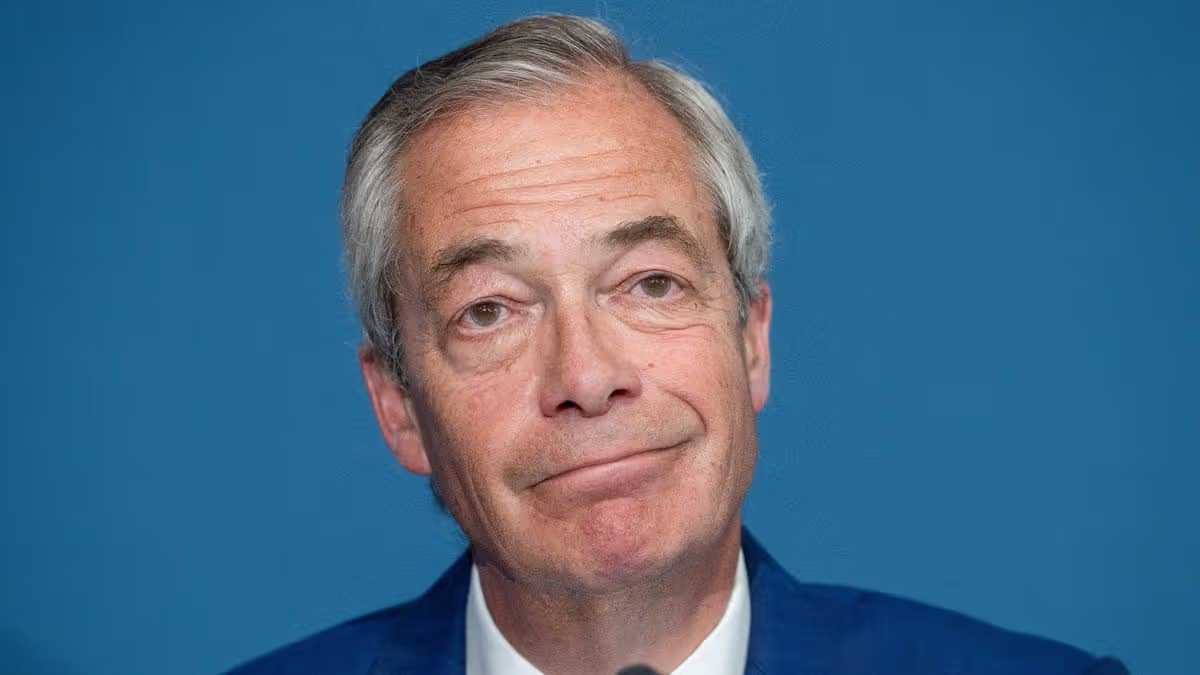
British Future’s analysis places direct responsibility for this corrosive disconnect on the nature of political discourse, singling out figures like Nigel Farage and his party, Reform UK. The report accuses them of actively spreading misinformation to explain away inconvenient data. When the Office for National Statistics published figures showing plummeting net migration, the think-tank claims Reform sought to “undermine the data,” with Farage falsely attributing the drop primarily to a rise in British citizens emigrating. In reality, the reduction was driven by a steep fall in new arrivals. This tactic, the report argues, exploits and widens the public’s pre-existing misconceptions. As British Future’s director, Sunder Katwala, notes, the political conversation is trapped in a self-reinforcing cycle: the only debate offered is on how to bring migration down, which inadvertently signals to voters that it must be perpetually rising, regardless of the truth.
Paragraph 4: The Vicious Cycle of Misperception and Distrust
The report identifies a troubling correlation: those who hold the most negative views on immigration are also the most likely to be misinformed about its trends. Individuals who desire a reduction in migration are disproportionately convinced that it is increasing and will continue to do so. This creates a cycle of pessimism and scepticism, where factual corrections are dismissed and promises to lower numbers are met with disbelief—only 15% of those wanting lower immigration believe it will be achieved soon. Ironically, Reform UK, the party most vocal about reducing immigration, has become the most trusted party among these immigration-sceptic voters, even as, according to the report, it promotes narratives that contradict official statistics. This dynamic fosters a deep distrust in institutions and data, making constructive policy planning exceptionally difficult.
Paragraph 5: A Call for Clarity and Responsible Leadership
To bridge this chasm between perception and reality, British Future proposes a shift towards greater governmental transparency and accountability. Katwala calls for ministers to publish a definitive annual immigration plan, setting out expected levels for different migration routes, such as work, study, and family reunification. This, he argues, would provide a clearer framework for public understanding, moving the debate from nebulous fears to managed expectations. The goal is to “take some of the heat out of our immigration debate” and keep the public better informed. The think-tank advocates for a more mature national conversation that moves beyond simplistic “up or down” rhetoric to address the practical realities of managing the pressures and gains of migration for Britain’s society and economy.
Paragraph 6: The Path Forward
The implications of this perception gap extend far beyond immigration policy alone; it strikes at the heart of democratic engagement and informed citizenship. When a majority of the electorate bases its views and votes on a factual premise that is demonstrably false, the potential for polarisation and policy error is immense. The British Future report serves as a stark warning that the triumph of narrative over data has tangible consequences. Recalibrating the debate will require a concerted effort: from media to improve public understanding of the figures, from all politicians to commit to factual rigor, and from institutions to communicate with clarity. Without such efforts, the UK risks making profound decisions about its future based not on how migration is, but on how a significant portion of the country mistakenly believes it to be, leaving the nation divided against both itself and the facts.