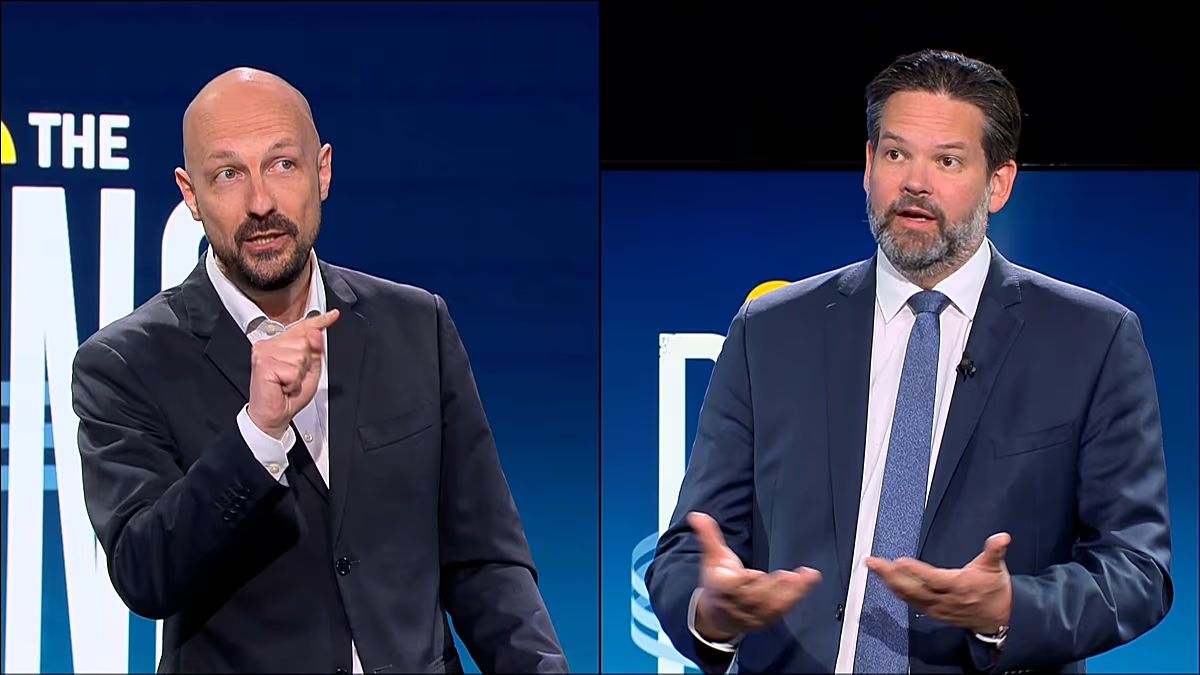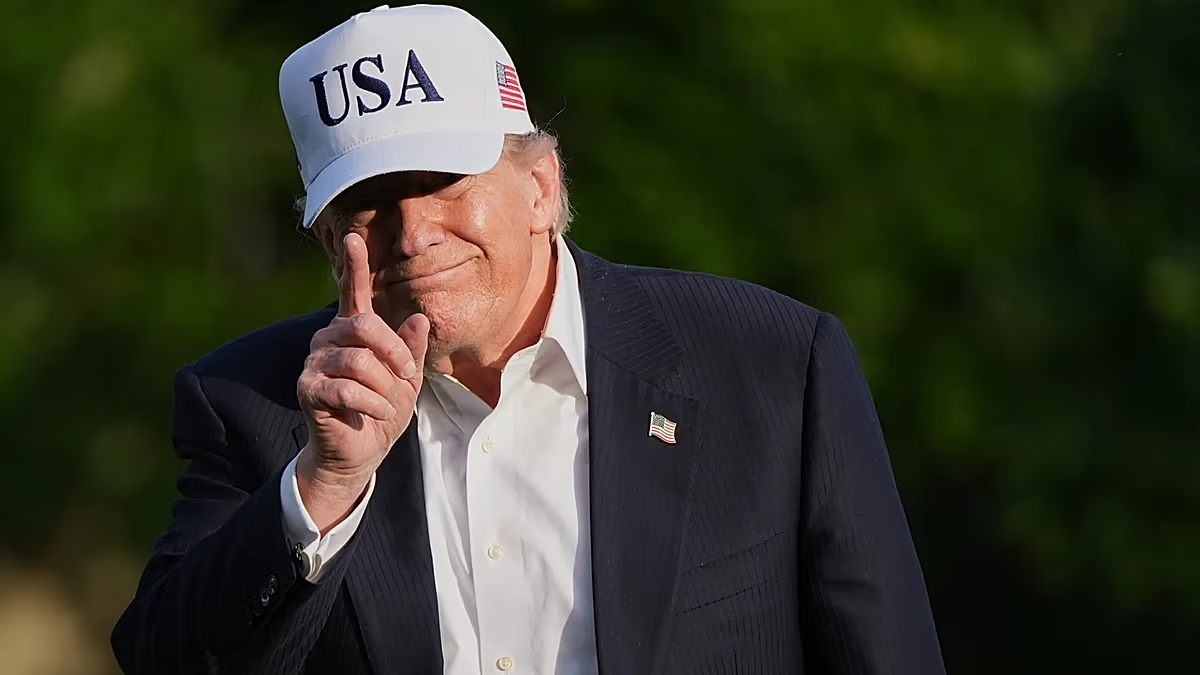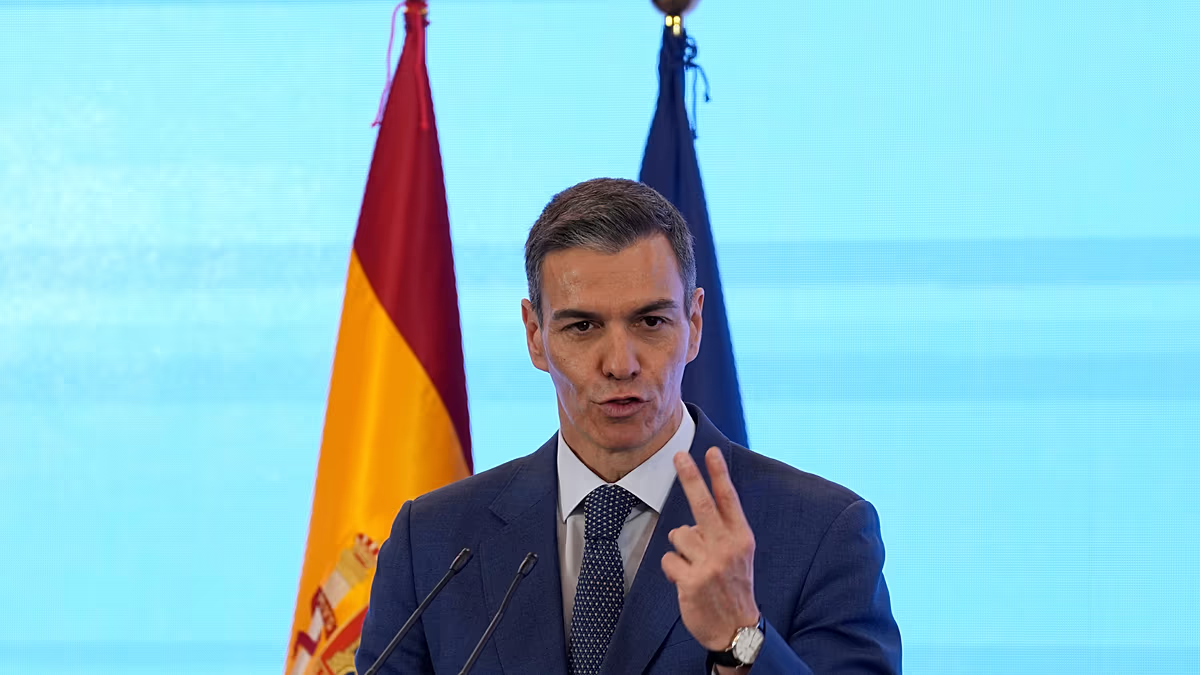
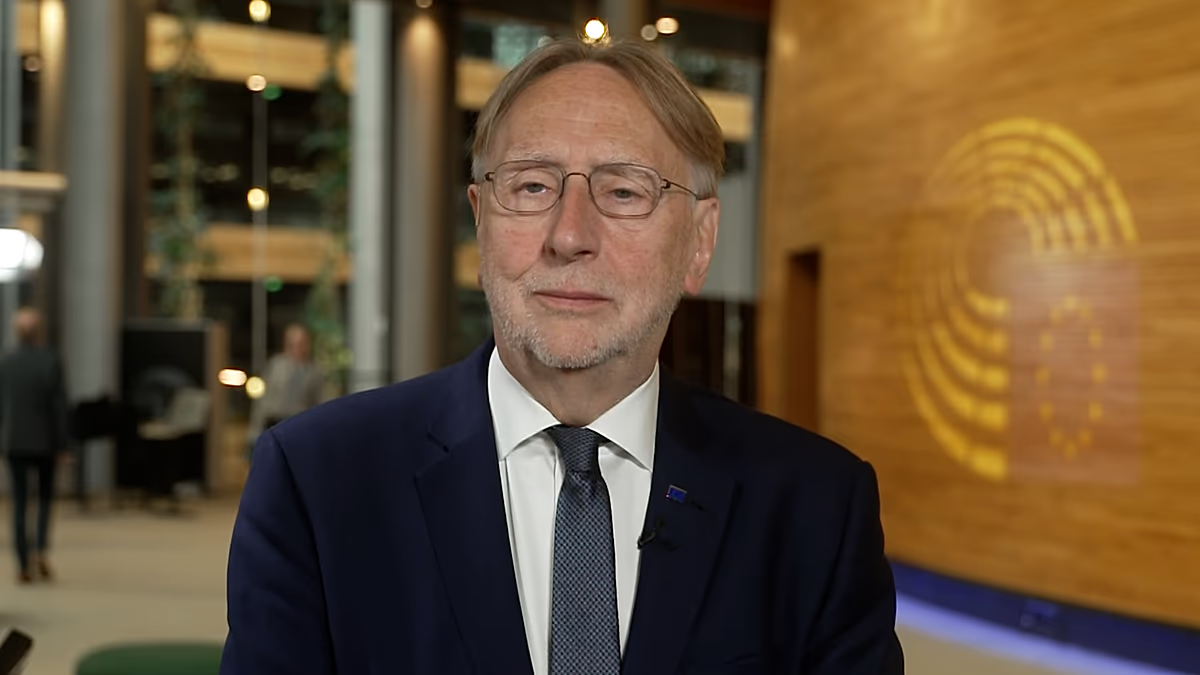



After a tense and protracted negotiation process, European Union lawmakers have finally cemented the terms for implementing last summer’s contentious trade agreement with the United States. The deal, which primarily eliminates EU import duties on a wide range of American industrial goods, was concluded under a persistent cloud of threat from the Trump administration. Top European Parliament negotiator Bernd Lange, while defending the final package as necessary, framed it not as a triumph but as a crucial line of defense. He made clear that the primary driver of the EU’s cautious strategy was the unpredictable and coercive trade tactics of U.S. President Donald Trump, whose threats of sweeping tariffs on European automobiles loomed over the entire process.
The agreement, often referred to as the “Turnberry Agreement,” has faced significant criticism within the European Parliament for being inherently imbalanced. It locks in lower European tariffs for U.S. goods while leaving higher American tariffs on key EU exports, like steel and aluminum, in place. Many Members of the European Parliament (MEPs) viewed this as a concession extracted under duress. Lange acknowledged these concerns but argued that within such a hostile climate, the priority was to secure “predictability and safety” for European consumers and industries. The package, therefore, is less about celebrating free trade and more about managing risk and insulating the EU’s economy from sudden, unilateral shocks from across the Atlantic.
Recognizing the profound uncertainty posed by the current U.S. administration, European negotiators fought hard to embed robust safeguards into the agreement. The most poignant of these is a “sunset clause” set for December 31, 2029—a date strategically placed eleven months after Trump’s scheduled departure from office. This clause allows the EU to terminate the deal unless it is actively renewed, effectively creating a circuit breaker for a post-Trump era. Furthermore, the agreement includes mechanisms for monitoring the economic impact on EU sectors, various suspension clauses, and a clear stipulation that if the U.S. does not lower its metals tariffs by year’s end, Europe will retaliate. These are not the hallmarks of a typical trade pact but rather the tools of a damage limitation exercise.
In his remarks, Bernd Lange presented a sober assessment of the EU’s position, emphasizing that true security remains elusive as long as President Trump is in power. He noted that the deal provides a “safety net” against known threats but offers “no security” against the “mercurial moods” of the American president or future “turbulences.” This candid admission underscores a fundamental shift in the transatlantic relationship, where trust has been replaced by contingency planning. The agreement is designed to navigate the “unknown,” a tacit acknowledgment that the usual rules of diplomacy and trade have been suspended, requiring Europe to prepare for volatility rather than stability.
The entire process highlights the defensive and reactive posture Europe has been forced to adopt. The final negotiations were rushed to a conclusion just two weeks after President Trump issued an ultimatum threatening 25% tariffs on EU cars if the deal was not implemented by July 4th. This coercive backdrop means the agreement will forever be colored by the circumstances of its birth. While Lange expressed hope that the U.S. administration would “act properly,” the structural safeguards tell a different story—one of preparing for the opposite. The EU is, in essence, bracing for continued pressure while trying to create a stable framework for its businesses amidst the chaos.
In conclusion, the ratified EU-US trade agreement symbolizes a pragmatic and wary chapter in transatlantic relations. It is less a bridge to deeper integration and more a guarded truce, engineered to protect European economic interests from what is perceived as a capricious and adversarial American leadership. Bernd Lange’s relief at concluding the deal is tempered by a stark warning: Europe will not be “out of the woods” as long as the current political climate persists in Washington. The agreement provides a temporary shield and a measure of predictability, but it also codifies a relationship now built on suspicion and the necessity of self-preservation, rather than on shared vision and mutual goodwill.