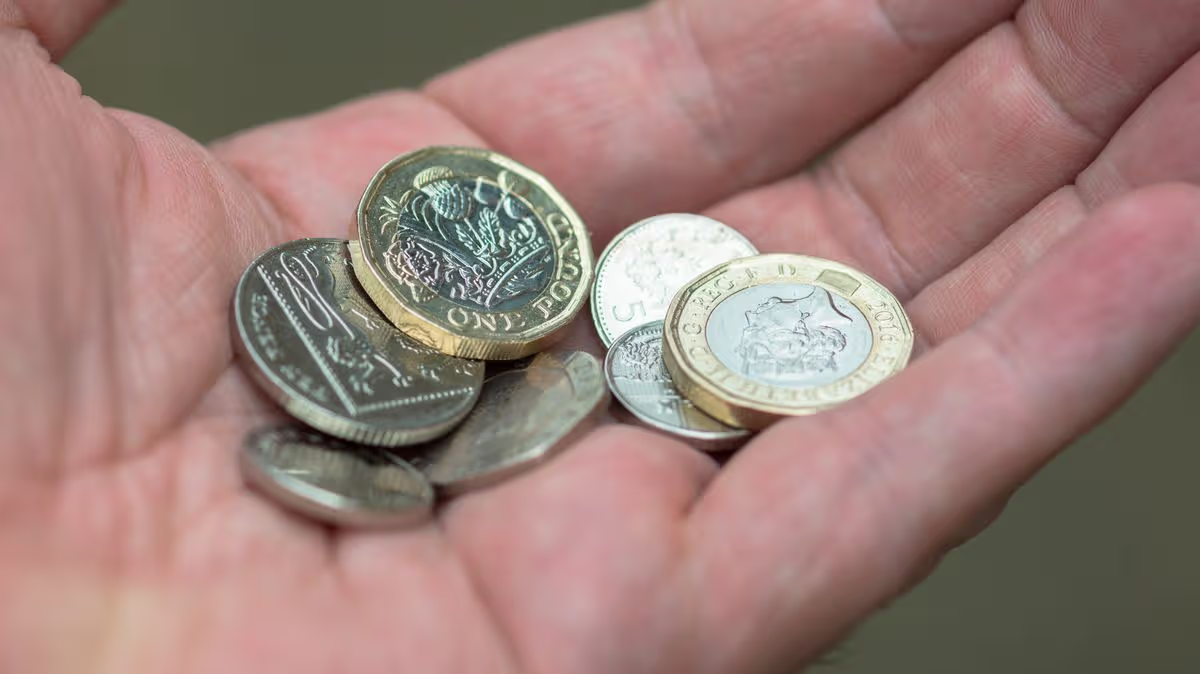




Amidst the familiar jingle of spare change in pockets and purses, a quiet treasure hunt is unfolding across the UK. A numismatic specialist, widely known online as the Coin Collecting Wizard, has issued a compelling plea to the public: pause before you spend your 20p coins. The reason lies in a fascinating minting mishap from 2008 that has transformed an ordinary piece of currency into a collector’s item worth significantly more than its face value. While a standard 20p piece is, of course, worth just that, a specific error variant from that year is now commanding prices of around £60 or more in the collector’s market. This call to action is not about a fleeting trend but centers on a genuine and documented rarity that has been circulating, often unnoticed, for over a decade and a half.
The heart of this numismatic story is a production error at the Royal Mint. In 2008, a new design for the reverse (or “tails”) side of the 20p coin, featuring a segment of the Royal Shield, was introduced. This new design was intended to be paired with a specific obverse (or “heads”) side that carried the date. However, in a slip-up during the minting process, a small number of the new obverse dies—which themselves lacked a date—were incorrectly paired with the old reverse die, which featured the Tudor rose. The critical consequence of this mismatch is that the resulting coins have no date inscribed on them whatsoever. In numismatic terms, this is known as a “mule” error, created when two dies not intended to be paired are used together. The Royal Mint has acknowledged that this error affected fewer than 250,000 coins out of the 136 million 20p pieces minted that year, confirming their scarcity.
Identifying one of these rare coins is a simple task that requires just a moment of inspection. On a standard 20p coin, the date is clearly inscribed on the reverse side, positioned just beneath the crown. To check for the valuable error, one need only examine both sides of any 20p coin from their change. If you search and find no date at all—neither under the crown on the back nor anywhere on the front—you may be holding the sought-after undated mule. The design will show the shield on one side and the Tudor rose on the other, a combination that should not exist, silently telling the tale of a minting floor mistake. This tangible link to a unique moment in British minting history is what fuels its desirability.
The expert emphasizes that while these coins are officially classified as rare, they are not mythical or impossible to find. Their very nature—a small number mistakenly released into general circulation—means they have been mingling with ordinary change in tills, piggy banks, and car cup holders for years. People are, remarkably, still discovering them in their everyday transactions even now, 15 years after they entered circulation. This possibility of an unexpected find adds an exciting dimension to handling cash. The coins remain legal tender with a face value of 20p, but their market value, driven by collector demand, tells a very different story. At the time of the report, one such coin was listed on a popular auction site with a starting bid nearing £100, illustrating the premium placed on this error.
For the average person, this story serves as a delightful reminder that history and value can be hidden in plain sight. It encourages a mindful appreciation of the everyday objects we often overlook. Checking a handful of coins takes mere seconds but could unveil a small windfall. This isn’t about frantic searching but about cultivating a moment of curiosity. The narrative transforms a routine piece of currency into a potential artifact, a tiny metallic snapshot of a procedural hiccup that has blossomed into a collector’s dream. It democratizes the idea of treasure hunting, making it accessible to anyone who handles cash.
Ultimately, the tale of the undated 2008 20p coin is more than a tip for potential profit; it’s a miniature lesson in history, economics, and human interest. It connects the public to the intricate and usually flawless world of coin production, highlighting how even the most regulated processes can produce rare and accidental wonders. So, the next time you receive a 20p in your change, take a brief second to turn it over. You might just be holding a piece of minting history, a conversational curiosity, and a small asset that proves sometimes, the most interesting stories are the ones written in metal, especially when something is conspicuously missing.