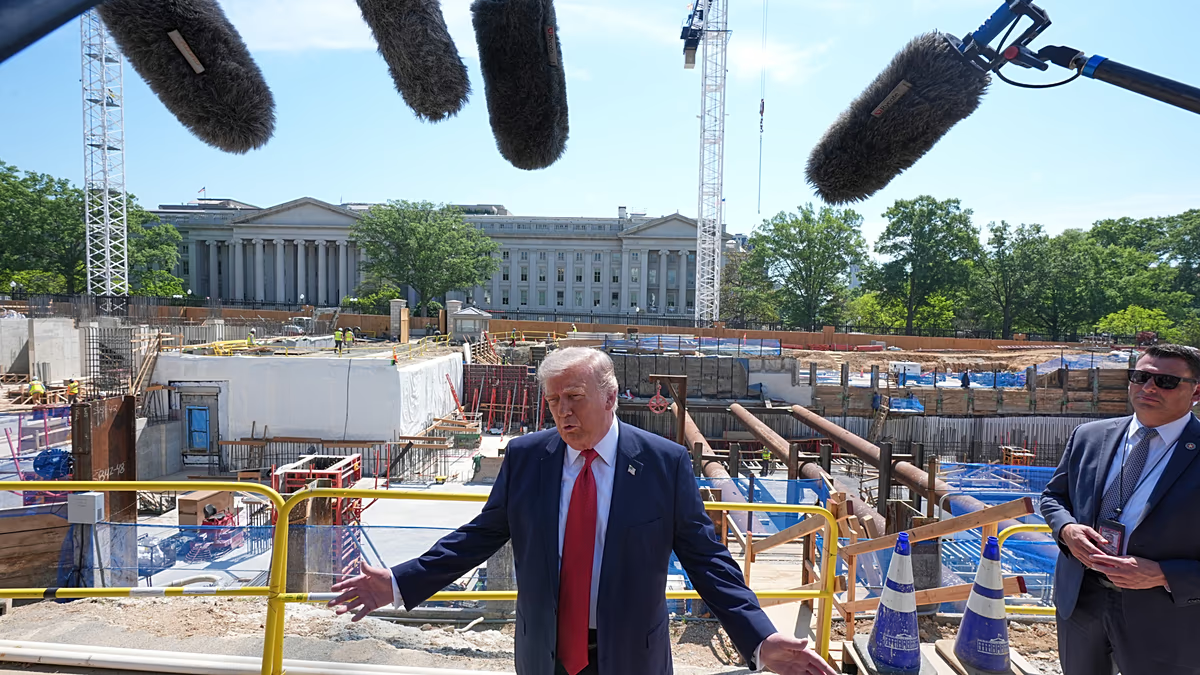
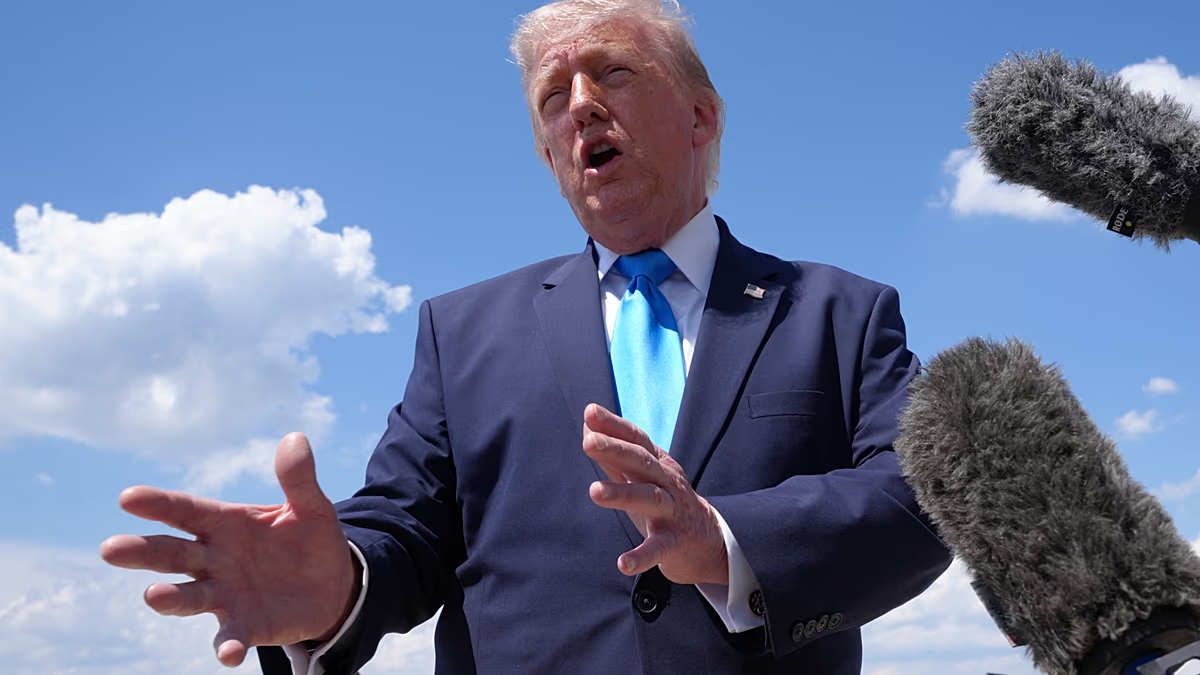


The diplomatic landscape surrounding Taiwan has entered a period of significant tension, marked by a potential shift in long-standing U.S. policy. In a statement that broke with decades of diplomatic precedent, former U.S. President Donald Trump announced his intention to speak directly with Taiwan’s leader, Lai Ching-te, while considering a substantial new arms deal for the island. This declaration is particularly striking because no sitting U.S. president has engaged in such direct communication with a Taiwanese leader since 1979, when Washington formally switched its diplomatic recognition from Taipei to Beijing. Trump’s casual remark, “I’ll speak to him. I speak to everybody,” belies the profound sensitivity of the issue, suggesting a personal, transactional approach to a matter that has been carefully managed through established channels for nearly half a century. The proposed conversation, coupled with arms sales, signals a possible move toward a more overt U.S. support structure for Taiwan, directly challenging the foundational understanding that has prevented a major crisis.
This potential shift occurs against the backdrop of China’s unwavering and increasingly assertive position. Beijing views Taiwan not as a separate nation but as an inseparable part of its own territory, a breakaway province that must eventually be reunified with the mainland. Chinese President Xi Jinping has consistently emphasized the critical importance of the “Taiwan issue” and has never renounced the use of force to achieve reunification. From China’s perspective, any official contact between foreign leaders and Taipei, especially involving arms transfers, constitutes a grave interference in its internal affairs and a violation of its core sovereignty. The recent U.S. actions are seen in Beijing as dangerously eroding the “One-China” principle, the very bedrock of Sino-U.S. relations since 1979. This creates a precarious situation where efforts to bolster Taiwan’s defense through arms sales and political recognition are interpreted by China as acts of provocation that justify its own military preparedness.
Complicating the situation further are Trump’s own contradictory statements, which reflect the inherent tension in U.S. Taiwan policy. Following a state visit to Beijing, he issued a direct warning to Taiwan against formally declaring independence, questioning why America should “travel 9,500 miles to fight a war” over such an act. “I want them to cool down. I want China to cool down,” he stated, portraying himself as a mediator seeking to de-escalate tensions. This rhetoric aligns with a traditional U.S. strategic ambiguity designed to deter unilateral actions by either side. However, the simultaneous push for a high-profile call with President Lai and a multi-billion dollar arms deal sends a starkly different signal—one of robust support and upgraded political relations. This duality creates confusion and uncertainty, leaving both Taipei and Beijing to guess at the true consistency and strategic endgame of U.S. policy, potentially miscalculating the other’s red lines.
Taiwan’s response has been a deft exercise in navigating these turbulent waters. The government in Taipei expressed gratitude for Trump’s role in regional peace efforts but firmly reasserted its own sovereignty. In a clear rebuttal to both U.S. warnings and Chinese claims, Taiwan’s foreign ministry stated that it is a “sovereign democratic country” over which “Beijing has no right to claim jurisdiction.” This statement underscores the core of the dispute: for the people of Taiwan, especially following decades of democratic development, the issue is one of self-determination and the right to their own governance. Taipei’s strategy remains focused on “peace through strength,” aiming to deepen cooperation with the United States to build a credible defense that deters aggression while avoiding overt provocations that could trigger a conflict. They seek security guarantees without being pawns in a great power struggle.
The cumulative effect of these developments is a dangerous erosion of the strategic buffers that have maintained a fragile peace in the Taiwan Strait for decades. The long-standing U.S. policy of strategic ambiguity—providing Taiwan with the means to defend itself without offering an explicit security guarantee—is being stretched to its limits. Direct presidential communication and major arms sales tilt the balance toward a clearer, more committed U.S. posture, which Beijing is certain to match with increased military and diplomatic pressure. This action-reaction cycle risks creating a new normal of heightened military alerts, frequent air and naval patrols, and a reduced threshold for crisis. The space for diplomatic maneuvering shrinks as both sides feel compelled to demonstrate resolve, increasing the likelihood of an accidental clash spiraling out of control.
Ultimately, the situation underscores a fundamental and growing clash of visions. China sees national rejuvenation as incomplete without Taiwan’s reunification. A democratic Taiwan sees its future in preserving its de facto independence and deepening international partnerships. The United States is grappling with how to support a democratic ally without precipitating a catastrophic war. There are no easy solutions, but the path forward requires clear, consistent communication and a renewed commitment to crisis management mechanisms from all parties. The alternative—a drift toward confrontation fueled by mixed signals, symbolic gestures, and military posturing—threatens not just regional stability, but global security. The delicate ecosystem of the Taiwan Strait cannot withstand the shock of abrupt policy shifts; it demands statesmanship that recognizes the immense human and economic cost of conflict, and prioritizes deterrence and dialogue over brinksmanship.