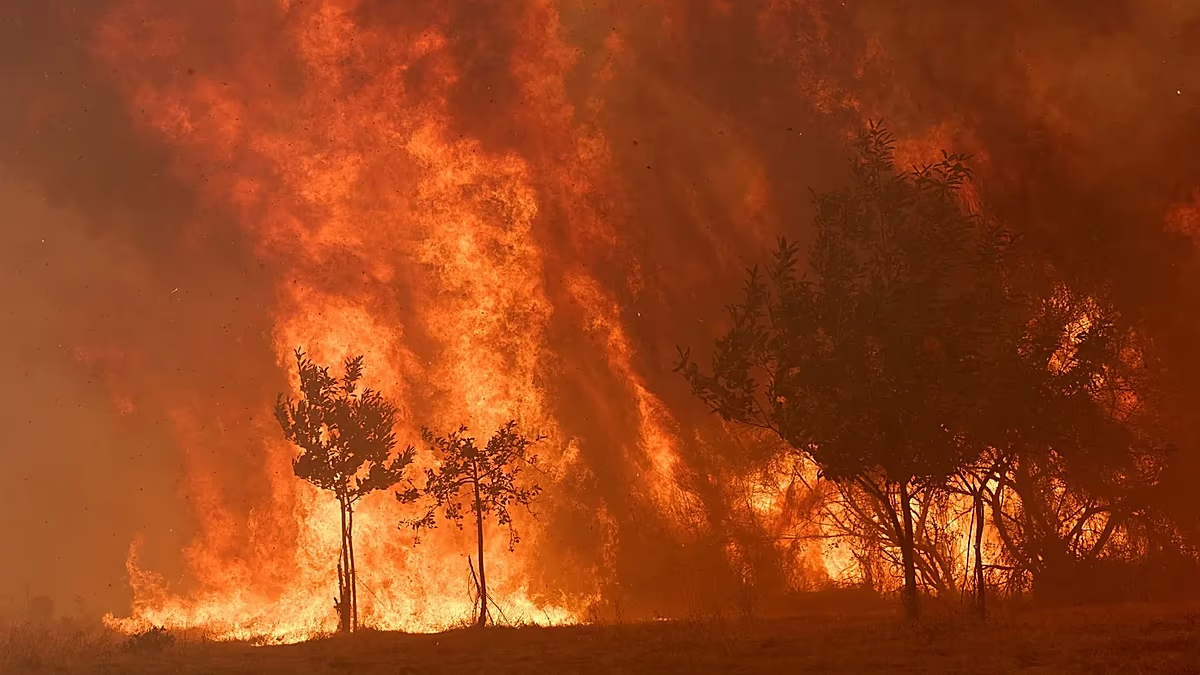



Spain is mobilizing an unprecedented arsenal in what has become a relentless and escalating battle against wildfires, a direct and devastating consequence of the climate crisis. On Thursday, Prime Minister Pedro Sánchez stood before the nation at the Torrejón airbase to unveil what he termed the state’s largest-ever deployment for a wildfire campaign. This monumental effort is a direct response to the catastrophic summer of 2025, which seared itself into the national consciousness as not only the hottest on record but also the most destructive, with nearly 4,000 square kilometers of land—an area larger than the island of Majorca—consumed by flames. As one of the European nations most vulnerable to a warming planet, Spain finds itself on the front line, where rising average temperatures are fueling longer, more intense heatwaves, deepening droughts, and creating a tinderbox landscape. Sánchez framed the initiative as an urgent necessity, stating, “We will put in place all the resources… to mitigate this emergency situation as much as possible and to prevent it happening again on this scale.”
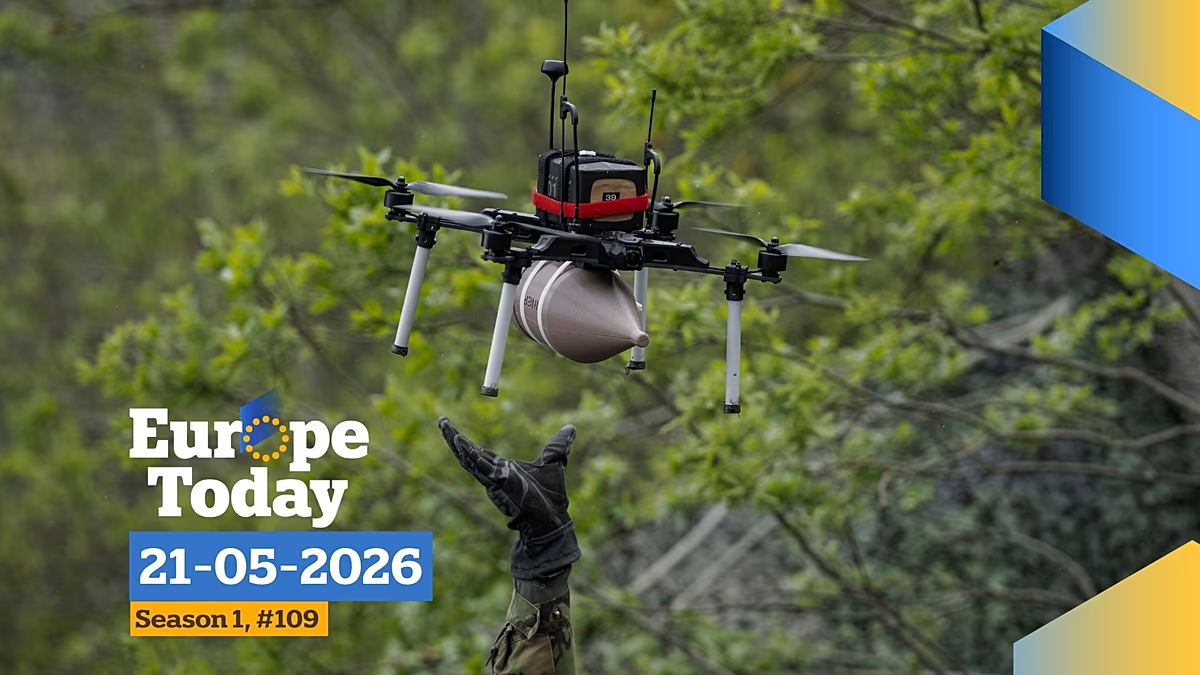
The strategic response is a technological and logistical leap forward, designed to confront fires that now behave with unprecedented ferocity. The government’s plan includes a significant bolstering of aerial firefighting capabilities, with new helicopters, planes, and specialized amphibious aircraft that can skim water from reservoirs to douse flames. This aerial fleet will be supported by a network of drones, advanced heat-detection cameras, and sophisticated surveillance systems, creating an integrated early-warning and rapid-response web. These tools are critical because, as Sánchez noted, modern wildfires strike “with greater force, greater virulence” and are exponentially harder to extinguish, often burning with an intensity that creates their own weather systems. Recognizing the shifting danger, the official wildfire season has been formally moved forward by two weeks to begin on June 1st, a tangible acknowledgment that the threat window is expanding year after year.
However, Spain’s fight is not merely against the flames but also against a persistent political challenge inherent in its decentralized structure. Wildfire management is primarily the responsibility of the country’s autonomous regions, a system that has often led to friction and recriminations during crises, particularly when regions governed by opposition parties are hardest hit. The devastating blazes of 2025 raged most fiercely in the right-governed regions of Galicia, Castile and León, and Extremadura, sparking public disputes over resource allocation and response times between local and central authorities. Sánchez directly addressed this fault line, appealing for a united front. “This battle…is won together with unity, with institutional loyalty, and not with confrontation,” he urged, emphasizing that “Fire does not distinguish between administrations, it does not ask who governs.”
At the heart of the Prime Minister’s announcement was a profound call for political and social unity in the face of a shared existential threat. He reiterated his plea for a “national pact against the climate emergency,” positioning the wildfire crisis not as an isolated seasonal disaster but as the most visible symptom of a broader climatic breakdown. This call to transcend partisan divides underscores the recognition that the scale of the challenge demands a cohesive, long-term strategy that outlasts electoral cycles. The new coordination measures between levels of government aim to streamline communication and resource-sharing, ensuring that the best available assets—whether national aerial resources or local ground crews—can be deployed seamlessly wherever the emergency strikes, without bureaucratic delay.
The human and ecological toll of the previous summer’s infernos hangs heavily over this new campaign. Beyond the staggering statistics of burned hectares lies a landscape of loss: destroyed homes, displaced wildlife, devastated agricultural livelihoods, and communities living with the lingering trauma of evacuation and the sight of their ancestral lands reduced to ash. The economic cost runs into the billions, from immediate firefighting expenses to long-term impacts on tourism, forestry, and soil stability. By launching this enhanced campaign, the government is implicitly acknowledging that the old ways of managing wildfires are no longer sufficient; a paradigm shift in preparedness and resilience is required to protect lives, ecosystems, and the economic fabric of vulnerable rural areas.
In essence, Spain’s historic anti-fire mobilization represents a nation girding itself for a new era of climatic adversity. It is a story of technological adaptation, deploying drones and heat sensors against an ancient enemy now supercharged by a changing climate. But more deeply, it is a test of national character and political will. The success of this campaign will depend not only on the efficiency of new helicopters but on the strength of the cooperation between governments, the commitment to sustained funding, and the broader societal engagement with the underlying crisis of global warming. As the hotter, drier months approach, the country watches and hopes that this unprecedented effort will mark a turning point in its struggle to safeguard its people and its precious natural heritage from the flames.