

Paragraph 1
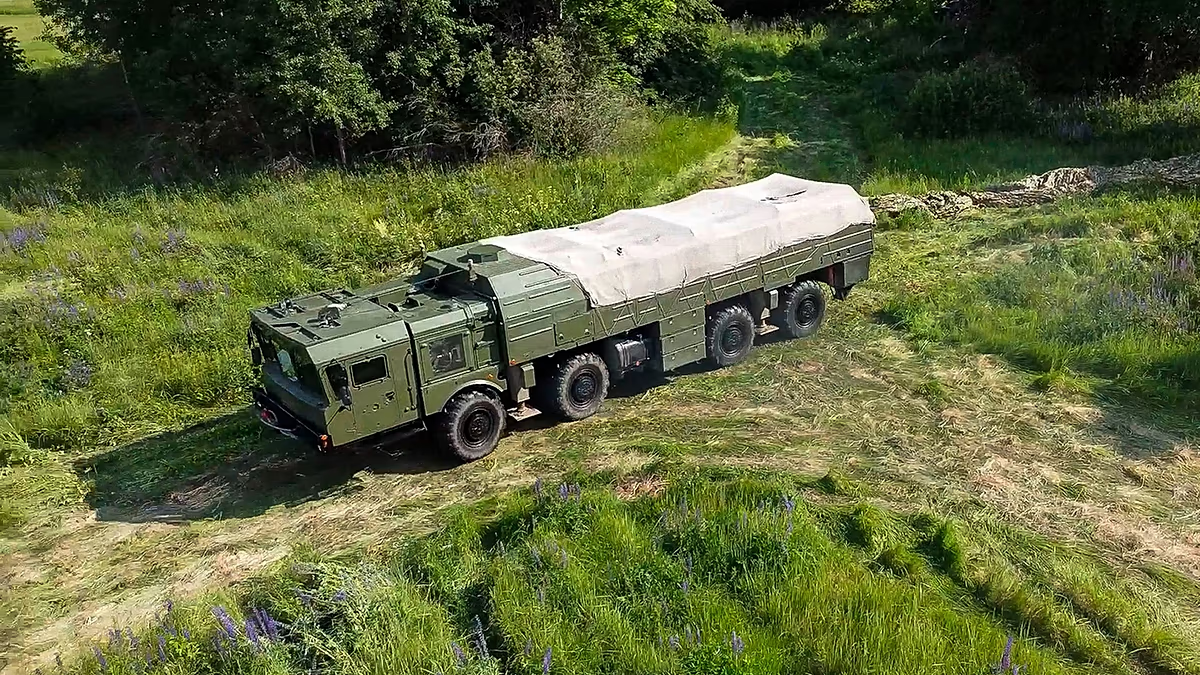
In a stark development that has further escalated tensions in Eastern Europe, Russia and Belarus have jointly announced the deployment of Russian nuclear weapons onto Belarusian soil. This action, framed as part of major, pre-planned military exercises, represents a tangible and alarming shift in the region’s security landscape. According to statements from the defense ministries in Moscow and Minsk released on a Thursday in late May, the process involved transporting nuclear munitions to field storage facilities within Belarus. To lend credibility to their claim, the ministries released a video clip, though its location remains undisclosed. The footage shows military vehicles moving through a forested area and what appear to be missiles being loaded onto mobile launchers, a visual meant to underscore the serious and operational nature of this deployment.
Paragraph 2
The weapon system at the heart of this activity is the Iskander-M, a modern missile platform known for its precision and mobility. Capable of striking targets up to 500 kilometers away, the Iskander can be armed with either conventional explosives or nuclear warheads, giving it a dual-purpose role that blurs the line between tactical and strategic weaponry. By moving these systems, with their nuclear-capable munitions, into Belarus, Russia effectively places a significant deterrent—or threat—much closer to the borders of NATO member states like Poland, Lithuania, and Latvia, as well as bringing more of Ukraine, including the capital Kyiv, into its immediate range. This move fulfills a pledge made by President Vladimir Putin over a year prior, turning a geopolitical warning into a military reality and fundamentally altering the nuclear posture in the region.
Paragraph 3
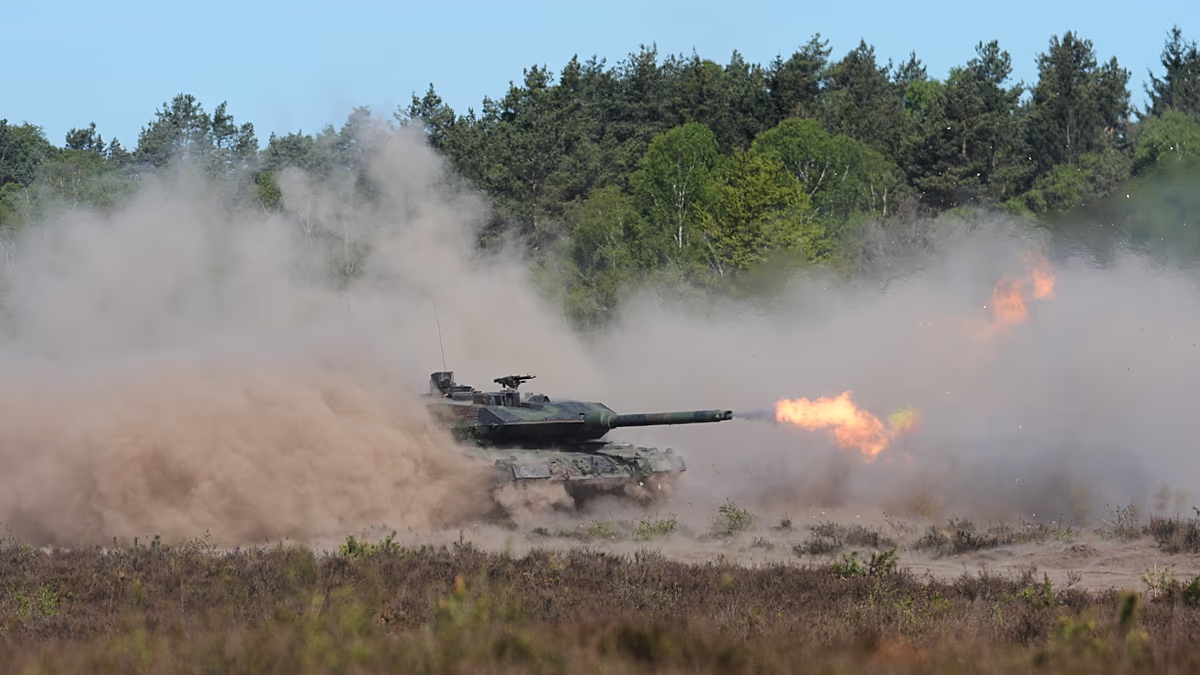
These actions are not occurring in isolation but as the centerpiece of extensive three-day nuclear drills spanning both Russia and Belarus. The scale of these exercises is formidable, involving tens of thousands of troops, hundreds of missile launchers, a fleet of drones, and a significant naval contingent including strategic submarines. For neighboring nations, particularly the Baltic states, these drills compound an already heightened sense of vulnerability. The region has been unsettled by a series of mysterious drone incidents and other hybrid threats, creating an atmosphere where every large-scale Russian military activity is viewed with profound suspicion and anxiety. The nuclear element injects an unprecedented level of risk into an environment already on edge.
Paragraph 4
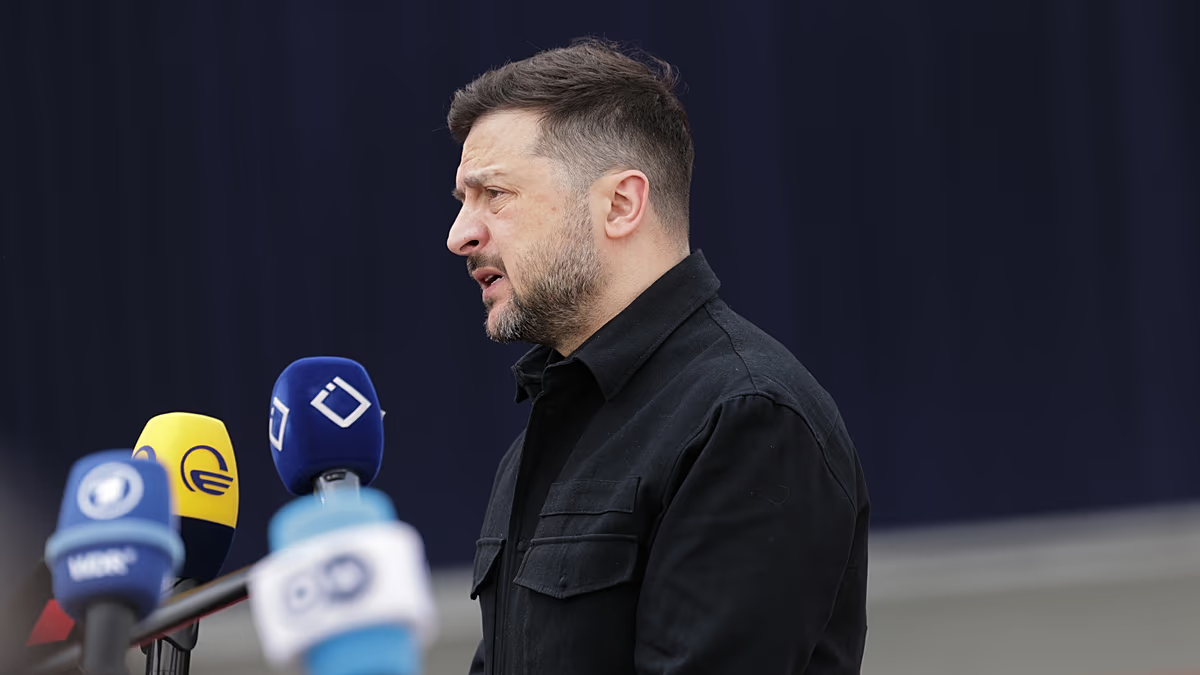
The response from Ukraine, which faces the most direct and existential threat from this consolidation of Russian and Belarusian forces, has been one of heightened vigilance. Ukraine’s Security Service (SBU) announced an immediate strengthening of defensive and security measures in its northern regions, which border Belarus. Their primary concern is not just the specter of nuclear weapons but the more immediate possibility of sabotage groups or military infiltrators crossing the border under the cover of the extensive exercises. President Volodymyr Zelenskyy confirmed these concerns, revealing that he had specifically discussed the potential for a new Russian offensive aimed at northern Ukrainian regions, including around Kyiv, with his military commanders. For Ukrainians, the drills are seen as both a psychological intimidation tactic and a potential rehearsal for renewed aggression.
Paragraph 5
This deployment raises profound and disturbing questions about the future of European security. By stationing its nuclear weapons outside its own territory for the first time since the end of the Cold War, Russia is deliberately testing NATO’s resolve and redrawing the lines of nuclear deterrence. It represents a deliberate “raising of the stakes,” making the conflict in Ukraine an even more central flashpoint in a renewed great-power confrontation. For Belarusian leader Alexander Lukashenko, it cements his country’s role as a full-fledged platform for Russian military power, sacrificing a degree of sovereignty in exchange for the Kremlin’s continued support, while placing his nation squarely in the crosshairs of any potential future confrontation.
Paragraph 6
Ultimately, the movement of nuclear munitions into Belarus is more than a tactical military exercise; it is a potent political symbol and a strategic gambit. It is designed to signal unwavering resolve, to sow division and fear within NATO, and to warn against increased Western support for Ukraine. The accompanying video serves as a deliberately chilling message: the capability is not just theoretical but operational and deployed. As the world watches, this development marks a dangerous new chapter, one where the nuclear shadow over the European continent has grown longer and darker, reminding everyone that the rhetoric of nuclear brinkmanship has been matched with concrete, destabilizing action. The path toward de-escalation appears narrower than ever, buried under the weight of missiles transported into a Belarusian forest.