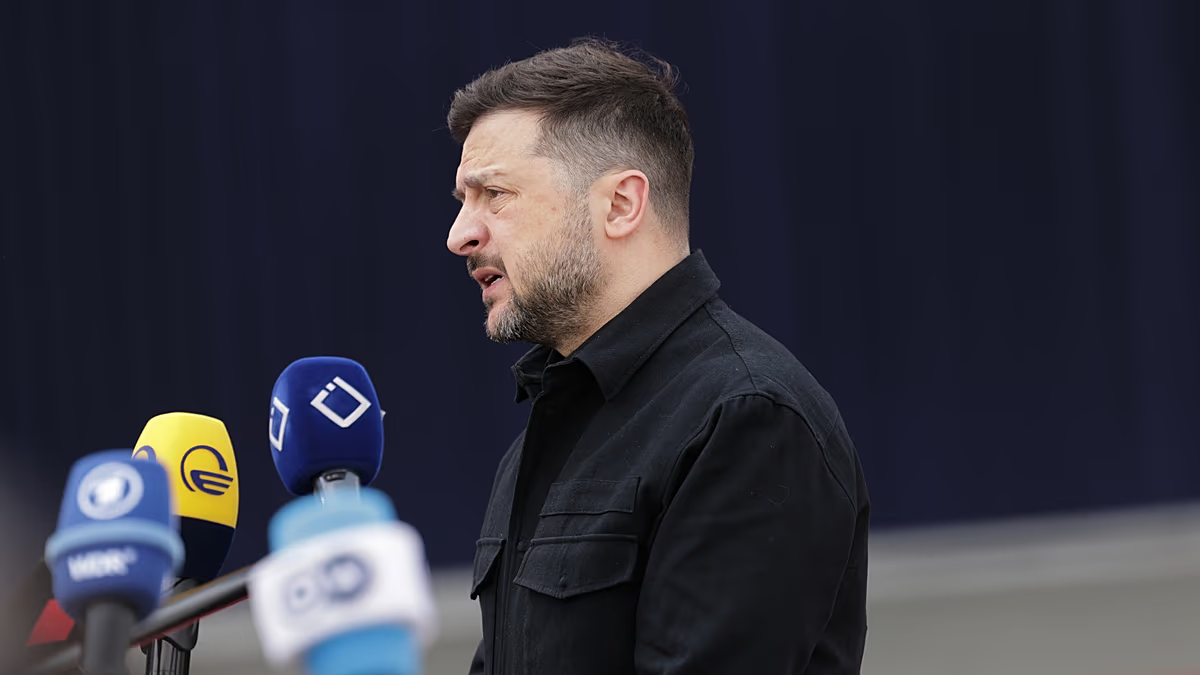


In a significant escalation of its long-range campaign against Russian military logistics, Ukrainian forces successfully struck the Syzran oil refinery deep inside Russian territory. Ukrainian President Volodymyr Zelenskyy publicly confirmed the operation, sharing video evidence that showed substantial flames and dark smoke engulfing the facility. This strike represents a clear and calculated shift in Ukrainian strategy, moving beyond defensive measures to actively disrupt the fuel supplies that power the Russian war machine. By targeting such critical infrastructure, Kyiv aims to strangle the logistical arteries that support frontline operations, imposing a tangible economic and operational cost on the Kremlin for its continued aggression.
The precision of this attack underscores the growing sophistication of Ukraine’s military capabilities. President Zelenskyy specifically credited the warriors of the Unmanned Systems Forces and the Special Operations Forces for their role, revealing a coordinated effort with Ukraine’s Security Service. This highlights a well-developed ecosystem of domestic drone technology and elite special operations units capable of executing complex missions far behind enemy lines. The human cost of the war, even in these retaliatory strikes, was made evident by the announcement from Russian regional governor Vyacheslav Fedorishchev, who confirmed two fatalities and several injuries at the refinery site—a somber reminder of the conflict’s far-reaching human toll.
This assault on the Syzran refinery is not an isolated event, but part of a concerted and escalating campaign. In the days leading up to this strike, Ukrainian forces had already targeted another major refinery in Kstovo. Furthermore, just days prior, Ukraine launched one of its largest aerial drone barrages since the war began, with Russian defenses reportedly intercepting over 550 drones across the country, including in the strategically symbolic Moscow region. These actions signal a strategic decision to take the war, in a limited but impactful form, directly to Russian soil, challenging the notion of Russia’s domestic sanctuary from the consequences of its invasion.
President Zelenskyy has framed these operations as a justified and necessary response to Russia’s own relentless bombardment of Ukrainian civilian life. He has articulated a doctrine of legitimate retaliation, stating that Ukrainian responses are direct consequences of Russia’s choice to prolong the war and its continuous attacks on cities and communities. This narrative positions Ukraine’s strikes on military-industrial targets like oil refineries as a proportional counter to Russia’s tactics, which have consistently targeted residential buildings and energy grids, aiming to break Ukrainian morale through hardship and terror.
Indeed, the Ukrainian home front continues to endure a brutal and almost unceasing barrage from Russian missiles and drones. In a stark example from just earlier in the week, Zelenskyy detailed a massive Russian attack on the Dnipro region that lasted over six hours and involved 524 attack drones and 22 missiles, striking both energy facilities and residential buildings. This constant reality of aerial terror provides the grim context for Ukraine’s own long-range operations. For Ukrainians, the flames seen rising from a Russian refinery are a distant echo of the destruction visited upon their own homes, a means of shifting some of the war’s pressure back onto the aggressor state.
The strategic calculus behind targeting Russia’s oil refining sector is multifaceted. Beyond the immediate disruption to military fuel supplies, these strikes aim to cripple a vital source of Russian state revenue, thereby undermining the economic foundation of Putin’s war effort. Each successful attack not only causes physical damage and forces expensive repairs but also creates uncertainty in global energy markets and demonstrates vulnerabilities within Russia’s own defenses. As the conflict grinds on, Ukraine’s demonstrated ability to project power deep into Russia with drones marks a new phase—one where Kyiv is no longer solely defending its borders but is actively working to degrade the enemy’s capacity to wage war, signaling both resilience and a determined shift towards a posture of strategic disruption.