



The recent interception of the “Global Sumud Flotilla,” a humanitarian aid mission bound for Gaza, has ignited a significant political firestorm within Israel and drawn sharp international criticism, centering on a controversial video released by National Security Minister Itamar Ben-Gvir. The footage shows the far-right minister taunting detained activists, who are seen kneeling with their hands bound. Waving a large Israeli flag before them, Ben-Gvir declared, “Welcome to Israel, we are the landlords.” The images, which he personally publicized, were intended as a show of force but have instead provoked a profound debate about the state’s values and its international image during a protracted and painful conflict.
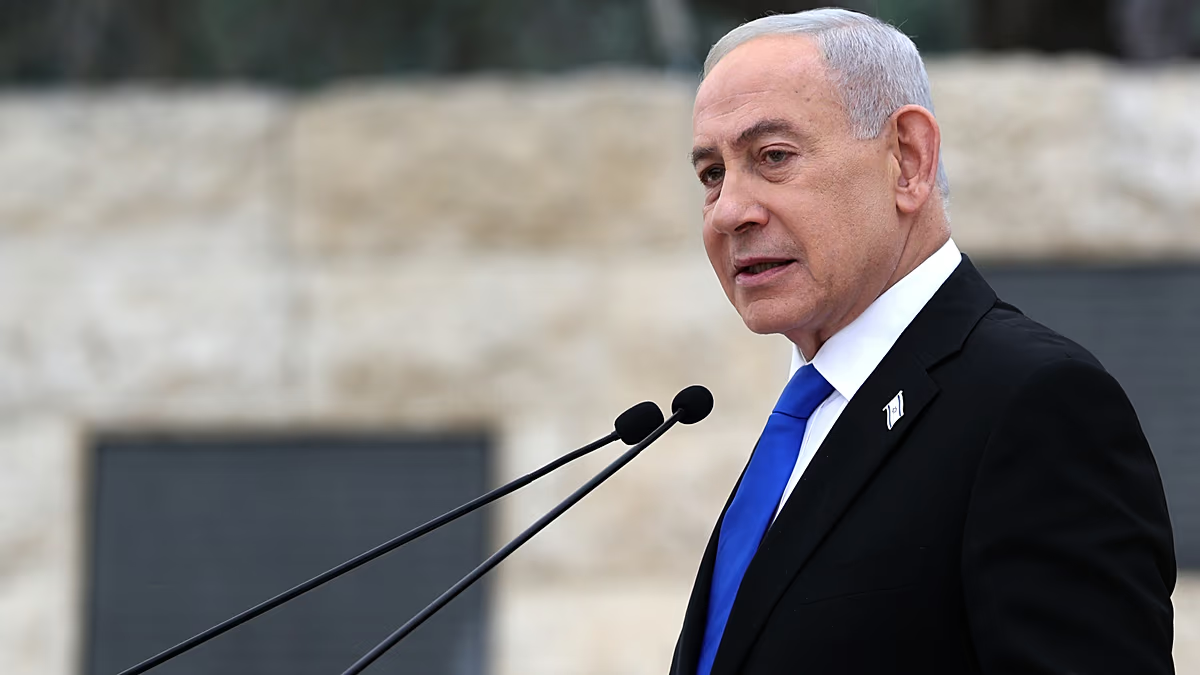
In a rare and pointed rebuke, Prime Minister Benjamin Netanyahu swiftly distanced himself and his government from his minister’s conduct. While firmly defending Israel’s legal right to intercept vessels it deems a security threat, Netanyahu stated that Ben-Gvir’s manner was “not in line with Israel’s values and norms.” This internal condemnation highlights a deep rift within the coalition government, where Ben-Gvir’s brand of confrontational, nationalist politics often clashes with more traditional establishments. The Prime Minister’s statement was an attempt to draw a line between legitimate security policy and what many saw as gratuitous humiliation, acknowledging the severe diplomatic damage the video inflicted.
The criticism from within Israel’s own leadership was particularly scathing. Foreign Minister Gideon Sa’ar addressed Ben-Gvir directly on social media, accusing him of having “deliberately caused damage to the state in this disgraceful performance.” In a powerful retort, Sa’ar asserted, “No, you are not the face of Israel.” This extraordinary public spat between senior cabinet members lays bare a fundamental struggle over the country’s identity and strategic posture. In response, an unrepentant Ben-Gvir framed the confrontation in stark, militant terms, arguing that his critics fail to understand that “Israel has stopped being a pushover,” and that supporters of terrorism “will get slapped.” This exchange transcends a simple policy disagreement, representing a clash between a hawkish vision of raw power and a more diplomatically-minded approach to statecraft.
Internationally, the video provoked outrage and bolstered existing criticisms of Israel’s conduct in Gaza. Australian Foreign Minister Penny Wong labeled the footage “shocking and unacceptable,” while demanding the release of eleven detained Australian nationals. Beyond formal diplomatic channels, the imagery served as a potent tool for activists and critics. Rania Batrice, a spokesperson for the flotilla, argued that the treatment of international activists revealed a deeper truth about the ongoing conflict. “If they’re doing that to Europeans and Americans… imagine what they’re doing to the Palestinian people,” she stated, calling the scene a microcosm of a larger injustice. Her plea that “strongly worded letters are not what we need right now” underscored a growing global frustration with diplomatic rhetoric in the face of compelling visual evidence.
The incident underscores the complex and often contradictory pressures facing the Israeli government. On one hand, it must enforce a naval blockade it considers vital for preventing weapons smuggling to Hamas, a stance supported by a significant portion of its populace after the horrors of October 7th. On the other, it must navigate intense international scrutiny and maintain relationships with allied nations, whose citizens were among those detained and humiliated. Ben-Gvir’s actions, celebrated by his nationalist base as a show of strength, effectively turned a controlled security operation into a public relations disaster, complicating Israel’s efforts to justify its security measures on the global stage.
Ultimately, this episode is more than a dispute over a single flotilla; it is a revealing snapshot of a nation at war with itself over its soul and its future. The kneeling activists, the waving flag, and the minister’s boastful proclamation have become symbols in a broader narrative. For Israel’s critics, they are evidence of a deliberate policy of dehumanization. For the government’s supporters, they represent a necessary defiance. And for the dissenting voices within the Israeli cabinet, they are a dangerous and embarrassing provocation that undermines both the state’s moral standing and its strategic interests. As the war continues, the tension between securing the state and upholding its professed democratic values remains painfully unresolved, with the world watching closely.