
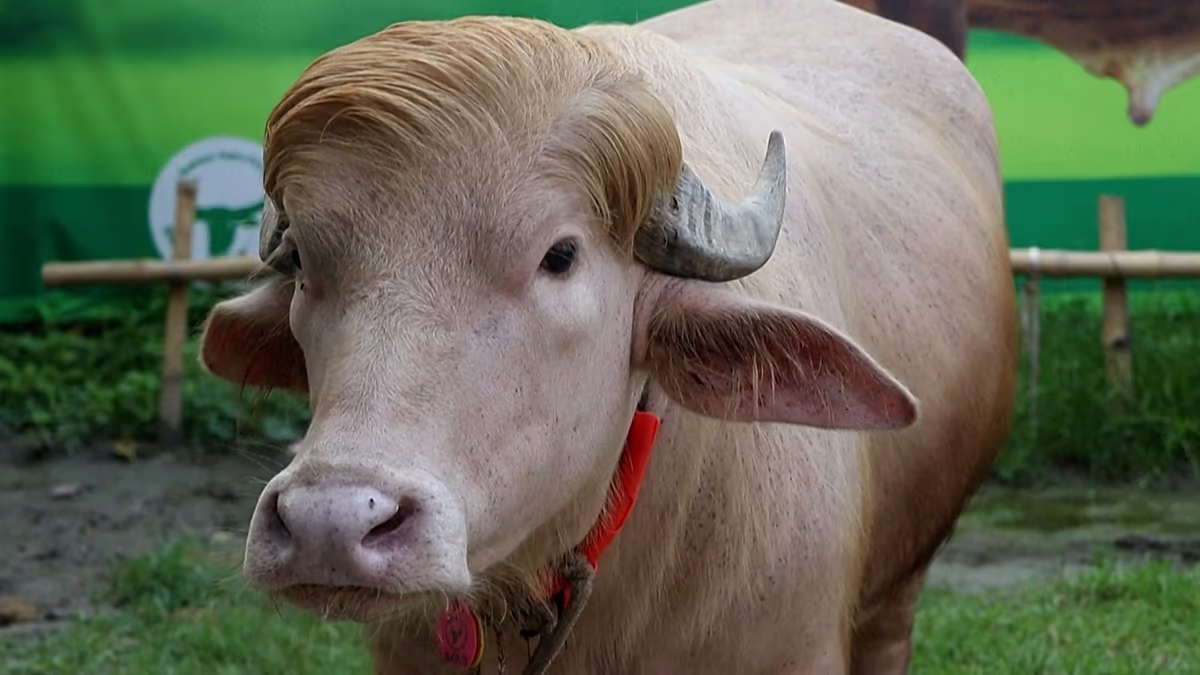


In the lush, river-cut countryside of Bangladesh, a most unusual star has emerged. This is not a celebrity in the traditional sense, but a 700-kilogram water buffalo belonging to farmer Zia Uddin Mridha. What sets this massive bovine apart and has propelled it to viral fame is its astonishing coat of long, flowing blond hair. The pale, sweeping locks that fall dramatically from its head and frame its face have drawn an immediate and widespread comparison: the distinctive hairstyle of former US President Donald Trump. This whimsical resemblance has transformed the quiet farm into an unexpected pilgrimage site. Throughout the month of May, families, social media influencers, and scores of curious locals have journeyed to see the animal, their phones held aloft to capture a glimpse—and a selfie—with the internet’s latest bizarre sensation.
The animal’s care has become a ritualistic preparation for its daily fame. Understanding its newfound role as a public figure, its caretakers wash the buffalo four times a day. Before the arrival of visitors, they meticulously brush its pale mane, ensuring the hair beneath its grand, curved horns is perfectly coiffed for its audience. This routine underscores the surreal shift from livestock to luminary. However, this sudden onslaught of attention has come at a cost. The owner, Mridha, notes that the constant stream of crowds and the disruption to its normal routine have caused the buffalo stress, leading to a noticeable loss of weight. In a bid to protect the animal’s well-being, the farm has been forced to impose restrictions on public access, attempting to balance its popularity with its health.
Yet, the allure of the “Trump Buffalo” proves irresistible. Despite these protective measures, visitors continue to flock from surrounding districts, their determination underscoring the peculiar gravity of this attraction. Some make the journey by boat, navigating the waterways of Bangladesh for a chance to lay eyes on the celebrated creature. This persistent footfall highlights a deep-seated human fascination with the rare and the novel. The timing adds another layer, as many are eager to see the animal before the onset of Eid al-Adha, one of the most significant festivals in the Islamic calendar. The buffalo’s fame has cast a unique spotlight on a period traditionally focused on faith and sacrifice.
The animal’s extraordinary appearance is not merely a quirk of grooming; it is a genetic rarity. Officials from the Bangladesh Department of Livestock Services explain that such albino buffaloes are exceptionally uncommon. The striking blond coat is the result of very low melanin production, a rare genetic occurrence in the species. This scientific fact elevates the buffalo from a mere curiosity to a legitimate natural wonder, a one-in-a-million creature that would stand out in any context. Its viral fame, sparked by a pop-culture comparison, has inadvertently highlighted a beautiful anomaly of nature that might have otherwise gone unnoticed outside its local village.
This context makes the impending festival of Eid al-Adha particularly poignant. In Bangladesh, a nation of over 170 million people, more than 12 million animals are typically sacrificed during the holiday, a solemn act of faith commemorating the devotion of Prophet Ibrahim. The buffalo, despite its celebrity status, is ultimately part of this profound tradition. Farmer Zia Uddin Mridha has spoken openly about this reality, expressing that he will personally miss the animal that brought him and his farm such unexpected attention. Nevertheless, he gently stresses that the sacrifice remains a central, sacred tenet of the religious celebration. His words introduce a moment of sober reflection amidst the fanfare, grounding the buffalo’s whimsical story in the bedrock of cultural and spiritual practice.
Thus, the saga of the blond buffalo is a deeply human story woven from contrasting threads: viral internet fame and ancient religious tradition, genetic rarity and pop-culture parody, carefree curiosity and solemn duty. It is a tale that captures a fleeting, surreal moment where a humble farm animal, through a twist of genetics and timing, becomes a global talking point. Yet, it also gently reminds us of the enduring rhythms of life, faith, and nature that continue beneath the flash of social media trends. As visitors depart with their photos and the festival approaches, the buffalo stands as a quiet testament to the unexpected ways in which the ordinary can become extraordinary, and how, even in the glare of the spotlight, deeper traditions hold their steady course.