



The seismic shock of Russia’s full-scale invasion of Ukraine in 2022 fundamentally altered the security landscape of Europe, thrusting Germany’s military, the Bundeswehr, back into the heart of national debate. Amid discussions of a historic Zeitenwende—or turning point—involving massive rearmament and increased defence spending, a critical question emerges: how do ordinary Germans actually view their armed forces and the nation’s role in defence? Dr. Timo Graf’s comprehensive annual study, “Germany in a Military Leadership Role?”, provides profound and often surprising answers, revealing a public that is pragmatic, supportive, but undergoing a significant reassessment of its alliances. The research, conducted independently of daily politics, traces a clear evolution in German attitudes, moving from a post-Cold War comfort zone towards a new, more self-reliant and vigilant realism in the face of aggression.
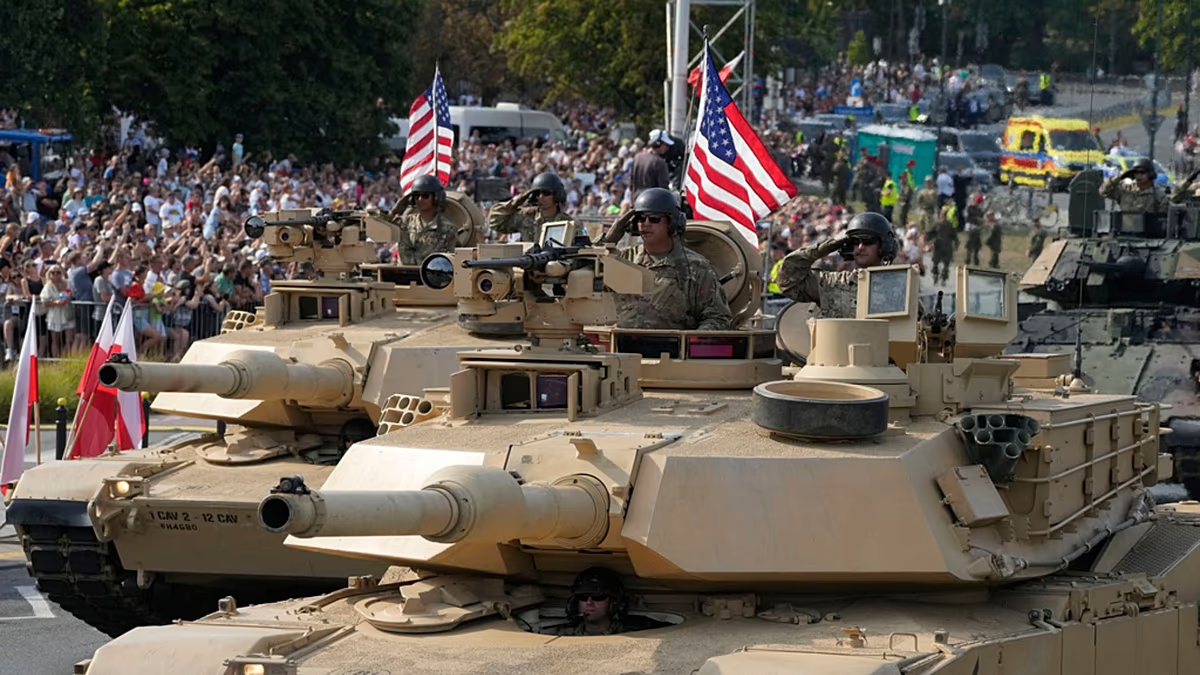
One of the study’s most striking findings is a dramatic and sustained decline in German trust in the United States as a NATO ally, with drops of up to 28 percentage points recorded by spring 2025. This “Trump effect,” reflecting anxiety over the former president’s return to office and his administration’s stance on NATO, European security, and global conflicts, has pushed trust to historically low levels. However, Dr. Graf suggests this sentiment may have now consolidated, with a hard core of transatlanticists remaining. Intriguingly, this eroded trust does not translate into a desire for a complete American withdrawal. A nuanced pragmatism prevails: while fewer Germans see the U.S. as a “reliable partner,” clear majorities still believe America should be involved in European defence, and support for hosting U.S. nuclear weapons on German soil as a deterrent has even slightly increased. The public, it seems, is acutely aware of Europe’s continued military dependency even as it grows deeply wary of the political reliability of its guarantor.
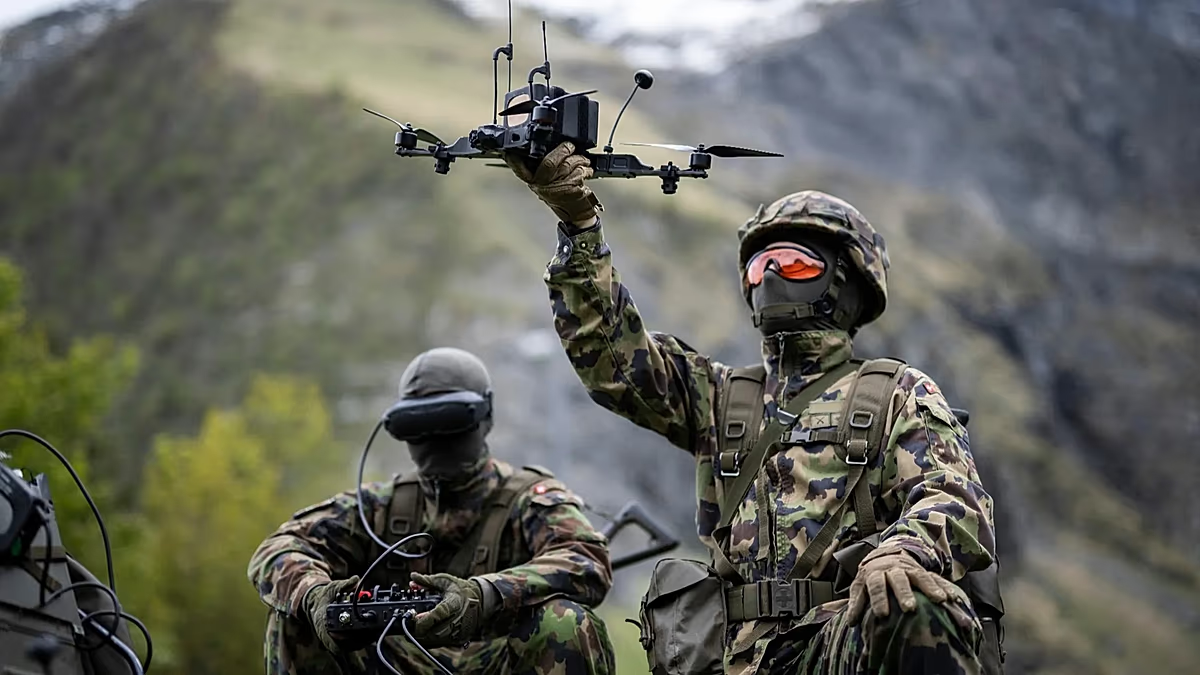
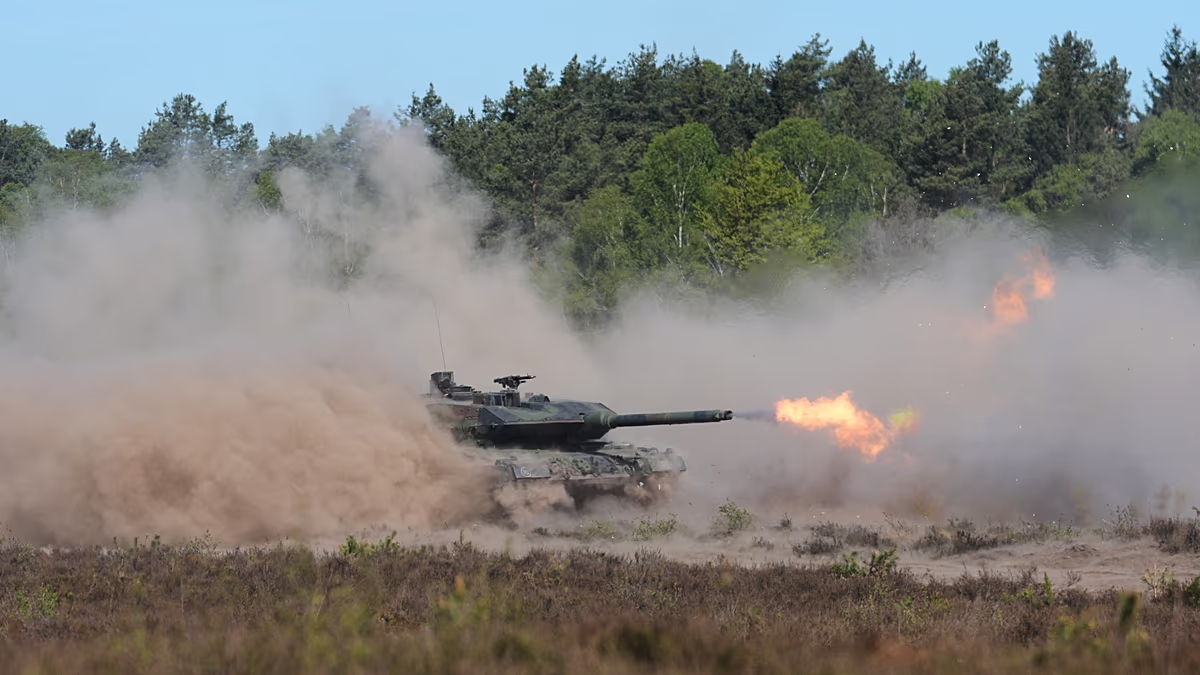
Contrary to a persistent cliché, the study robustly debunks the notion that Germans are inherently pacifist or harbour broad scepticism towards their military. The data shows that a stable and substantial majority—consistently around 75% since 2000—holds a positive opinion of the Bundeswehr as an institution. What has shifted is not the esteem for the soldiers, but the public’s support for their mission. The Zeitenwende in public opinion is a strategic one: a decisive move away from support for controversial overseas deployments like Afghanistan or Mali, which were often questioned on political grounds, towards strong backing for the Bundeswehr’s renewed core task of territorial and collective defence within Europe. This is directly linked to a stark reassessment of the threat, with 65% of Germans now viewing Russia as a direct military threat. The armed forces are thus supported not for abstract peacekeeping, but for the concrete, understood necessity of defending German and allied soil.
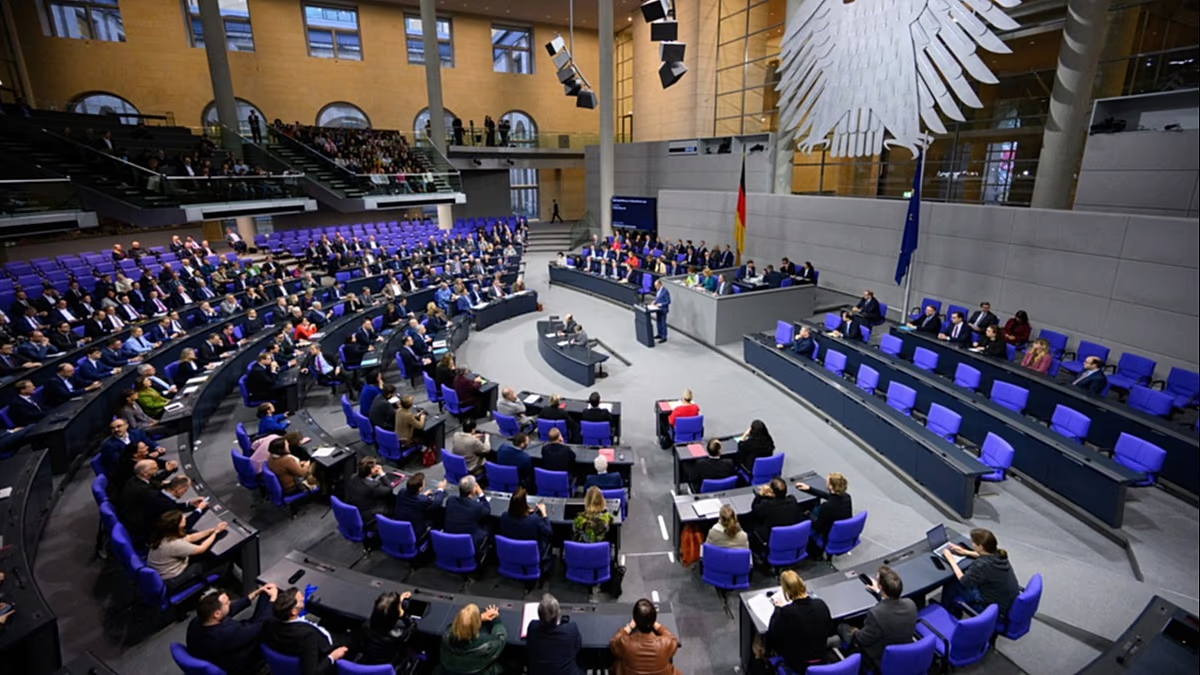
This support is remarkably broad-based, cutting across age and, to a large extent, political affiliation. While younger generations, socialized after the suspension of conscription in 2011 and during an era of military downsizing, are slightly less enthusiastic, clear majorities among them still back the Bundeswehr and increased spending. Politically, support for higher defence spending commands majorities across the spectrum, from around 75% of conservative CDU/CSU voters to 62% of Green voters and an absolute majority of Left party voters. Even among traditionally more critical left-leaning voters, most are not fundamentally opposed to the military or strengthening defence; their scepticism is more focused on the pace and societal implications of rearmament. This reveals a national consensus forged by perceived existential threat, overriding historical ideological divides.
This consensus translates into solid public backing for Germany’s concrete military commitments on NATO’s eastern flank. When asked about strengthening engagement to secure the alliance’s border, nearly half of Germans agree, with only 23% in opposition. Support is even stronger for specific, geographically closer missions: air policing over Poland and, most of all, the Baltic Sea surveillance mission, which enjoys a 66% approval rating. The logic is clear and intuitive: the closer a deployment is perceived to Germany’s own security, the greater the public support. The abstract, often unsuccessful rationale of past missions—like stabilising Mali to curb migration—has been replaced by a direct understanding that defending the Baltic states or Poland is tantamount to defending Germany’s own front yard. The deployment of a permanent Bundeswehr brigade to Lithuania fits squarely into this publicly endorsed strategy of forward defence.
In conclusion, the German public has undergone a profound and pragmatic recalibration. Driven by Russia’s blatant aggression, a volatile American ally, and a daily reality of hybrid threats, a stable majority now accepts higher defence spending as a necessary investment in a newly dangerous world. The Bundeswehr itself enjoys strong institutional support, which has been redirected and energised by its refocus on national and alliance defence. While trust in the United States has been deeply wounded, it has not shattered the foundational understanding of strategic interdependence. The picture that emerges is not of a nation embracing militarism, but of a society soberly stepping into a role of greater responsibility and self-reliance, supporting a capable military for a clear and present purpose: ensuring its own security and that of its European neighbours in an unsettled age.