

Here is a humanized and expanded summary of the provided content, structured into six paragraphs as requested.
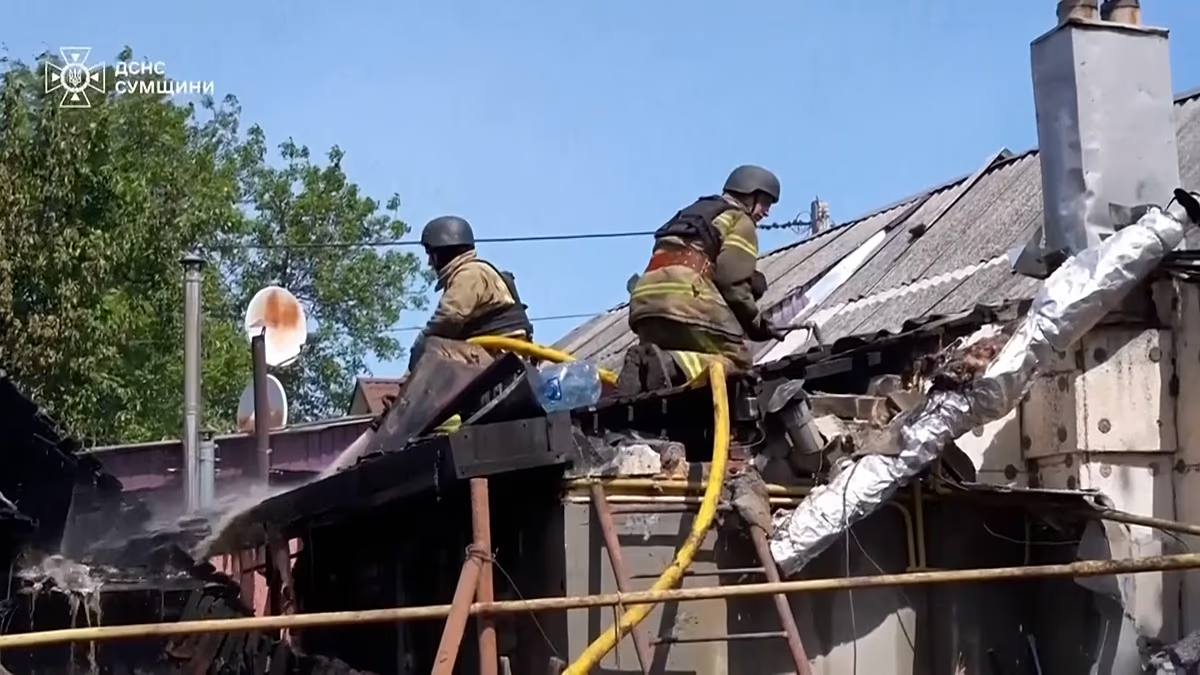
In the predawn darkness of Sumy, a familiar and dreadful scene unfolded once more. Emergency crews, their figures silhouetted against an ominous glow, moved with a grim determination through streets choked with smoke and littered with debris. The relentless spray of fire hoses attempted to tame the flames devouring homes, while other responders carefully picked through the skeletons of damaged structures, their every movement a silent prayer that no one remained trapped within. The local authorities confirmed a heartbreaking detail that cuts through the statistical fog of war: among the injured was a child. This single fact transforms the abstract violence into a profound human tragedy, a young life interrupted by terror and shrapnel.
The visual evidence released in the aftermath tells a stark story of suburban devastation. Photographs show not just fire, but its brutal aftermath: roofs collapsed inwards as if under a giant’s fist, walls standing with their faces scorched black, and teams of emergency workers, their uniforms smudged with soot, methodically removing piles of rubble. This damage was the result of another overnight assault, a relentless rhythm of violence that has become the horrifying normal for this region. Sumy’s geographic position, nestled near the Russian border, has made it a perpetual target, enduring repeated bombardments throughout the war. Despite the passing months, the community remains heartbreakingly vulnerable to the sudden, unseen threat of drones and missiles piercing the night sky.
The assault on Sumy was not an isolated incident, but part of a massive, coordinated wave of aggression. According to Ukraine’s air force, that same night saw Russia launch an astounding 116 drones across the country’s northern, eastern, and southern regions. In a testament to both the scale of the attack and the relentless preparedness of Ukrainian defenders, the military reported intercepting 109 of these unmanned aerial vehicles. However, the grim mathematics of modern warfare means that even a high interception rate cannot guarantee safety. Officials confirmed that a ballistic missile and five drones successfully struck their targets across five different locations. Furthermore, the very act of defense can spawn its own dangers, as falling debris from destroyed drones caused significant damage in four additional areas, a cruel reminder that safety is fleeting even when a direct hit is avoided.
This latest barrage arrives amidst a complex and contradictory backdrop of ongoing diplomatic murmurs and relentless military reality. While channels of communication regarding potential reductions in hostilities may remain theoretically open, the battlefield tells a different, more visceral story. Both sides continue to engage in devastating long-range strikes, a grueling war of attrition that extends far beyond the front lines. For Ukrainian civilians, this translates to a life lived in the shadow of sudden annihilation, where a trip to the market, a night’s sleep, or a morning coffee can be shattered by sirens and explosions.
Ukrainian officials are sounding an urgent alarm about the compounding consequences of these sustained attacks, particularly on civilian infrastructure. Targeting power grids, residential buildings, and municipal services does more than just cause immediate destruction; it applies a grinding, systemic pressure that slowly cripples a community’s ability to function and recover. Emergency services—the firefighters, paramedics, and utility workers—are stretched to their absolute limits, racing from one crisis to the next with diminishing resources and little respite. For local residents in frontline regions like Sumy, this strategy creates an exhausting reality of perpetual disruption, where access to heat, clean water, and medical care becomes a daily struggle, deepening the humanitarian crisis far from the trenches.
Ultimately, the story emerging from Sumy and across Ukraine is one of profound resilience in the face of calculated terror. It is a story written in the weary resolve of firefighters hosing down a neighbor’s home, in the community solidarity that forms in basements used as bunkers, and in the unbearable grief of a child’s injury. Each intercepted drone is a tactical success, but each scorched wall and shattered window represents a human cost that cannot be tallied on a military briefing slide. As long-range strikes persist, they are not merely hitting coordinates on a map; they are eroding the very fabric of daily life, testing the spirit of a population that endures, and reminding the world that the true front line in this conflict is often a quiet street in a city like Sumy, awaiting the next tremor of war.