


Here is a humanized and expanded summary of the provided content, structured into six paragraphs.
In a dramatic and destabilizing ruling, a Turkish court has thrown the nation’s political landscape into turmoil by annulling the 2023 leadership election of the main opposition party, the Republican People’s Party (CHP). According to the state-run Anadolu Agency, the court not only overturned the vote that brought current leader Özgür Özel to power but also ordered the party’s former long-term chair, Kemal Kılıcdaroglu, to return as interim leader. This decision represents a sharp and severe escalation against the country’s embattled opposition, sending immediate shockwaves through Turkish institutions. The financial markets reacted with visceral alarm, as the ruling prompted Istanbul’s main stock exchange to plummet by over 6%, a clear indicator of the profound uncertainty the judicial intervention has unleashed.
The legal pretext for this seismic ruling centers on allegations of vote-buying at the CHP’s November 2023 congress. Prosecutors have alleged that Özel secured his victory by pressuring delegates with promises of jobs and other illicit incentives. It is critical to note, however, that this case had already been dismissed once by an Ankara court in October, which found the accusations to be without substance. Undeterred, prosecutors appealed, and a higher court has now found in their favor, reactivating the charges. This procedural back-and-forth highlights the contentious nature of the case and raises immediate questions about the consistency and independence of the judicial process in what is a deeply political matter.
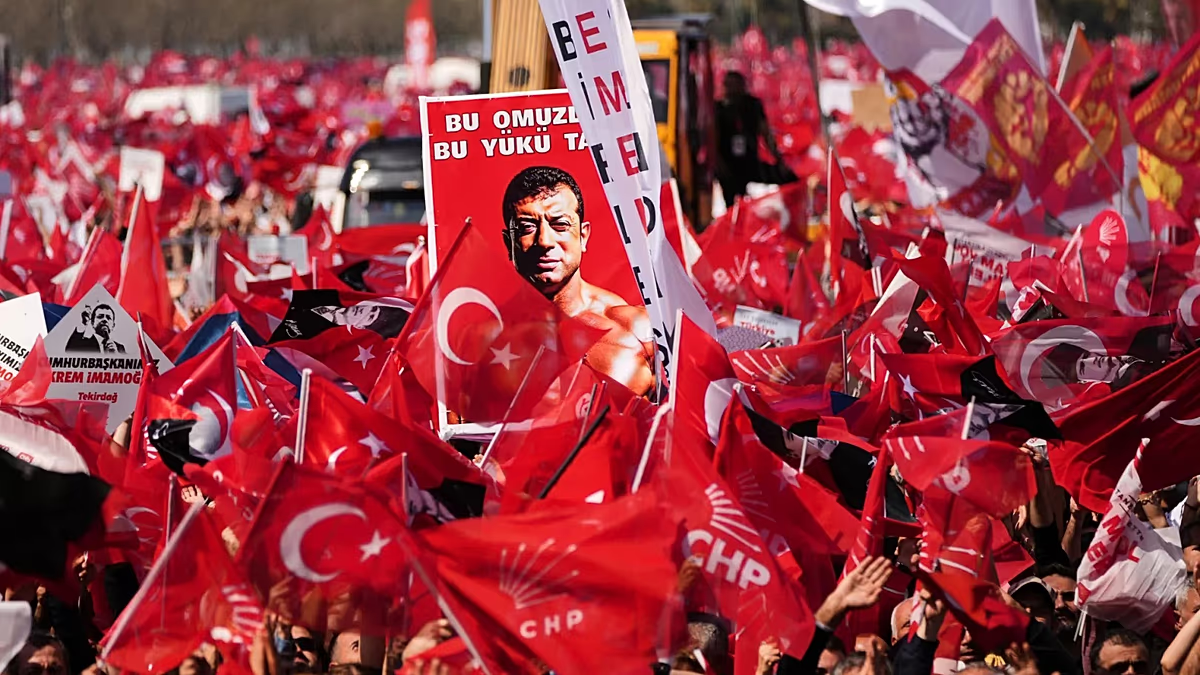
For critics of President Recep Tayyip Erdoğan’s government, this judicial maneuver is not about legal integrity but raw political strategy. They view it as a transparent attempt to undermine and cripple Turkey’s oldest political party at the very moment it poses the greatest threat in years. Under Özgür Özel’s leadership, the CHP achieved a monumental victory over Erdoğan’s ruling AK Party in the 2024 local elections and has been climbing in national polls. The party itself has resolutely denied all charges, framing the court’s decision as nothing short of a “political coup” orchestrated through a pliant judiciary. This move is seen as an effort to halt the opposition’s rising momentum by any means necessary.
The court’s order to reinstate Kemal Kılıcdaroglu adds a layer of profound irony and internal conflict to the crisis. Kılıcdaroglu, now 77, led the party through a series of demoralizing national electoral defeats, failing to make significant dents in Erdoğan’s political armor. His tenure was widely perceived as lackluster, and his replacement by the more dynamic Özel was seen as a necessary renewal. Under Özel’s energized leadership, the CHP’s fortunes reversed dramatically within months, culminating in the pivotal local election win. Forcing his return as a “caretaker” leader is therefore interpreted as an attempt to reimpose a weaker leadership on the party from the outside, effectively using a past failure to engineer a future setback.
This event cannot be viewed in isolation, as it forms part of a broader pattern of legal pressure applied to prominent opposition figures. The most prominent example is Ekrem İmamoğlu, the popular Istanbul mayor widely considered one of the few politicians capable of defeating Erdoğan in a national race. İmamoğlu, who was a galvanizing force behind massive street protests last year following the arrest of the CHP’s presidential candidate, is now embroiled in an array of legal battles. He faces charges ranging from graft to espionage and terror ties, accusations he vehemently denies as politically motivated. In a staggering example, prosecutors in one case are seeking a prison sentence of 2,430 years against him. The annulment of Özel’s leadership appears to be another front in the same war, targeting the party’s operational command while its most potent electoral weapon, İmamoğlu, is besieged in the courts.
Ultimately, this ruling extends far beyond internal party politics; it strikes at the heart of Turkish democratic integrity. By using the courts to potentially remove a successfully elected opposition leader and install a state-preferred alternative, the episode erodes the already diminished boundaries between the judiciary and the executive. It creates a climate where electoral success can be nullified by legal challenge, chilling political competition and undermining public trust. The coming days will reveal whether this judicial decision stands or is itself appealed, but its immediate effect is to cast a long shadow over Turkey’s political future, suggesting that the greatest challenges for the opposition may not be at the ballot box, but in the courtroom.