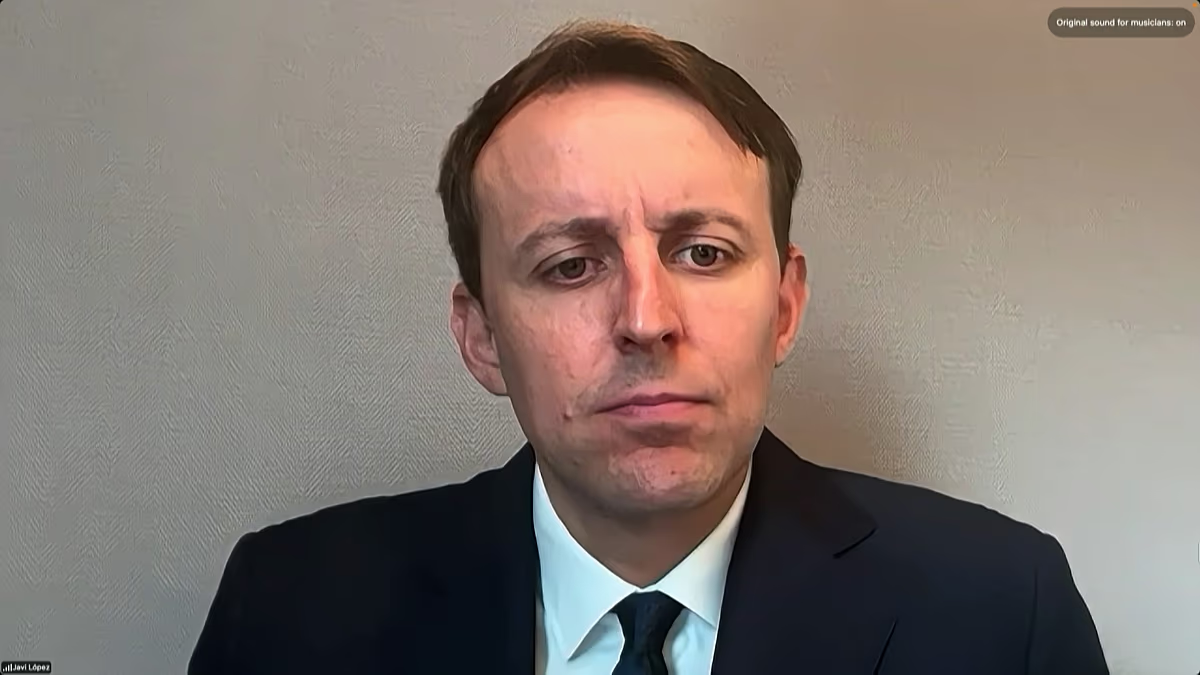


The European Union’s recent trade strategy represents a proactive and assertive shift in its global economic policy, moving beyond a defensive posture to actively shape its international relationships. According to MEP Javi López of Spain’s Socialists and Democrats group, this new approach is exemplified by the EU’s refreshed trade agreement with México. He characterizes these efforts as part of the bloc’s “offensive foreign action,” a deliberate campaign to secure the Union’s economic future and geopolitical standing. This strategy is not merely about opening new markets; it is a calculated response to a world marked by supply chain fragility and geopolitical tension, aiming to build a more resilient and diversified European economy.
This offensive is vividly illustrated by the pursuit of several significant trade negotiations simultaneously. The updated deal with México, alongside ongoing talks with major economies like India and the sprawling Mercosur bloc in South America, signals a broad and ambitious agenda. Each agreement serves as a strategic pillar in a larger architecture designed to reduce over-reliance on any single region or trading partner. By engaging across different continents and with diverse economies, the EU is methodically weaving a global network of trade relationships. This multi-front engagement demonstrates a commitment to moving away from economic dependencies that have proven vulnerable in recent years, toward a system of balanced, reciprocal partnerships.
The core driver of this policy is the imperative of diversification. Lessons learned from recent global crises—from pandemic-induced supply chain collapses to geopolitical conflicts disrupting energy and trade flows—have cemented the idea that over-concentration is a critical risk. The EU’s trade offensive is, therefore, a form of economic risk management. By spreading its trade and investment across a wider geographical and political spectrum, the bloc seeks to insulate itself from regional instabilities and create more optionality for its businesses and consumers. This creates a safety net, ensuring that if one corridor faces disruption, alternative pathways can sustain the Union’s economic vitality.
Beyond sheer diversification, these agreements are also crafted to advance the EU’s broader values and standards on the global stage. Modern trade deals are no longer just about tariffs and quotas; they encompass chapters on sustainable development, labor rights, environmental protection, and digital governance. Through its “offensive” trade policy, the EU leverages its economic clout to promote these principles, embedding them into the rules of global commerce. This allows the Union to project its vision of a fair and sustainable global economy, influencing partners to align with European standards and creating a more predictable and ethical international trading environment for European companies.
For European citizens and businesses, this strategic shift promises tangible benefits. A more diversified trade network means greater access to a variety of goods, services, and raw materials, potentially enhancing competitiveness and stabilizing prices. It opens doors for small and large companies alike to explore new markets, fostering innovation and growth. Furthermore, by securing these agreements proactively, the EU is positioning its economy to better navigate future global shocks, contributing to long-term job security and economic stability within its member states. This outward-focused strategy is fundamentally linked to inward-looking goals: safeguarding prosperity, employment, and quality of life for Europeans.
In conclusion, MEP Javi López’s framing of the EU’s trade policy as an “offensive foreign action” captures a significant evolution in the bloc’s approach to the world. It is a move from reactive protection to proactive engagement, using trade as a primary tool to build resilience, spread risk, and promote values. The deals with México, India, and Mercosur are not isolated events but interconnected components of a coherent plan to redefine Europe’s place in the global economy. This strategy acknowledges that in an interconnected yet volatile world, economic security and influence are not given but must be actively and continuously forged through smart, forward-looking partnerships.