

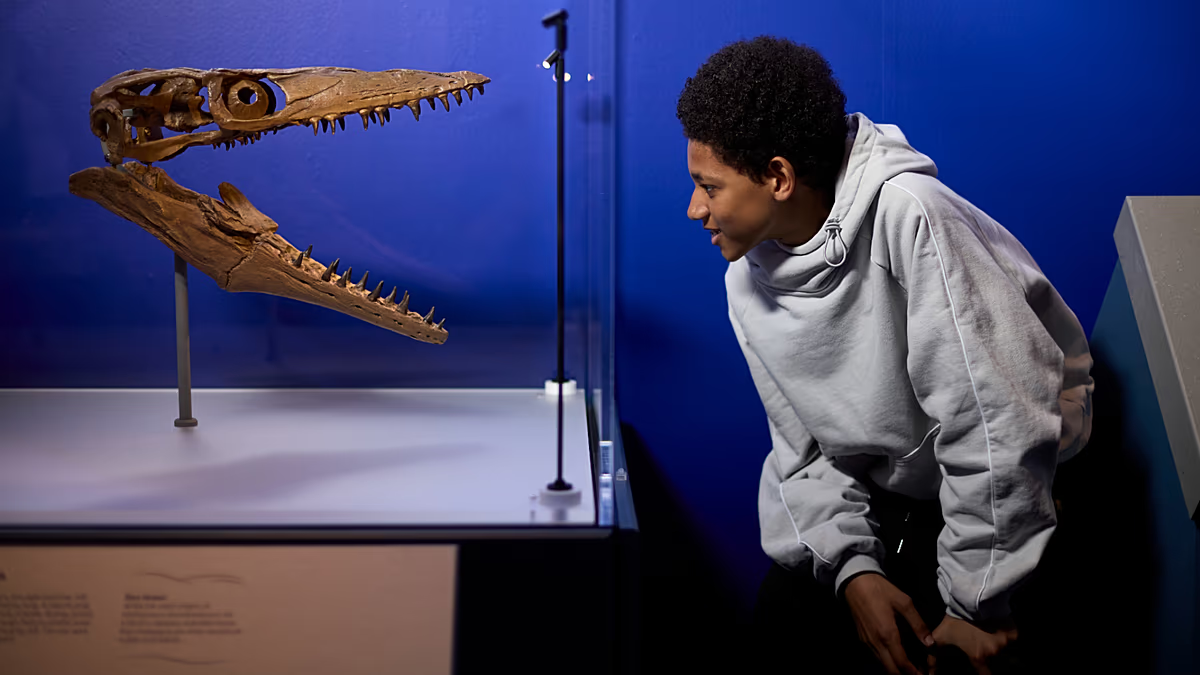


While the Jurassic Period is synonymous with dinosaurs like the mighty Tyrannosaurus rex stomping across ancient lands, a parallel drama unfolded beneath the waves. In the vast, sunlit shallows and mysterious depths of prehistoric oceans, a different set of colossal rulers held sway. These were the marine reptiles—the true monsters of the deep, whose forms were as fantastical as any myth. A new exhibition at London’s Natural History Museum, “Jurassic Oceans: Monsters of the Deep,” invites visitors to journey nearly 200 million years back in time to witness this underwater realm, where enormous predators hunted in a world teeming with life and danger.
Among the most captivating stars of this submerged world was the plesiosaur. Imagine a creature stretching up to 12 meters long, propelled not by a tail but by four expansive, wing-like flippers. As Dr. Marc E.H. Jones, the museum’s curator of fossil reptiles and amphibians, explains, this extraordinary anatomy allowed it to “fly” through the water in a coordinated, graceful motion. Its most iconic feature, however, was an improbably elongated neck, culminating in a small, sharp-toothed head—a design perfect for darting into schools of fish or surprising prey from below. Yet, despite its aquatic mastery, this giant remained tethered to the surface; like modern whales, it was an air-breather, regularly rising to gasp the atmosphere before returning to its hunting grounds.
However, the exhibition transcends mere spectacle to deliver a profound and urgent message rooted in the fossil record itself. These magnificent creatures, and countless other species, did not last forever. The rocks tell a story of extinction, and a key driver identified by researchers is climate change. Dr. Jones notes that even in the deep past, relatively slow shifts in global climate had devastating impacts on marine ecosystems, altering sea temperatures, chemistry, and food chains. The parallel to our present moment is stark and intentional: today, our oceans are under unprecedented pressure from human-induced climate change. In just two centuries, we have added over 2,000 gigatons of CO₂ to the atmosphere, a geologically instantaneous event that is rapidly warming the Earth and its seas.
This historical comparison serves not as a distant allegory but as a direct warning. The current rate of change dwarfs many of the prehistoric episodes recorded in stone, suggesting the potential for ecosystem disruption on a scale that could mirror past mass extinctions. The exhibition implicitly asks: if slow changes could unravel these ancient worlds, what fate awaits modern marine life under today’s accelerated upheaval? The pressure mounts on every level—from coral reefs bleaching in warming waters to the migration patterns of prey species collapsing—threatening a new, human-made catastrophe.
“Jurassic Oceans: Monsters of the Deep” thus becomes a bridge between two epochs. It celebrates the awe-inspiring biodiversity of the Jurassic seas—a time of plesiosaurs, ichthyosaurs, and mighty marine crocodiles—while firmly anchoring their story in the context of our planet’s fragile and interconnected history. It is a reminder that the laws of nature that governed their rise and fall still govern us. By studying these ancient leviathans, we gain not only wonder but crucial insight into the resilience and vulnerability of life on Earth.
The exhibition is open at London’s Natural History Museum until January 3, 2027. It offers a chance to stand before the bones of real ocean giants, to marvel at their adaptations, and to reflect on the legacy we are now creating in our own oceans. In the end, these fossils are more than relics; they are ambassadors from a lost world, urging us to heed the lessons they carry so that the deep might continue to be a realm of life, not just a record of loss.