

The Flames of Fear: A Tragedy in the Heart of an Ebola Outbreak
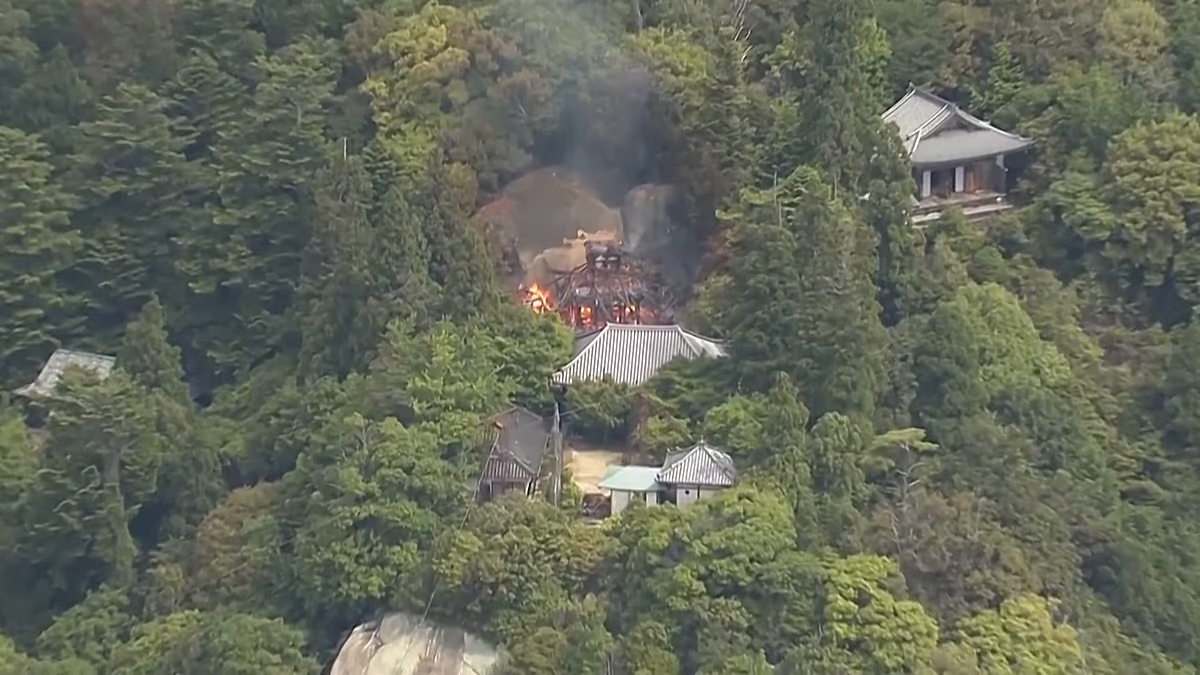
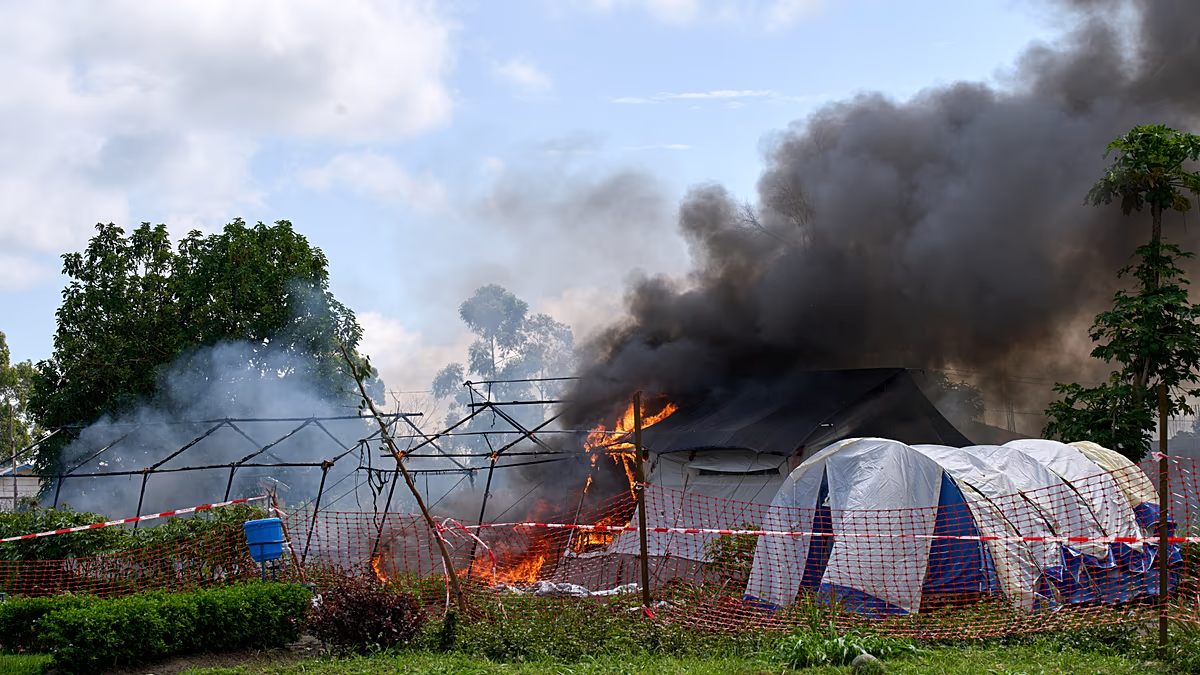
In the turbulent heart of the Democratic Republic of Congo’s Ituri province, a single death ignited a fire far beyond the physical flames that consumed part of the Rwampara hospital. In late May 2026, a young man, described as a popular and talented local footballer, succumbed to illness within the hospital’s Ebola treatment unit. When his grieving relatives arrived, their profound need to reclaim his body for a traditional burial was met with a firm, clinical refusal. Medical staff, adhering to strict and vital safety protocols, explained that the body was highly contagious and required a supervised, safe burial to prevent further transmission of the virus. This collision between immutable scientific necessity and deep-seated cultural and emotional need sparked an immediate and violent protest. An angry crowd, believing the young man had died from typhoid, not Ebola, attempted to torch the treatment tents and hurled stones at healthcare workers, leading to injuries and necessitating police intervention. This incident was not merely a riot; it was a raw, human explosion of grief, mistrust, and fear, revealing the profound human dimensions of a public health crisis.
The violence stemmed from a chasm of understanding and belief that runs deep in communities scarred by conflict and misinformation. As a local politician explained, some villagers simply do not believe the Ebola virus exists. In a region where outside interventions have often brought conflict or exploitation, the sudden arrival of international aid workers, complex protocols, and the sequestration of loved ones can be perceived as another foreign invention—a scheme to make money or exert control. To the family, their son was a footballer, not a biohazard; his death was a personal tragedy, not a statistical case. The insistence on a impersonal, scientific burial felt like a final, cruel theft, denying them their sacred right to honor and farewell him according to their customs. This distrust is not born of ignorance alone, but of a historical context where promises have been broken and outside forces have often brought harm, making the life-saving guidelines of epidemiology feel like yet another oppressive, foreign dictate.
The context of this tragedy is a severe and ongoing Ebola outbreak centered in Ituri province, near Bunia, which had, by that time, claimed over 130 lives. The World Health Organization had declared it a global health emergency, underscoring its serious international risk, though not classifying it as a pandemic. Ebola itself is a horrifyingly efficient virus, first identified in 1976, capable of fatality rates up to 90%. Its symptoms—raging fever, profound weakness, hemorrhagic diarrhea and vomiting—are terrifying. The necessary response is equally severe: isolation, containment, and the safe management of contagious corpses. The protocols at Rwampara hospital were not arbitrary; they were a frontline defense against a microscopic enemy that thrives on contact. Yet, in the heat of immediate loss, these lifesaving rules appeared to the family as a cold and disrespectful bureaucracy, an institution treating their beloved as a threat rather than a human being.
This tragic event underscores the monumental challenge of epidemic management: that the human element is as critical as the medical one. An outbreak is fought on two battlegrounds—one against the virus in the lab and the clinic, and another against fear, rumor, and trauma in the community. Effective response requires more than just tents, vaccines, and protocols; it demands relentless community engagement, transparent communication, and respect for local practices wherever safely possible. Health workers must be diplomats and counselors as well as clinicians, building trust before crisis strikes. While safe burial practices are non-negotiable for public safety, explaining their necessity with empathy, involving community leaders in the process, and finding ways to incorporate respectful cultural elements can bridge the gap. The injured aid worker and the terrified staff at Rwampara are heroes operating in a doubly dangerous environment—risking not only infection but also violence born from misunderstanding.
Ultimately, the fire at the hospital is a stark reminder that a health crisis is a holistic human crisis. It speaks of the desperation of families stripped of their rites, the courage of health workers operating under dual threats, and the destructive power of misinformation in vulnerable societies. The young footballer’s death became a symbol—for his community, a symbol of a system that dehumanizes; for the health system, a symbol of the deadly cost of non-compliance. Resolving such clashes is imperative not just for social order, but for epidemic control itself, as distrust drives people to hide symptoms, avoid treatment, and violently oppose interventions, allowing the virus to spread unchecked.
In conclusion, the incident at Rwampara hospital is a poignant lesson in global health. Fighting a virus like Ebola requires a sterile, scientific precision, but winning that fight requires a warm, human touch. It demands that we see not just cases, but people; not just contagious corpses, but beloved sons and daughters. The path to ending an outbreak lies as much in respectful dialogue, cultural sensitivity, and trusted relationships as it does in isolation units and protective gear. Until public health strategies fully integrate this human dimension, tragedies like this—where grief and fear manifest in flames—will remain a tragic, recurring cost of epidemic response, undermining the very goal of saving lives.