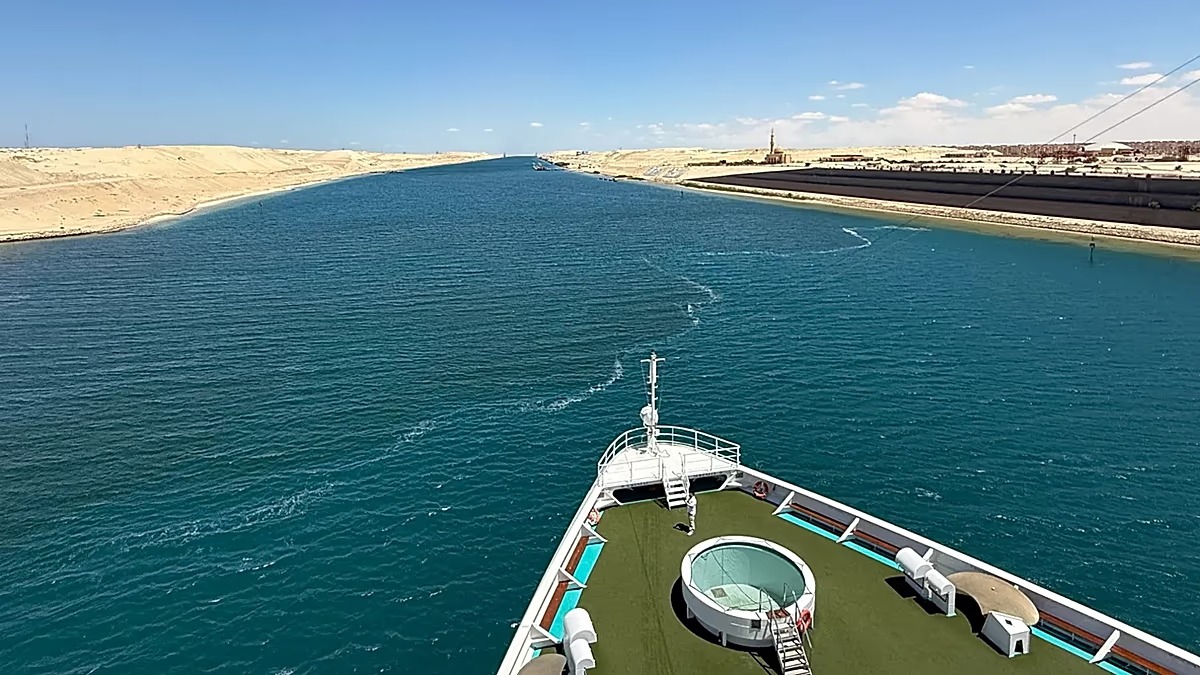



In an era defined by geopolitical uncertainty, the global tourism industry finds itself navigating turbulent waters once again. Far from the immediate tensions of the Strait of Hormuz, yet deeply affected by its ripples, over 300 leaders from the public and private sectors gathered on a luxury cruise ship in the Suez Canal. Their mission, convened by the World Travel & Tourism Council (WTTC), was to chart a course for recovery amidst what many are calling a “perfect storm” brewing for the crucial summer season. The juxtaposition was striking: a summit on resilience and leadership held literally afloat on one of the world’s other vital trade arteries, a symbol of the interconnectedness and fragility of global mobility. This unprecedented floating forum underscored a sector bracing itself, seeking collective answers to the compounding threats of fuel shortages, soaring ticket prices, and a looming connectivity crisis.
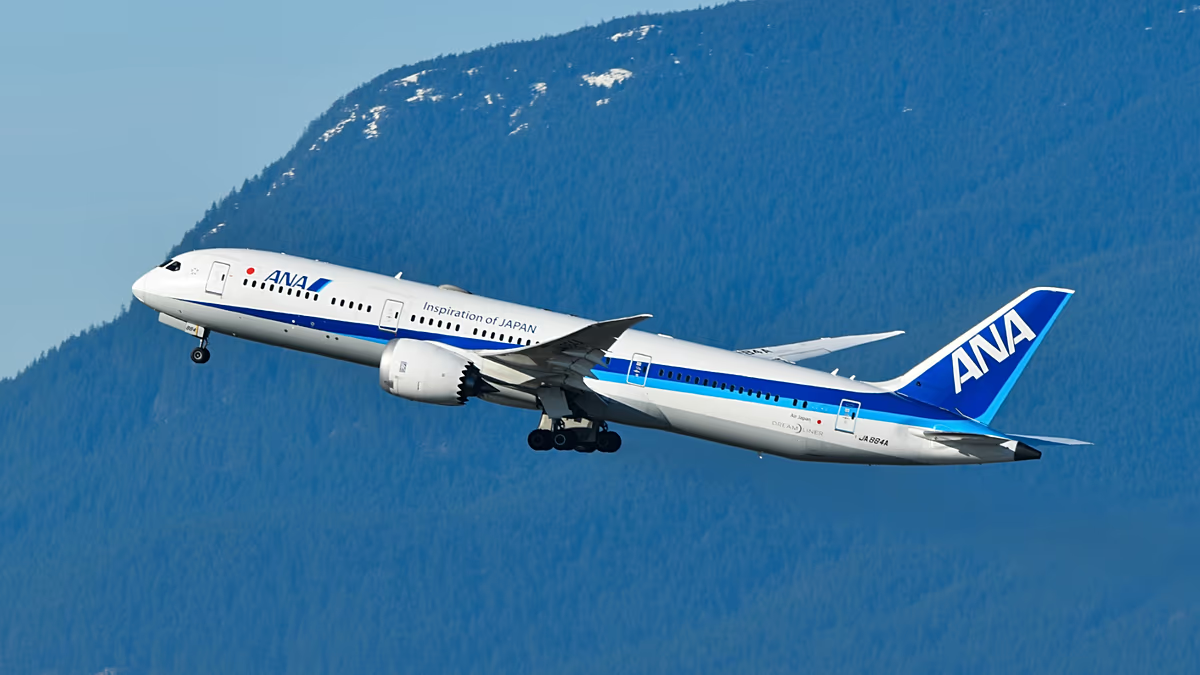
The most acute pressure point is air connectivity, the lifeblood of international tourism. The disruptions in the Middle East have triggered a cascade of challenges, primarily through skyrocketing fuel costs and shortages of aviation paraffin. For airlines, where fuel typically constitutes nearly a third of operating expenses, this crisis threatens their very operational viability. The fear permeating the summit was that these unsustainable costs would inevitably be passed down the chain to the traveller, the sector’s most essential yet vulnerable participant. As Gloria Guevara, President and CEO of WTTC, pointed out, the crisis is already manifesting as “fewer seats available.” The European Commission has issued stark warnings, predicting potential disruptions including widespread flight cancellations, significant delays, and inevitably, higher fares for consumers, casting a shadow over summer travel plans.
In response to this looming scenario, industry leaders are advocating for proactive government intervention to shield both the industry and travellers. Guevara passionately urged governments to consider reducing taxes on airlines, a measure she argues would act as a critical buffer. “If taxes are lowered,” she contended, “there will be no impact on travellers and mobility will be allowed without affecting supply.” This call highlights a desire for partnership between the public and private sectors to stabilize the ecosystem. The sentiment was echoed by Egypt’s Tourism Minister, Sherif Fathi, who shifted the focus from demand to supply, noting that the “main challenge for international tourism is not the demand, but the supply of transport.” He provided a tangible example, citing a 16% drop in tourism to Egypt in April directly attributable to the reduction in available flights and seats, proving the crisis is already exacting a economic toll.
European tourism authorities are watching these developments with intense vigilance. Eduardo Santander, CEO of the European Travel Commission (ETC), confirmed that concern is high within the European Commission, which is prepared to take coordinated action if the situation deteriorates, potentially forcing member states to share strategic fuel reserves—a measure reminiscent of the pandemic-era vaccine solidarity. Santander identified the United Kingdom as particularly exposed due to its fuel supply dynamics, while noting countries like Spain are in a somewhat safer position thanks to their reserves. He also predicted a noticeable shift in travel patterns for the coming season, with Europeans likely to favour closer-to-home destinations and intra-European travel, a pragmatic adaptation to higher costs and uncertainty. This moment, he suggested, could also accelerate a long-standing industry goal: deseasonalising tourism to spread demand beyond the volatile summer peak.
Despite the palpable anxiety, a thread of resilient optimism ran through the summit. Guevara struck a note of cautious confidence, reflecting on the sector’s hard-earned experience. “We are now more accustomed to managing crises and dealing with these situations,” she stated, alluding to the successive challenges of pandemics and past conflicts. The WTTC continually emphasised the monumental economic role of tourism, a sector that represents nearly 10% of the global economy and supports one in every nine jobs on the planet—a reminder of the high stakes involved. The very location of the summit, in the historic Suez Canal, served as a metaphor for this resilience: a conduit for global trade that has witnessed countless historical upheavals yet endures, adapting to each new era.
As the discussions concluded, the message from the Suez Canal was one of determined preparedness tempered by realism. The industry projected a united front of confidence, celebrating its historical capacity to overcome crises. Yet, behind the scenes, there is an undeniable holding of breath. The coming weeks in the Middle East hold the key. The decisions made there will not only influence regional stability but could very well redraw the map of global tourism, shifting travel corridors, altering consumer behaviour, and marking a significant inflection point for the world economy. The summit acknowledged that while tourism has always been a story of exploration and connection, its next chapter will be defined by its agility in navigating an increasingly complex and interconnected landscape of risk.