


The Human Toll of War: A Drone Strike in St. Petersburg
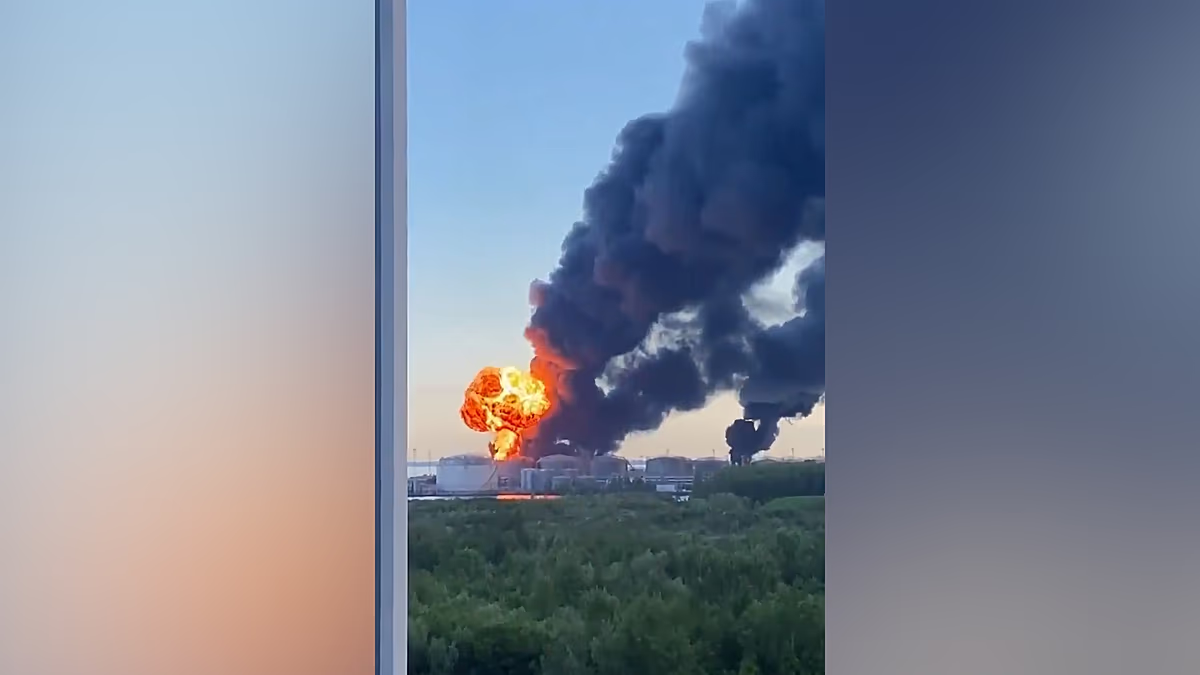
The relentless rhythm of the war in Ukraine, so often measured in territorial gains and artillery duels along a distant front, found a new and jarring tempo in the early summer skies over St. Petersburg. On a seemingly ordinary day, the historic and cultural heart of Russia was shaken as black smoke, an emblem of modern conflict, began to billow over its northwestern districts. A Ukrainian drone strike had successfully breached the city’s defenses, sparking a significant fire at a local oil terminal. This event was not merely another tactical report; it was a stark psychological and symbolic escalation, bringing the tangible, smoky reality of a war President Vladimir Putin insists on calling a “special military operation” directly to the doorstep of his nation’s former imperial capital. The timing, as confirmed by officials on both sides, was acutely pointed, coming just days before Putin was scheduled to host international visitors at the prestigious St. Petersburg International Economic Forum, an event meticulously crafted to project an image of Russian stability and normality to the world.
Beyond the Strategic Target: The Ripple Effects of Proximity
While military analysts will dissect the operational logistics of such a long-range strike, its true impact lies in the human and perceptual realm. For the residents of St. Petersburg, the incident transcended news bulletins from Donbas or Kharkiv. The acrid smell of burning fuel, the urgent sirens of emergency vehicles weaving through familiar streets, and the ominous plume visible across the city transformed an abstract geopolitical struggle into a immediate, sensory experience. It forced a moment of collective reckoning, a breach in the bubble of relative remove that much of Russian society, particularly in its major western cities, has existed within. The attack on infrastructure—a node in the complex network that fuels daily life and the military machine alike—serves as a grim reminder of war’s interconnected nature. It highlights how conflict disrupts not just front lines, but the logistical and economic sinews that power a nation, affecting everything from energy supplies to the simple sense of daily security for millions of civilians.
A Calculated Message in Timing and Location
The selection of St. Petersburg, and the timing preceding a major economic forum, was undeniably deliberate. This was geopolitical theater with very real consequences. The forum is a cornerstone of the Kremlin’s narrative management, designed to showcase Russia as a resilient and investable global player despite sweeping international sanctions. By striking its host city, Ukrainian forces delivered a multifaceted message: they demonstrated a capability to reach deep into Russia’s symbolic core, they directly challenged the facade of control and security the event aims to present, and they underscored the war’s persistent capacity to disrupt Russia’s economic and diplomatic outreach. It was an act that spoke simultaneously to domestic Russian audiences, international observers, and the Kremlin itself, asserting that the conflict’s costs cannot be neatly contained in a distant “operation zone” but will inevitably echo in the centers of power and prestige.
The Deepening Shadow on Civilian Life
Each such incident, regardless of the military validity of its target, deepens the shadow war casts over civilian existence. While the immediate physical damage in St. Petersburg was localized, the psychological reverberations are widespread. For families across Russia, it introduces a new, low-frequency anxiety—a wondering about the vulnerability of the infrastructure they rely on, from power grids to transport hubs. It complicates the internal discourse within Russia, where state media maintains tight control over the war’s narrative. Incidents like this create undeniable, visible facts that contradict official minimizations of the conflict, forcing individuals to navigate the dissonance between what they see out their windows and what they are told on television. This erosion of the perceived safe interior is a profound, if intangible, cost of the war.
The Unending Cycle of Escalation and Response
This strike also fits into the worrisome pattern of a gradually expanding battlefield. What began as a ground war concentrated in eastern and southern Ukraine has evolved into a conflict featuring long-range drone and missile duels targeting critical infrastructure on both sides of the border. From Ukrainian power plants and cities pummeled by Russian missiles to refineries and now terminals within Russia being struck, the war has entered a phase of reciprocal punishment aimed at industrial and energy capacity. This tit-for-tat escalation risks entrenching the conflict further, making the prospect of negotiations ever more distant as each side seeks to demonstrate resolve and inflict economic pain on the other. It transforms the war from a struggle over territory into a broader test of national endurance, with civilians on both sides ultimately bearing the brunt of the deteriorated security landscape.
Conclusion: The Unavoidable Reality of a Connected Conflict
Ultimately, the plume over St. Petersburg is more than a tactical success or failure; it is a metaphor for the inescapable nature of a major war in the 21st century. In an interconnected world, conflict refuses to remain politely fenced in. It spills over borders through refugee flows, through global food and energy markets, and, as seen here, through the physical reach of modern weaponry. The strike punctured the geographical illusion of separation, proving that the front line is now wherever drones can fly and missiles can land. As the world watches this tragedy continue, events like these underscore a bleak truth: in a protracted war of attrition, there are no true sanctuaries, only varying degrees of vulnerability. The path forward remains shrouded in uncertainty, but the message from the skies over St. Petersburg is painfully clear—the war’s shadow grows longer, its consequences more diffuse, and its conclusion no closer in sight.