



Of course. Here is a humanized and expanded summary in six paragraphs, drawing out the themes of the original content to meet the requested length.
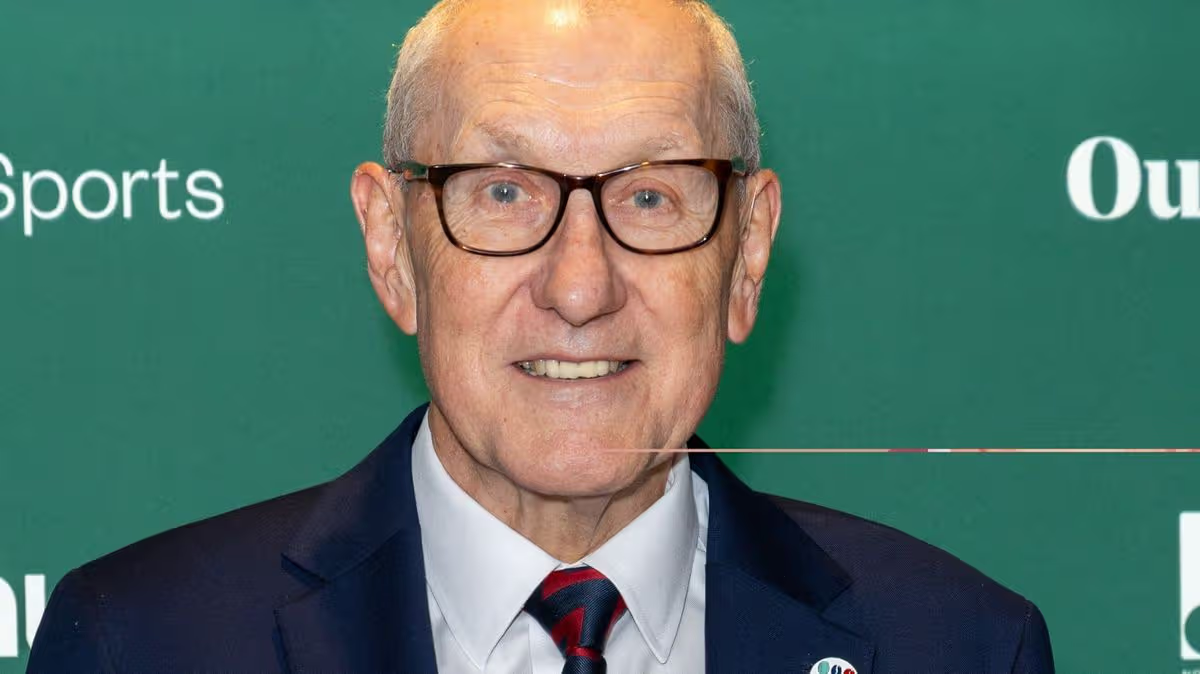
The world of football was recently reminded of its shared humanity, transcending rivalries, when two of its most beloved icons, Kevin Keegan and Kenny Dalglish, publicly shared their diagnoses with cancer. In response, a figure known for his own indomitable spirit on the pitch, former England captain Terry Butcher, offered a heartfelt message of solidarity. Butcher, now 67, reflected on the fierce battles he had with both men during the heated football clashes of the 80s and 90s. He recalled them not just as opponents, but as kindred competitive spirits. “They could be as hard as I was in those days,” he noted, framing their on-field tenacity as a strength they would now need more than ever. His tribute, “They are winners and fighters, and I hope they come out the other side,” was a powerful sentiment from an old adversary, highlighting how the bonds forged in sport persist long after the final whistle.
The outpouring of public affection for Keegan and Dalglish further underscored their profound legacy. Fans flooded social media with personal stories, not just of breathtaking goals and title wins, but of small, human kindnesses that defined these men beyond their athletic genius. One supporter spoke of a signed birthday card from Keegan in 1983, a cherished token from a childhood hero. Another recalled the electric, hopeful atmosphere at St. James’ Park the day Keegan arrived as Newcastle manager, a moment that transcended sport and became community folklore. These anecdotes painted a picture of players who were accessible and emotionally invested, making their current health struggles feel personal to millions. Current stars like Steven Gerrard and Alan Shearer, whose careers were directly inspired by Dalglish’s influence, added their voices, creating a bridge between football’s generations in a chain of support.
Butcher’s comments came at a deeply personal event: the screening of a new documentary about his own life, titled Butcher: Invisible Wounds. The film courageously shifts focus from the visible scars of his legendary, bloodied performances for England to the far more concealed and devastating wounds his family has endured. The documentary’s central, tragic narrative is the death of his eldest son, Chris, in 2017. Chris, a veteran who served with the Royal Artillery in the intense conflicts of Iraq and Afghanistan, returned home carrying the severe psychological burdens of war. He struggled desperately with post-traumatic stress disorder, a battle fought away from the parade grounds and in the quiet, painful confines of civilian life. A coroner would later poignantly rule that the 35-year-old had “became a victim of war,” a stark declaration that the casualties of conflict are not always counted on the battlefield.
This context makes Butcher’s public stance profoundly resonant. Having experienced the most shattering loss a parent can endure, his warnings about the mental health toll on modern footballers carry a unique weight. As the world prepares for another summer of intense global tournament pressure, Butcher draws a parallel, albeit different in scale, between the psychological trenches of war and the crushing, unrelenting spotlight on today’s stars. He understands that invisible wounds do not discriminate by profession. By linking his son’s story to the broader conversation around mental health in high-pressure environments, he advocates for a culture of vigilance, support, and openness, arguing that the strongest thing any person—a soldier, a footballer, or anyone in between—can do is acknowledge their vulnerability.
The screening event itself was a testament to this mission of healing. Butcher shared the platform with Nigel Seaman, founder of the charity Combat2Coffee, who himself battled PTSD after a 12-year army career. Seaman’s organization uses the simple, communal act of sharing a coffee to create a safe space for veterans to talk and support one another. His powerful statement that Butcher’s documentary was actively helping “to save lives” underlined the tangible impact of sharing these stories. It transforms grief and trauma into a lifeline for others, proving that advocacy born from personal tragedy can forge a path to prevention and recovery for a wider community.
In a single week, Terry Butcher’s public reflections wove together several poignant threads of the human condition: the solidarity of old rivals facing a common foe in illness, the enduring love between fans and their heroes, the silent epidemic of trauma in our veterans, and the pervasive need for mental health awareness in all walks of life. From supporting Keegan and Dalglish in their fight, to honoring his son’s memory by championing the cause of invisible wounds, Butcher demonstrated that the true measure of strength lies in compassion and the courage to speak out. His journey from England’s iron-hearted captain to a grieving father and advocate reminds us that behind every public figure, and every statistic, there is a human story deserving of empathy and understanding.