




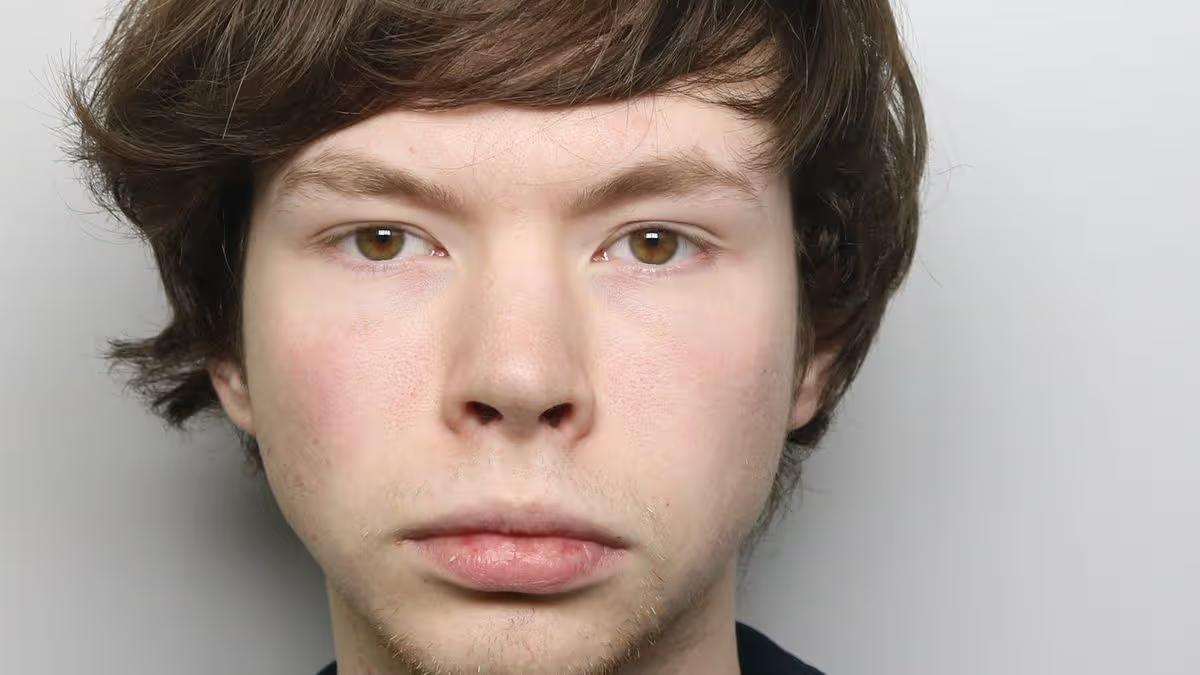
The tragic and deeply disturbing case of Dylan Phelan, a 21-year-old from Leeds, represents a horrifying confluence of digital anonymity, predatory behavior, and profound human vulnerability. In October 2024, Travis Dyer, a 21-year-old man from Louisiana, USA, struggling with his mental health, took his own life following a campaign of coercion and cruelty orchestrated within the shadows of the internet. Central to this campaign was Phelan, who, along with two American men known only as “Mads” and “Rob,” exploited Dyer’s despair for what a judge would later call “morbid curiosity.” Their interactions occurred primarily on the online platform Discord, within a private server ironically named “Recovery4all.” This space, far from offering solace, became a hunting ground where Dyer’s expressed suicidal thoughts were not met with compassion, but with sinister encouragement. The relationship, built over several months, culminated in a two-minute video call on October 30, 2024, during which the trio actively encouraged Dyer to end his life. In a chilling postscript, Leeds Crown Court heard that after Dyer died, Phelan could be heard laughing in the background.
The details of the “campaign of cruelty,” as described by prosecutor Andrew Petterson, reveal a methodical and sadistic grooming process. Travis Dyer, in his isolation and pain, found not support but predators who weaponized his trust. The court heard how Phelan and the others encouraged Dyer to spend all his money on drugs and alcohol, deliberately crippling his means of financial survival and further trapping him in a cycle of desperation. Even more shockingly, they persuaded him to carve their initials into his own skin—a permanent, physical manifestation of their psychological ownership, with Phelan’s name reportedly carved onto Dyer’s hip. This act symbolizes the grotesque power dynamic at play: the reduction of a vulnerable human being to an object of experimentation and control. The ultimate manipulation was, of course, the direct encouragement to commit suicide during that final video call. A post-mortem examination confirmed Dyer died from a gunshot wound, a stark and violent end to a life systematically stripped of hope by those he mistakenly believed were his confidants.
The path to justice began not with a digital trail uncovered by police, but through a haunting intervention by Phelan’s own parents. A woman, whom Phelan had initially met online and later in person, learned of his involvement and took the courageous step of informing his family. His parents, confronted with this unimaginable truth, then took their son to Elland Police Station themselves. This act of profound moral responsibility stands in stark contrast to the cruelty displayed by their son. Upon being presented by his parents, Phelan admitted to officers that he had “assisted the suicide” of a man in Louisiana, whom he incorrectly referred to as “Tyler.” His electronic devices were seized, leading to a further disturbing discovery: extreme pornography and an indecent image of a child were found on his phone and computer. These findings painted a picture of an individual engaged with deeply harmful and illegal content, compounding the severity of his actions in the Dyer case.
At his sentencing, the judge identified Phelan’s motivation as “morbid curiosity,” a phrase that attempts to rationalize the irrational—a profound lack of empathy elevated to a lethal level. This curiosity was not a passive observation but an active, participatory cruelty. The laughter heard after Dyer’s death is perhaps the most visceral evidence of this desensitization, a sound that echoes the dehumanization at the heart of the crime. While the two American accomplices, “Mads” and “Rob,” remain known only by their pseudonyms and their legal status unclear, Phelan faced the British courts. He was sentenced to life in prison, with a minimum term of six years and nine months. The sentence reflects the gravity of encouraging or assisting a suicide, a serious criminal offence, and acknowledges the transnational, digitally-facilitated nature of the predation.
This case forces a grim reflection on the dark potentials of online connectivity. Platforms like Discord, which can be havens for community and shared interest, also contain unmoderated, private corners where the most malevolent behaviors can fester away from public view. The “Recovery4all” server is a prime example: a space purportedly for mental health support that was transformed into a torture chamber. It underscores the critical need for digital literacy, not just in protecting personal data, but in recognizing predatory behavior and understanding that anonymous online relationships can carry very real, life-altering dangers. For individuals like Travis Dyer, who sought understanding in his darkest moments, the digital world presented not a lifeline, but a meticulously laid trap.
Ultimately, the story of Travis Dyer and Dylan Phelan is a human tragedy of loss, failure, and chilling indifference. Travis Dyer was a young man with his whole life ahead, whose internal struggles were mercilessly exploited. His death is a profound loss. Dylan Phelan, now a convicted criminal serving a life sentence, represents a failure of empathy so complete it becomes criminal. The actions of his parents show that humanity and responsibility can intervene, even in the darkest circumstances. This case serves as a solemn warning about the shadows that exist within our interconnected world and the enduring imperative to reach out with genuine compassion to those in crisis, both online and off. The memory of Travis Dyer demands nothing less.