


A Glimpse of Solidarity: Humanitarian Aid Reaches Cuba Amidst Deepening Crisis
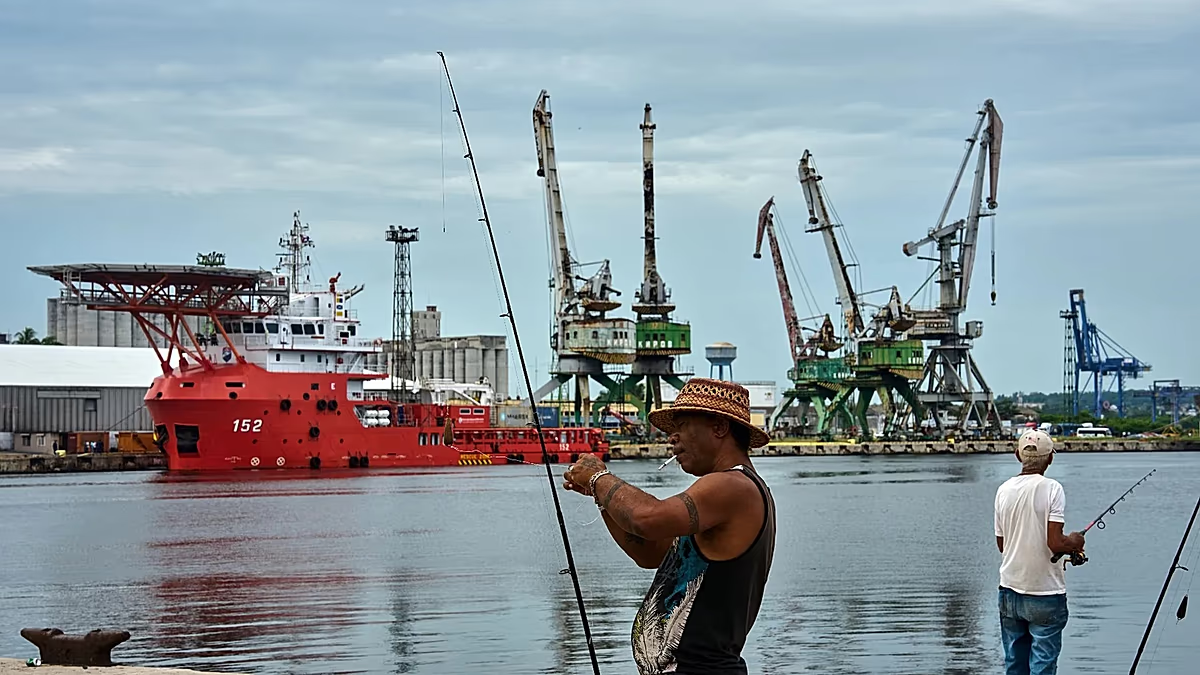
In a quiet but significant arrival early Friday morning, a ship flying the Colombian flag entered Havana Bay, escorted by a small Cuban vessel. This was not a routine commercial delivery, but a purposeful mission of humanitarian aid. Carrying nearly 100 tonnes of essential goods, the shipment represented a tangible act of regional solidarity. Organized on the orders of Colombian President Gustavo Petro, the vessel brought non-perishable food, vital medicines, hospital supplies, and even electrical materials and solar panels—items crucial for a nation grappling with profound energy shortages. The cargo also included seven tonnes of goods collected by grassroots solidarity groups, underscoring the people-to-people support that persists despite geopolitical tensions. This delivery followed closely on the heels of another ship, which had arrived just the previous weekend bearing 1,700 tonnes of essential supplies from Mexico and Belize. Together, these voyages paint a picture of neighboring nations stepping in to provide a lifeline.
This lifeline, however, arrives against a backdrop of escalating pressure and severe deprivation. The United States has recently intensified its long-standing sanctions regime, announcing new measures against Cuba’s state-owned oil and gas company. This move came mere days after the U.S. government sanctioned Cuban President Miguel Díaz-Canel himself, along with other officials and several institutions. For Cuba, these actions tighten the vise of a decades-old economic embargo, further crippling its ability to address basic needs. The island nation is already struggling under the weight of a chronic and severe shortage of petroleum, a situation the U.S. openly links to its goal of forcing a change in Cuba’s economic and political model. The result is a compounding crisis where policy and human suffering are inextricably linked.
Perhaps nowhere is this link more acutely felt than in the pervasive darkness of power outages. Rolling blackouts, already a miserable fact of life for Cubans over the past five years due to the island’s economic and energy crisis, have intensified. The U.S. has actively worked to starve Cuba of fuel, with recent threats from the Trump administration aiming to penalize any country that sells or provides oil to the island. This energy blockade has consequences that ripple far beyond darkened homes and stifling heat. As Cuban Foreign Minister Bruno Rodríguez revealed, the severe fuel shortage is now so dire that it is preventing the United Nations from distributing its own humanitarian aid. He noted that 170 containers of UN aid, valued at $6.3 million, are sitting undelivered, their vital contents unable to reach beneficiaries because there is no fuel to transport them. Rodríguez emphasized that the blockade is not just hampering the Cuban economy but is actively obstructing the work of international humanitarian organizations.
The situation exists within a volatile and uncertain diplomatic landscape. While both the U.S. and Cuba have acknowledged that some lines of communication remain open, the scope and substance of these talks are a mystery. This ambiguity is overshadowed by threatening rhetoric. The Trump administration has repeatedly raised the specter of military action against Cuba, often in the context of its intervention in Venezuela, where U.S. forces invaded and arrested former President Nicolás Maduro. In a statement last Thursday, Trump remarked that Cuba had “sort of collapsed” and suggested that dealing with the island was a pending item on an aggressive agenda, to be addressed “as soon as we’ve finished” military operations in Iran. This language casts a long shadow, transforming the humanitarian crisis into a potential flashpoint.
Thus, the arrival of the Colombian aid ship is a poignant symbol of two competing narratives. On one hand, it is a story of regional cooperation and human empathy, a demonstration that the immediate needs of a suffering population can inspire cross-border support. The contents of the hold—food, medicine, solar panels—speak to a practical effort to alleviate daily hardship. On the other hand, its journey is set against a narrative of coercion, isolation, and escalating threat, where fuel is weaponized and military intervention is hinted at as a policy tool. The aid addresses symptoms, but the political stalemate perpetuates the disease.
Ultimately, the scene in Havana Bay is a microcosm of Cuba’s present reality: a moment of relief, measured in tonnes of essential goods, delivered into a nation caught in a perfect storm of enduring embargo, acute energy starvation, and geopolitical intimidation. The solar panels on that Colombian ship may someday help power a light or a fan, a small victory against the blackouts. But until the broader political and economic siege is resolved, such humanitarian shipments, however welcome and necessary, remain drops of relief in an ocean of profound and man-made crisis.