




The sea possesses a dual nature of breathtaking beauty and formidable danger, a paradox tragically underscored by recent events. In the UK alone, at least eleven lives have been lost to drowning during the recent spell of warm weather, a stark reminder that open water swimming safety can never be taken for granted. These are not mere statistics but profound personal tragedies, each representing a future cut short. The repetition of such devastating headlines every summer, emanating from beaches, rivers, and coastal spots across the country, points to a persistent and urgent public safety issue. It is a chilling pattern that demands a deeper understanding of why these incidents occur and a collective commitment to preventing them.
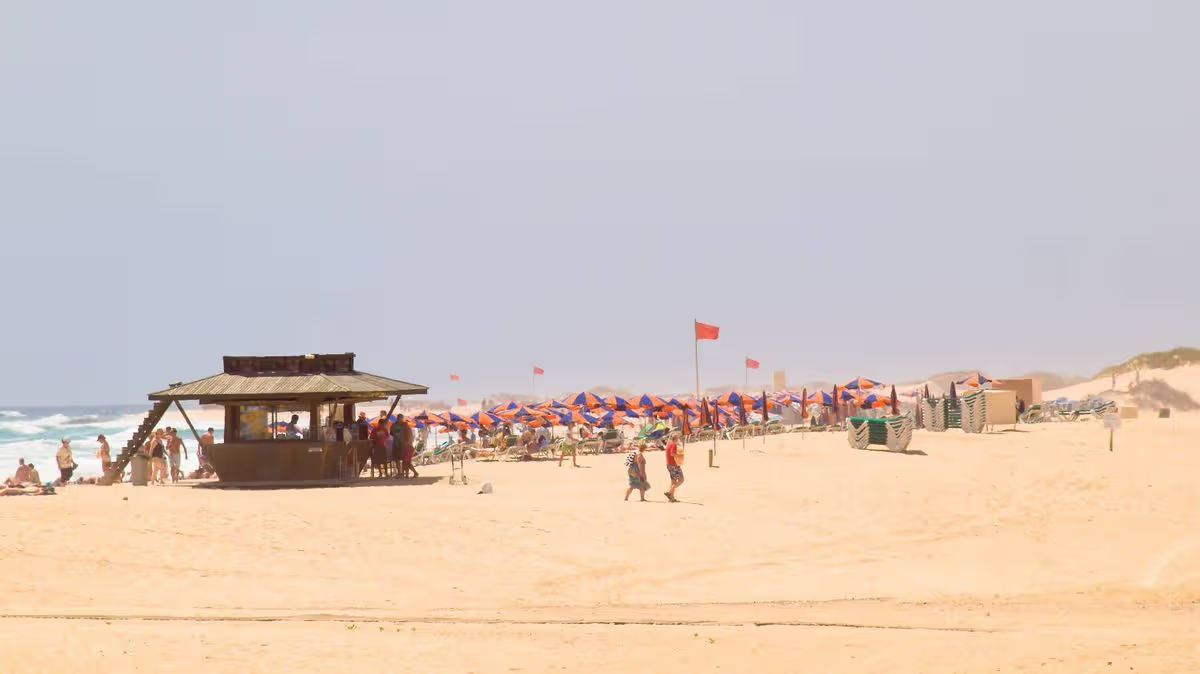
A personal encounter brought this abstract danger into terrifying focus. A close friend, celebrating abroad in Corralejo, found herself and another friend in a life-or-death struggle in the deceptively calm waters of Grandes Playas. One moment they were enjoying the Mediterranean, the next they were being dragged under by a powerful, unseen force. Despite being a strong and experienced swimmer, my friend described the utter helplessness of fighting against the current, swallowing seawater, and feeling her strength ebb away. The terror was compounded when she turned to see her friend in even more desperate straits, overcome by panic and visibly drowning. In a split-second decision that defies comprehension, she turned back from her own fight for survival to reach her friend.
Somehow, through a combination of adrenaline, love, and sheer will, she managed to grasp her friend and guide them both back to the safety of the shore. The aftermath, however, was as alarming as the event itself. Their calls for help from lifeguards went unanswered, leaving them to process the sheer trauma of the event alone. What was most instructive was the context: there were no obvious warning signs, the conditions appeared benign, and both individuals were competent in the water. This anecdote powerfully dismantles a dangerous myth. The sea is an indiscriminate force; it does not care about your confidence, your fitness, or your swimming resume. It can turn from serene to lethal in seconds, overpowering anyone caught in its grip.
This story illuminates a critical fallacy in how we often approach open water: the conflation of confidence with safety. We too often assume tragedies only befall the reckless, the inexperienced, or the weak. My friend’s ordeal proves otherwise. The real threat often lies invisibly beneath the surface in the form of rip currents, sudden drops, changing tides, and cold water shock. A moment of relaxation can swiftly become a crisis. While I am eternally grateful for my friend’s bravery and quick thinking—a testament to her character—the sobering truth is that her heroic decision could have resulted in two fatalities instead of a rescue. The situation should never have been allowed to develop.
Therefore, this narrow escape must serve as a catalyst for greater public awareness and education. We must proactively teach our children, and remind ourselves, about the specific hazards of open water, moving beyond a generic “be careful” to understanding the mechanics of rip currents, the importance of swimming parallel to the shore to escape them, and the necessity of checking official warnings and lifeguard presence. Awareness campaigns must emphasize that a beautiful day does not equate to a safe sea. Respect for the water’s power is the most essential skill any swimmer can possess.
The sea offers us immense joy, a connection to nature, and treasured summer memories. Yet, we must never let its allure blind us to its inherent risks. No swim, no photograph, and no fleeting moment of fun is worth a life. My friend was fortunate; many others have not been. If sharing this harrowing experience causes even one person to pause, to assess the conditions more carefully, or to seek out water safety knowledge, then a measure of good can be drawn from the brink of tragedy. Let us honor those who have been lost not just with grief, but with a renewed and unwavering commitment to vigilance and education, ensuring that respect for the water’s power becomes as natural as our desire to enjoy its beauty.