


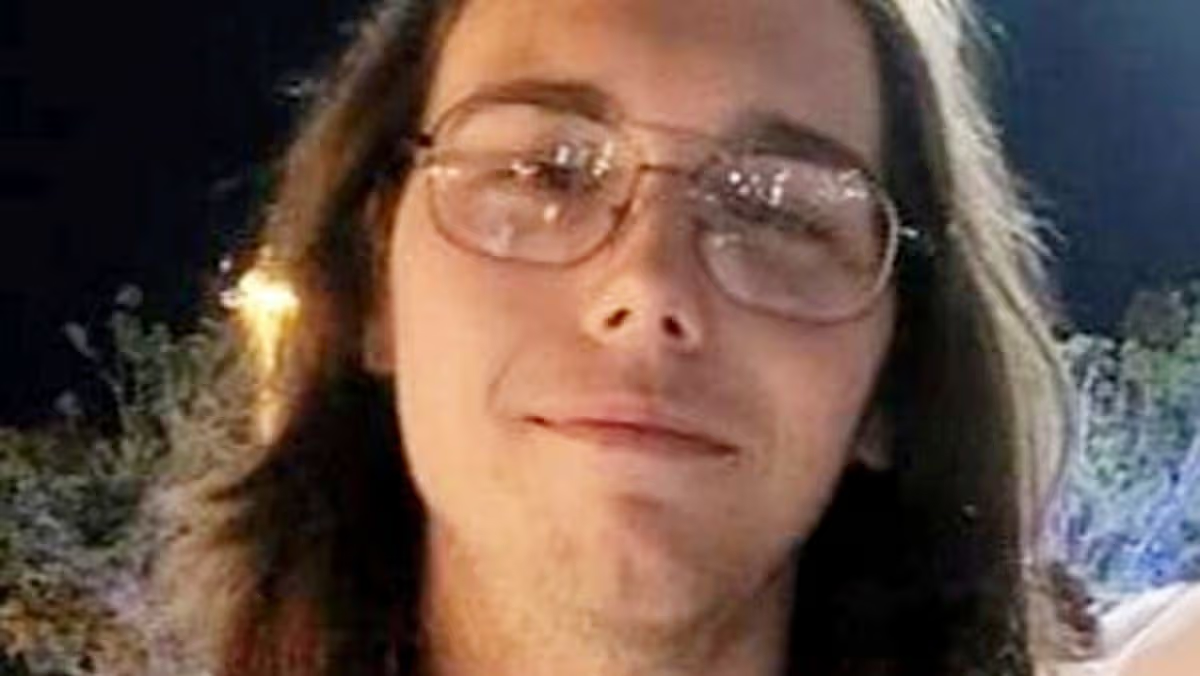
In the shadowed corners of the digital world, where connectivity can twist into predation, the tragic death of 21-year-old Travis Dyer from Louisiana exposes a harrowing modern cruelty. Travis, a young man who had already endured a lifetime of loss, including the drowning deaths of his mother and sister, was struggling with his mental health when he encountered a group on the messaging platform Discord. This online space, far from being the supportive community it might have appeared, became the stage for a calculated campaign of grooming and coercion. Travis was systematically encouraged to drain his finances on alcohol and drugs, his vulnerabilities exploited by individuals hidden behind screens. The culmination of this abuse occurred on October 24, 2024, during a video call where Travis, having carved the name of one of his tormentors into his own skin, was repeatedly goaded to end his life. His final moments were met not with help or horror, but with chilling encouragement and laughter from the other participants.
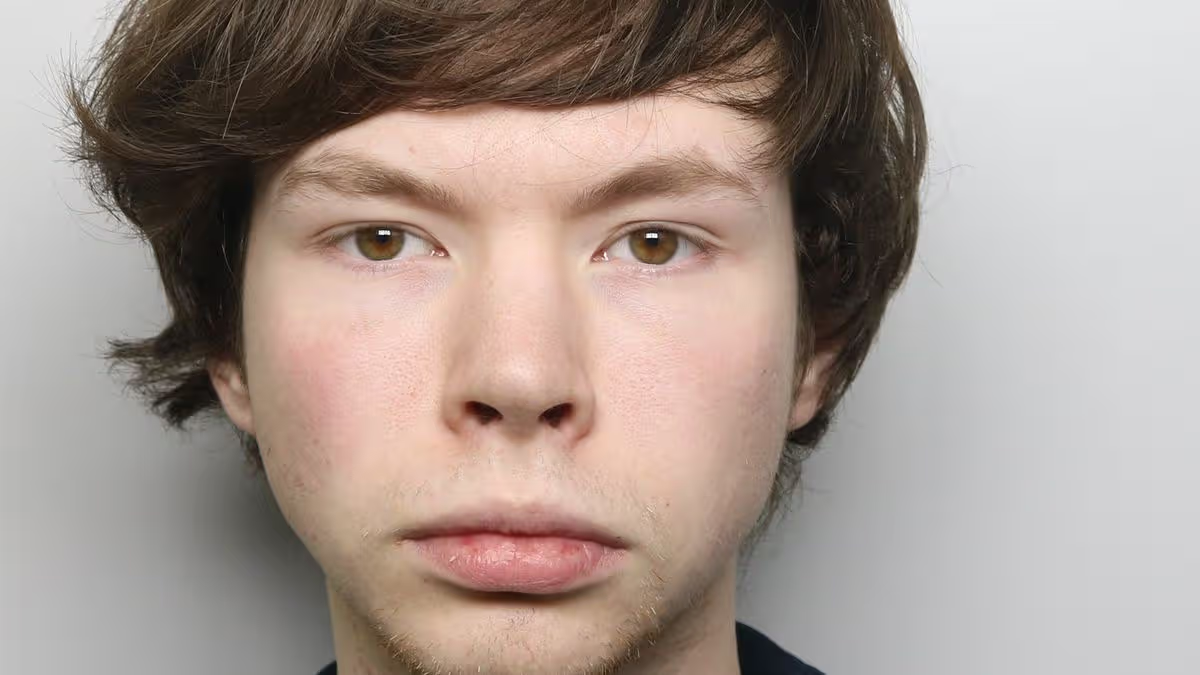
Among those on that fatal call was 21-year-old Dylan Phelan from Morley, West Yorkshire. Motivated by what a British judge would later call “morbid curiosity” and a desire to control another, Phelan actively urged Travis to pull the trigger. After the gunshot sounded, Phelan callously preserved a recording of the suicide on his computer. For months, this horrific act remained a hidden digital secret, until Phelan divulged the truth to a female acquaintance. Her reaction was one of profound horror, a stark and human counterpoint to the depravity she had just learned of. She took the extraordinary step of informing Phelan’s own parents, which ultimately led to Phelan being taken by his family to a police station to confess. This chain of events, set in motion by one conscientious individual, became the critical breach in the wall of anonymity that shielded the online group.
In the ensuing legal proceedings at Leeds Crown Court, the profound gratitude of Travis Dyer’s grieving family was directed not only toward justice, but pointedly toward that one brave individual. In a Victim Personal Statement, they drew a powerful distinction between the darkness that consumed their son and the light that finally revealed the truth. They acknowledged that Phelan operated within a toxic “group-think” that transformed a digital space into a “hunting ground.” Yet, they made a point to honor Travis’s “true online friend in England,” the woman whose research and moral courage led her to find Travis’s family and unveil the agonizing reality of his death. This act, the family emphasized, proved that the digital landscape holds the capacity for profound human connection and courage, making the defendants’ choice to wield it as a weapon all the more egregious.
The courtroom heard how Travis Dyer was, in the words of his great-grandmother Vivian Mahoney, “a shy, smart and resilient young man who survived more tragedy than most endure in a century.” He had a job, remaining family who adored him, and a future that was brutally stolen. Mr Justice Cotter, presiding over the case, sentenced Dylan Phelan to six years and four months imprisonment for encouraging suicide, as well as related charges of making an indecent image and possessing extreme pornography found on his devices. The judge was scathing in his assessment, stating Phelan showed “no respect for the life of Travis Dyer” and was a participant in a “campaign of cruelty.” Importantly, the judge underscored that Phelan did not act alone, and in an unusual judicial plea, urged anyone with information on the other participants, known as “Mads” and “Rob,” to contact U.S. authorities. He highlighted one, in particular, as “a very real danger to vulnerable people online,” citing boasts of being a sociopath involved in multiple suicides.
This case stands as a grim testament to the terrifying potential for harm that can fester within unmoderated online enclaves. It illustrates how collective anonymity can embolden individuals to shed empathy, engaging in acts they would likely never consider in the physical world. The digital “hunting ground,” as Travis’s family termed it, provides a shield for predators who seek out the vulnerable, turning shared struggles with mental health into opportunities for manipulation and ultimate control. The laughter that followed Travis’s death is the sound of humanity utterly divorced from consequence, a symptom of a dangerous disconnect fostered in certain toxic online subcultures.
Yet, within this same story lies a counter-narrative of profound humanity and responsibility. The actions of one person—the friend who listened, who believed, who investigated, and who spoke up—demonstrate that technology itself is not the villain. It is a tool, its moral valence determined by those who wield it. Her integrity created the crucial pivot from darkness to light, enabling justice to begin and providing a shattered family with the terrible truth they deserved to know. Travis Dyer’s story is therefore a dual plea: a warning about the urgent need for vigilance, compassion, and intervention in digital spaces, and a reminder that every individual possesses the power to be that “true friend”—to choose light over darkness, and to disrupt cruelty with courage. For anyone in distress, or who knows someone who may be, support is available through organizations like the Samaritans, a vital human connection in a world that can sometimes feel perilously disconnected.