


The Crackdown in Izmir: A Political Standoff on the Streets of Turkey
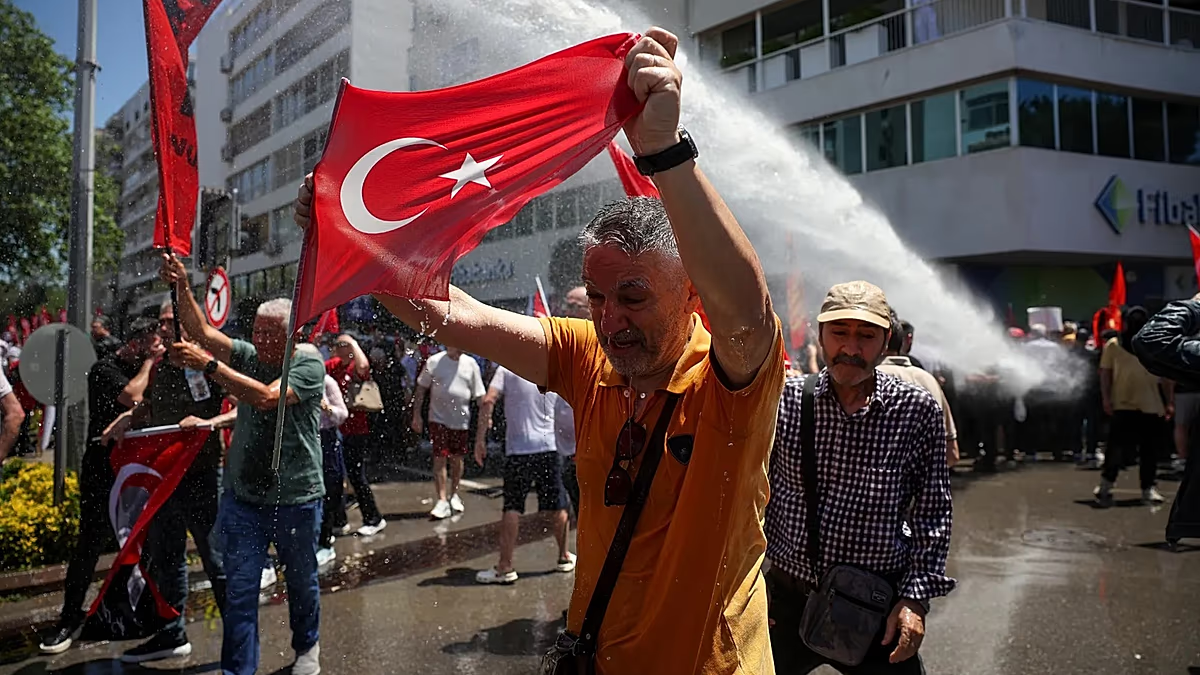
In a stark display of escalating political tensions, the streets of Izmir, Turkey, became a battleground this week. On Tuesday, riot police deployed water cannons and pepper spray against a gathering crowd, not to disperse violent protesters, but to prevent citizens from reaching a public square to hear a speech by Özgür Özel. He is, in the eyes of his millions of supporters, the legitimately elected leader of the nation’s main opposition party, the Republican People’s Party (CHP). The scene, broadcast by opposition media, showed largely middle-aged, determined citizens being drenched by high-pressure hoses as they approached steel barriers sealing off Cumhuriyet Square. This forceful intervention transformed a planned political rally into a symbol of a deepening democratic crisis, highlighting the severe rift between the opposition and the state apparatus under President Recep Tayyip Erdoğan.
The Spark: A Courtroom Coup Upends the Opposition
This confrontation did not emerge from a vacuum. It was the direct result of a seismic and controversial judicial decision days earlier. An Ankara appeals court abruptly overturned the results of the CHP’s 2023 leadership congress, which had seen Özel, a 51-year-old reformist, defeat the party’s longtime leader Kemal Kılıçdaroğlu. The court cited procedural irregularities and, in a stunning move, reinstated the 77-year-old Kılıçdaroğlu. To critics of the government, this ruling was a transparently political maneuver, the latest in a series of legal attacks designed to cripple the most significant challenge to Erdoğan’s rule. The decision ignited immediate outrage within the CHP, with Özel and his allies refusing to accept what they deem a judicial coup, barricading themselves inside the party’s Ankara headquarters in a dramatic, if short-lived, act of defiance.
From Headquarters to the Streets: Özel’s Defiant Response
Faced with a police raid on the headquarters that ended with plastic bullets and pepper spray, Özel vowed to take his struggle to the people. “I will go wherever the people are waiting,” he declared, making his way to the CHP stronghold of Izmir. Undeterred by the barricades and police blockade at Cumhuriyet Square, he adapted, walking to a nearby plaza where he was met by thousands of cheering supporters. From this impromptu stage, he issued a direct challenge to his predecessor, Kılıçdaroğlu, calling for an immediate new party congress to let the membership decide its leader. “Don’t divide the party, don’t stop our march to power,” Özel pleaded, framing the conflict as a fight for the soul of the opposition and for democratic legitimacy itself. His message was clear: the authority of a court order perceived as politically engineered would not supersede the will of the party’s base.
A Broader Campaign of Pressure Against the CHP
The targeting of Özel is viewed by many analysts and observers as part of a broader, systematic campaign to neutralize the resurgent CHP ahead of any future election. The party, now level with Erdoğan’s Justice and Development Party (AKP) in polls, delivered a serious blow to the government in the 2024 local elections, securing key cities like Istanbul and Ankara. That victory catapulted Istanbul’s charismatic CHP mayor, Ekrem İmamoğlu, into the position of Erdogan’s likeliest challenger. Significantly, İmamoğlu has been imprisoned since last year, facing a barrage of criminal cases that could result in decades behind bars. These legal battles, often centered on unproven corruption allegations, create a pattern that government critics describe as the weaponization of the judiciary to sideline potent political threats, casting a long shadow over the prospect of free and fair electoral competition.
The Government’s Stance and a Nation Divided
In the midst of this turmoil, President Erdoğan marked the Eid al-Adha holiday with a televised message hoping for reconciliation and softened hearts—a sentiment that rang hollow to those facing water cannons a day prior. The government and its supporters maintain that Turkey’s courts are wholly independent and impartial, and that all legal proceedings follow due process without political interference. This official narrative starkly contrasts with the lived experience of the opposition, which sees a state using its full institutional power to thwart its activities. The clash in Izmir, occurring as the country began a major holiday, underscored a nation deeply divided, not just by political preference, but by fundamentally different perceptions of justice, democracy, and the rule of law.
An Uncertain Future on the Road to 2028
The standoff leaves Turkey at a precarious juncture. While the next presidential election is not formally scheduled until 2028, speculation is rife that Erdoğan may call an early vote to capitalize on a fragmented opposition. However, the CHP’s current crisis, engineered or not, risks backfiring by galvanizing its supporters and solidifying a narrative of government overreach. Özel’s call to “take the struggle to the streets” signals a potential shift toward more confrontational mass politics. The coming weeks will test whether the party can unify under this pressure or fracture further. Ultimately, the images from Izmir represent more than a disrupted rally; they are a poignant snapshot of a democracy under profound strain, where the simple act of assembling to hear a political leader has become a contested, and met with force, right. The path forward remains fraught, holding the nation’s political stability in the balance.