
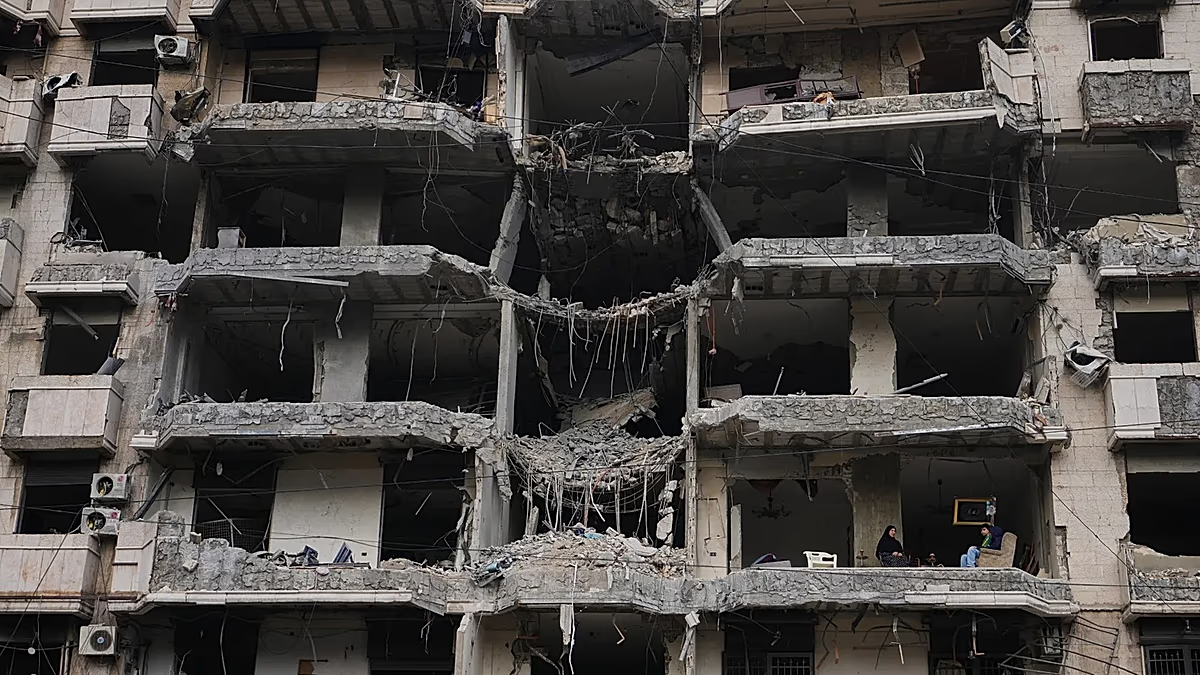


The escalating conflict between Israel and the Lebanon-based militant group Hezbollah entered a dangerously intense new phase this week, marked by a devastating Israeli airstrike on the village of Mashghara in Lebanon’s Bekaa Valley. According to Lebanese state media, the late Monday attack resulted in twelve fatalities, with rescue workers laboring to pull bodies from the rubble. This strike was not an isolated event but part of a broader, sharp escalation in hostilities, coming on the heels of Israeli Prime Minister Benjamin Netanyahu’s public declaration that he had authorized “an even greater acceleration of our operations” against Hezbollah across Lebanon. While the Israeli military did not directly comment on this specific strike, it stated it was targeting Hezbollah infrastructure in eastern Lebanon, and an anonymous Israeli security official confirmed the call-up of an additional military battalion to the northern front, signaling a potential preparation for expanded ground operations.
This brutal exchange of fire unfolds against a backdrop of profound human cost and displacement. Since the conflict was sparked in early March by Hezbollah firing rockets into northern Israel in solidarity with Iran, the Lebanese Health Ministry reports at least 3,185 people killed and over 9,600 wounded in Israeli strikes. The humanitarian toll is staggering, with over a million people displaced within Lebanon. The latest wave of intensive strikes has reignited deep-seated fears among the Lebanese populace of a renewed full-scale war, potentially exposing even the capital, Beirut, to direct strikes. The anxiety is palpable among civilians like Tony Aboud in Beirut’s Hamra district, who expressed the widespread sentiment of living on a knife’s edge, stating, “By just saying a few words on TV he (Netanyahu) causes everyone to panic and flee their homes… I don’t know what’s going to happen and how long we can live like this.”
The military dynamics on the ground have also evolved, with Hezbollah boasting of deploying new, hard-to-intercept fibre-optic drones against Israeli troops and northern Israeli towns. In response, Israel has updated its defensive guidelines for northern communities, warning against large gatherings. Prime Minister Netanyahu, in a social media video ahead of the strikes, vowed a fierce response, declaring, “We will smite them hip and thigh.” Hezbollah, for its part, has vowed to continue its attacks until Israel ceases its daily airstrikes and fully withdraws its troops from Lebanese territory. This cycle of retaliation and vow of continued resistance creates a formidable barrier to de-escalation, locking both sides into a trajectory that seems to point toward wider war.
Amid this volatile climate, a critical diplomatic effort is simultaneously underway. Lebanese and Israeli military delegations are scheduled to meet in Washington for direct talks, a move fiercely opposed by Hezbollah. The Lebanese government, represented by President Joseph Aoun, views these negotiations as a potential pathway to a ceasefire. President Aoun defended the decision to engage with Israel, while firmly stating that his demand for a complete Israeli withdrawal from southern Lebanon remains “non-negotiable.” This creates a complex diplomatic puzzle: the official Lebanese state seeks a negotiated end to the fighting based on Israeli withdrawal, while the powerful Hezbollah, which operates as a state-within-a-state, continues its military campaign with separate objectives and backing from Iran.
The convergence of extreme military escalation and fragile diplomatic maneuvering presents a moment of extreme peril. The Washington talks offer a slender thread of hope for de-escalation, but they are happening as the violence reaches new peaks. The stark contrast between the call for dialogue and the reality of intensified bombing raids and troop mobilizations highlights the profound challenges facing any peace process. The outcome likely hinges on whether the talks can produce a tangible breakthrough—such as a mutually agreed cessation timeline—fast enough to overtake the momentum of war, or if the escalating violence will render the diplomatic track irrelevant.
Ultimately, the situation on the Lebanon-Israel border is a tinderbox threatening to ignite a regional conflagration. The human suffering, measured in thousands of lives lost and millions displaced, is already immense. The latest strikes and troop movements suggest both sides are preparing for a potentially broader and even more destructive confrontation. The world watches anxiously to see if the dialogue in Washington can establish a firewall, or if the rhetoric of “accelerating operations” and “smiting” enemies will dictate the tragic course of events, pushing two nations and the wider Middle East closer to the brink of a devastating full-scale war. The coming days will be decisive in determining whether diplomacy or violence charts the path forward.